
Continuing Education At Home
Professional Counselor - MFT - NBCC
Introduction to Aging and Long Term Care
See Accreditations - click here
Minority groups as a proportion of the United States Population (U.S. Census Board Decennial projections)
In 1970 16% of the population was minorities
In 1998 27% of the population was minorities
By the year 2050 50% of the population will be minorities
Chapter 1
Healthy Aging
The Goal is Healthy Aging
If you ask 10 people, you will have 10 different definitions of aging. Aging to some people might be defined as: being able to perform everyday tasks without a problem for as long as possible, tasks such as bathing, eating, dressing, shopping, cooking, driving or taking the bus, walking a flight of steps or half a mile, lifting or carrying weight, meditating, reading, writing or handling small objects, and helping others.
We don\'t want to live long lives, we want to live long, healthy lives; we want to add healthy life to years, not just years to life. Aging is qualitative, not just quantitative.
Successful aging has to be more than just the absence of disease. Healthy eating, exercise, and peace of mind will improve not only our health but will also improve specific illnesses and peace of mind.
Definitions of Aging
Chronological age: actual numbers of years alive
Biological age: a general term encompassing loss of muscle strength and endurance, loss of ability to resist disease, wrinkling of the skin due to loss of collagen and elastin, loss of hair and teeth.
Psychological age: how old you feel and think you are.
Social age: how you are treated and categorized by society
Of these, biological and psychological aging are the ones over which we can exert the most control. Of course, we can accelerate or retard aging by what we eat and drink, whether we smoke, how regularly we exercise, the way we think and feel, the type of work we do, and our personal relationships.
The major myths/misconceptions about aging
- Getting old is a dead end - that there\'s no growth or potential for being actively engaged. Aging is not all loss and decline inevitably leading to sadness/depression. It does happen to some, but not to all. Most seniors are very much engaged.
- Decline in mental function. This is the most frightening myth for most people. Fear of loss of independence in this way (or because of physical ailment) is at the root of all our myths and misconceptions about aging.
- Their families abandon older people. Not the norm at all. Most seniors have frequent contact with their children, siblings and friends.
Why do these myths/misconceptions arise?
They arise because we know someone to whom they have happened. As is human nature, we then tend to focus on that negative aspect. We tell ourselves, "That\'s what it\'s like to be old" when we see someone who\'s had a stroke, suffers from dementia, is in a wheelchair, etc.
We have a tendency to lump all seniors into one demographic group. But the term senior can cover a span of 40 or 50 years. We wouldn\'t dream of generalizing about the period of birth through age 50, so we shouldn\'t do the same with seniors. They are a very diverse group. In fact, as people grow older, the differences increase among individuals due to milestones: being widowed or other changing family circumstances, personality is more entrenched, etc. There is no common denominator among a given group of seniors other than age.
There is the myth of mental decline. We forget things even when we\'re younger. When we\'re younger, however, we accept/dismiss it as just having too much on our mind at a given time. But when we\'re old and forget things, we automatically blame age. "Environmental/societal" factors contribute to the myths as well, like a crosswalk where even a very able-bodied person has trouble crossing before the light changes. The senior that holds up traffic trying to cross doesn\'t have a problem - the light just changes too fast for anybody. Things like too-small print on packaging, dim lighting in public areas, and grey-on-grey elevator buttons all set seniors up to "fail."
Why do we treat getting old as problem as opposed to a natural part of life?
Today, our society responds to situations or intervenes only when they are problems - when someone is in need. Therefore, if you are in need of some type of assistance and you are old, then aging is seen as the problem that has caused you to be in need. In other words, if you have a "need" for public intervention, then you must have "a problem."
What\'s the best thing about aging?
The majority of seniors report that they\'re happy despite health problems that may be present. People adjust their goals and adapt to circumstances as they age.
Things take on different priorities - things that may have caused you stress 20-30-40 years ago may not be as important to you. Seniors\' accumulated wisdom allows them to accept that there are things you just can\'t change.
When asked, seniors indicate the following as being important to their perceptions of quality of life:
- Independence: health/well-being; not needing to count on children for things; ability to travel. They don\'t relish the idea of having to need others for basic functions.
- Relationships: family and friendships are very important.
- Money to live reasonably well.
Is there "ageism" in our society?
Yes, and it\'s incredibly insidious. It\'s rooted (like all "isms") in devaluing the aging population - they\'re past their prime.
You can see ageism in action in things like unemployment rates among seniors and resource allocation (i.e. cutbacks to long-term care facilities, etc.). You can tell society\'s valuation of a population by the amount of resources that are allocated to its members.
How will the baby boomers differ as seniors from their parents\' generation?
They\'ll be more demanding. They\'ll feel "entitled." They will have an increased level of awareness about their health, what makes people sick, and know what interventions and medical advances are available to help them.
Where the study of aging is headed...
Those who study aging are struggling to separate what is an inevitable effect of aging from what is avoidable or can be changed. There are memory changes, etc., but many of these effects of aging can be ameliorated.
 |
Chapter 2.
Cultural Competency
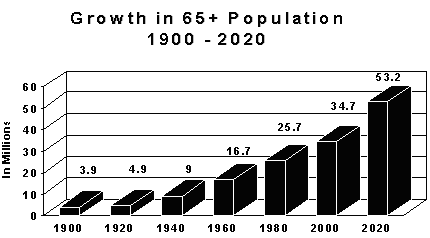
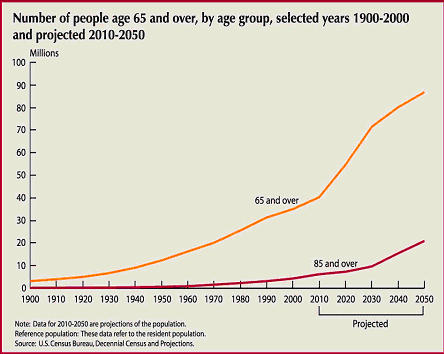
Demographics The demographic composition of the United States population will change dramatically in the next few decades. Within the next ten years, the population will grow significantly older and more diverse. This demographic shift has important implications for direct service providers. A greater number of elderly individuals will be in need of health and human services. Racial and ethnic minority elders will constitute a growing proportion of this group. It is critical for direct service providers to be aware of the current and projected characteristics of this diverse population to prepare for addressing their changing needs into the future.
The United States is a nation with a rich mix of people who come from different racial, ethnic, and cultural backgrounds. That mix is becoming even more dynamic. The minority older population will triple by 2030 (US Census Bureau Decennial projections). By then, about one quarter of the elderly population will belong to a minority racial or ethnic group. In some parts of the United States, such as California, the upsurge in the number of older minority adults will be dramatic.
Although the older populations will increase among all racial and ethnic groups, the Hispanic older population is projected to grow the fastest, from about 2 million in 2000 to over 13 million by 2050 (US Census Bureau, Decennial Projections). In fact, by 2050, the Hispanic population age 65 and older is projected to outnumber the non-Hispanic black population in that age group (US Census Bureau, Decennial Projections).
Cultural Competence There is consensus that social services, health promotion/disease prevention, and health services should be culturally sensitive to better meet the needs of older minority Americans. Compelling evidence indicates that race and ethnicity correlate with persistent, and often, increasing health and socioeconomic disparities among U.S. populations. Although there is progress in the overall health of the nation, there remains a continuing disparity in the burden of illness and death experienced by African Americans, Hispanic Americans, Indians and Alaska Natives, and Asian and Pacific Islanders. These disparities are believed to be the result of the complex interaction among genetic variation, environmental factors, specific health behaviors, and factors of service delivery.
Health disparities, and other disparities which set racial and ethnic minority populations apart from the mainstream, are due, at least in part, to problems experienced in accessing and effectively utilizing health and human services. However, a solid and growing body of research now indicates that one of the major reasons that services remain inaccessible and under utilized is because they are not responsive to the needs of the group being served - they are not "culturally sensitive."
Additional, research is needed to better understand these relationships and to acquire new insights into eliminating the disparities and developing new ways to apply our existing knowledge to this goal. Improving access to quality services will require working with communities to identify culturally sensitive implementation strategies. Understanding culture helps service providers avoid stereotypes that can undermine their efforts. It promotes a focus on the positive characteristics of a particular group, and reflects an appreciation of cultural differences. Culture plays a complex role in the development of health and human service delivery programs. Approaches that build on the strengths of minority communities and understand and respect minority cultures result in interventions, which can lead to healthy practices and behaviors. Some call this an "emic" approach--working from the inside, using the strengths, perspectives, and strategies which elders and their families identify for themselves as being most effective.
It is important for direct service providers to acknowledge the significance of culture in people\'s problems as well as their solutions. Although there is some research to suggest that the optimal situation is one in which there is similarity between the service recipient and worker, such matches are a rare luxury. Consider the second-generation Vietnamese-American mental health social worker whose clients consist of Japanese-American and African-American families. It would not be feasible for the social worker to try to memorize cultural traits while trying to become familiar with these families. Subgroups and individuals within particular groups are quite diverse. Instead, the social worker must have an appreciation of the cultural differences between her culture and her clients\', respect her clients\' culture, and behave in a manner that exemplifies this respect. The goals in becoming more culturally competent are to continue to learn about differences and to rid oneself of stereotypes. Cultural competence demands an approach to service recipients in which assumptions are few.
Factors that Influence Culture
The cultures of patients and providers may be affected by:
- educational level
- income level
- geographic residence
- identification with community groups (e.g., religious, professional,
- community service, political)
- individual experiences
- place of birth
- length of residency in the US
- age
While we know that cultural influences shape how individuals and groups create identifiable values, norms, symbols, and ways of living that are transferred from one generation to another, it is important for us to distinguish the differences created by such factors as age, gender, geographic location, and lifestyle. Race and ethnicity are commonly thought to be dominant elements of culture, but a true definition of culture is actually much broader than this. For example, ethnic and racial groups are usually categorized very broadly as African American, Hispanic, American Indian and Native Alaskan, or Asian American and Pacific Islander. These broad categories are sometimes misleading, because they can often mask substantial differences within groups. The larger group may share nothing more than common physical traits, language, or religious backgrounds. We often fail to consider the distinct factors that influence culture within larger populations that determine how people think and behave.
What is Cultural Competence? Cultural competence is defined as "a set of cultural behaviors and attitudes integrated into the practice methods of a system, agency, or its professionals, that enables them to work effectively in cross cultural situations." Cultural competency is achieved by translating and integrating knowledge about individuals and groups of people into specific practices and policies applied in appropriate cultural settings. When professionals are culturally competent, they establish positive helping relationships, engage the client, and improve the quality of services they provide. It is important to understand that the concept of cultural competency has two primary dimensions: surface structure and deep structure.
Borrowed from sociology and linguistics, these terms have been used to describe similar dimensions of culture and language.
Surface structure involves matching intervention materials and messages to observable, "superficial" (though nonetheless important) characteristics of a target population. For audiovisual materials, surface structure may involve using people, places, language, music, food, and clothing familiar to and preferred by the target audience. Surface structure also includes identifying which channels (e.g., media) and settings (e.g., churches, senior centers) are most appropriate for the delivery of messages and programs.
Deep structure involves socio-demographic and racial/ethnic population differences in general as well as how ethnic, cultural, social, environmental and historical factors may influence specific behaviors. Whereas surface structure generally increases the "receptivity" or "acceptance" of messages, deep structure conveys relevance. Surface structure is a prerequisite for feasibility, while deep structure determines the efficacy or impact of a program.
Barriers to Service Access
Structural Barriers
A significant external barrier to health care access is lack of health care insurance and out-of-pocket health care costs. Factors that have been shown to significantly affect out-of-pocket health care costs include poor health, high levels of functional impairment, limited education, and low income. Because minority elders are in general in poorer health, suffer more functional impairments, have more limited educations and lower incomes than the general population, they may face significantly higher burdens for out-of-pocket costs. Out-of-pocket costs also account for a much higher proportion of income for lower income groups than higher income groups. The current average out-of-pocket costs amount to 19 percent of total income for all Medicare beneficiaries, but account for 28 percent of income for those in poorer health, 24 percent for those with one or more functional impairments, 21 percent for those who did not complete high school and 31.5 percent for those at the lowest income levels (Administration on Aging. "Facts and Figures). Another set of structural barriers is logistical difficulties, including a lack of transportation, language difficulties and illiteracy. Transportation difficulties disproportionately affect lower income racial and ethnic minority elders, many of whom do not have automobiles and, even more importantly, may not have the language skills and information necessary to get a driver\'s license and navigate through their community. Many of these elders also experience confusion regarding public transportation and other resources available to help them access services. Cultural Barriers Some barriers to services can be considered \'internal\' because they are characteristics of the minority groups, and they include styles of interaction and expectations, as well as misconceptions. Traditional Chinese culture, for example, values shielding patients from discussing the full severity of an illness, which is in direct conflict with contemporary Western medical practices. The most common cultural misconception among policy makers, program planners and service providers is an underestimation of the needs for formal support for ethnic elders. This misconception is based on the assumption that minorities "take care of their elders "within the family. Research does confirm that a significant proportion of minority elders live with their family. Unmarried older African Americans are twice as likely to live with family members as whites, Hispanic American and Asian American elders are three times as likely, and half of urban Native American elders live with family members (controlling for income, health status, and other characteristics).
The Cultural Sensitivity Continuum
- Fear: Others are viewed with trepidation and contact is avoided.
- Denial: The existence of the other group is denied.
- Superiority: The other group exists but is considered inferior.
- Minimization: The group is acknowledged, but the importance of cultural differences is minimized (e.g., "we\'re all human after all").
- Relativism: Differences are appreciated, noted and valued.
- Empathy: A more full understanding of how others perceive the world and how they are treated is achieved.
- Integration: Assessment of situations involving members of other cultures can be accomplished and appropriate actions undertaken.
Principles of Cultural Competence
Culture plays a complex role in the development of health and human service delivery programs. As indicated earlier, the need for the provision of culturally appropriate services is driven by the demographic realities of our nation. Understanding culture and its relationship to service delivery will increase access to services as well as improve the quality of the service outcomes.
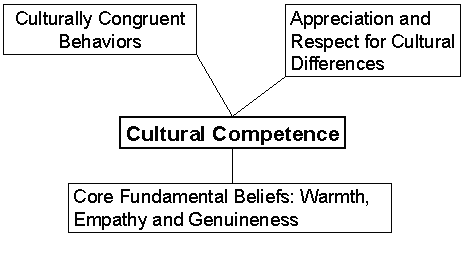
Research has begun to provide the underpinnings for the development of standards for the delivery of services to diverse populations. The following Principles are drawn from research material on the role culture plays in providing services to older adults. When professionals practice in a culturally competent way, programs that appropriately serve people of diverse cultures can be developed. Each person must first posses the core fundamental capacities of warmth, empathy and genuineness. Professionals must first have a sense of compassion and respect for people who are culturally different. Then, practitioners can learn behaviors that are congruent with cultural competence. Just learning the behavior is not enough. Underlying the behavior must be an attitudinal set of behavior skills and moral responsibility. It is not about the things one does. It is about fundamental attitudes. When a person has an inherent caring, appreciation and respect for others they can display warmth, empathy and genuineness. This then enables them to have culturally congruent behaviors and attitudes. When these three essentials intersect, practitioners can exemplify cultural competence in a manner that recognizes, values and affirms cultural differences among their clients.
Values and Attitudes
Culture shapes how people experience their world. It is a vital component of how services are both delivered and received. Cultural competence begins with an awareness of your own cultural beliefs and practices, and recognition that people from other cultures may not share them. This means more than speaking another language or recognizing the cultural icons of a people. It means changing prejudgments or biases you may have of a people\'s cultural beliefs and customs. It is important to promote mutual respect. Cultural competence is rooted in respect, validation and openness towards someone with different social and cultural perceptions and expectations than your own. People tend to have an "ethnocentric" view in which they see their own culture as the best. Some individuals may be threatened by, or defensive about, cultural differences. Moving toward culturally appropriate service delivery means being:
- knowledgeable about cultural differences and their impact on attitudes and behaviors;
- sensitive, understanding, non-judgmental, and respectful in dealings with people whose culture is different from your own;
- flexible and skillful in responding and adapting to different cultural contexts and circumstances.
How do different cultures differ in their views on aging? North American culture embraces youth. By contrast, aboriginal people view the elderly as repositories of tradition and wisdom, and they are revered as a result. The Chinese view is very similar. Older people in North America are often segregated, living in nursing homes or the like, and there is not as much interaction between generations as in some cultures. Parents who were first-generation immigrants to the United States can often be disappointed when they\'ve brought "old country" traditions and expectations, but their children have adopted the North American thinking in this regard.
Chapter 3.
Depression in Seniors
How common is depression among seniors? It depends on how you define depression. There are two types: The "serious illness" is clinical depression. Approx. 2-5% of those over 65 are affected (not dissimilar to the general population). In nursing homes or hospitals, that population can be affected up to 25% (Administration on Aging. "Facts and Figures: Statistics on Minority Aging in the U.S.," U.S. Department of Health and Human Services: Washington, DC).
Individual depressive symptoms are much more common. 15-20% of healthy seniors can have one or two symptoms, but that doesn\'t qualify them for clinical depression.
Previously unaffected seniors can develop "late onset" depression. A person can have been totally fine until a very advanced age, and can then become depressed. Often when this happens there is an underlying medical cause.
A number of different kinds of depression, or mood disorders, can afflict older adults. These illnesses affect how people feel about themselves and the world around them. They can influence every aspect of a person\'s life, including appetite, sleep, levels of energy and fatigue, and interest in relationships, work, hobbies, and social activities.
Emotional stress or loss of function can sometimes trigger depression, although it can also develop without a clear precipitant. Strength of character or previous accomplishments in life will not prevent depression. Depression is not a sign of weakness or a problem that can just be willed away. Without proper treatment, their depressive symptoms can last for months or even years and can worsen. Research suggests that depressive disorders are medical illnesses related to changes and imbalances in brain chemicals called neurotransmitters that help regulate mood.
Some people have their first episode of major depression in late life, while others have had many episodes of major depression since a young age. The two main symptoms of a major depressive disorder are depressed mood most of the day--nearly every day for 2 weeks or longer--and/or loss of interest or pleasure in activities the person usually enjoys.
Other symptoms of depression can include
- Significant weight loss or weight gain or changes in appetite
- Trouble sleeping, waking very early, or sleeping too much
- Feeling restless, "keyed up," and irritable
- Fatigue, lack of energy, or feeling slowed down
- Feelings of guilt, worthlessness, or hopelessness
- Difficulty concentrating, remembering, or making decisions
- Recurrent thoughts of death or suicide, suicide attempts.
Severe major depressive disorder can sometimes be accompanied by delusions (believing things that are not true, such as that people are out to get you) or hallucinations (seeing or hearing things that are not there). When this happens, the depression is called psychotic depression. Psychotic depression is most common in late life.
The number-one cause of suicide in the United States is untreated depression. Older adults have a suicide risk almost twice that of the general population. White men over age 65 (NIH Publication No. 03-4594 Printed January 2001; Revised April 2003) have a suicide rate five times higher than the general population. Depression is the most common diagnosis in older adults who commit suicide, so it is critical that depression be recognized and treated as soon as possible.
Older people can have other kinds of depressive disorders, such as minor depressive disorder and dysthymic disorder, which are not as severe as major depression. Although these illnesses may not cause symptoms as serious as major depression, they can still make it very difficult for the person to function and should be evaluated and treated.
Many older adults have medical illnesses, some of which can cause depression. Illnesses that can cause depression include Parkinson\'s disease, stroke, heart attack, vitamin B12 deficiency, hyper- or hypothyroidism, multiple sclerosis, lupus, certain kinds of cancers, vascular dementia, Alzheimer\'s disease and many other illnesses. Depression makes it more difficult to treat the other medical illness, since depressed patients may not take care of themselves and follow prescribed treatment. Depression caused by medical illnesses can be treated effectively, but it is important for patients to report their symptoms to the doctor who is treating them.
Many older adults are taking multiple medications. Many medications may cause or worsen depression; these include blood pressure medications, such as reserpine and beta-blockers, anti-ulcer medications, medications for Parkinson\'s disease, muscle relaxants, steroids and many others.
Life Changes
Many older adults experience the loss of loved ones and friends. They may also be affected by other major life changes, such as retirement, moving to a retirement or nursing home, financial difficulties, poor health, and loneliness. Some people have the mistaken idea that it is normal for older people to feel depressed. This is not true. Although stresses such as loss and major life changes can sometimes trigger depression, depression is not an inevitable consequence of such loss and life changes. While grief is expected after the loss of a loved one, if severe depression continues for longer than two months after such a loss, the person should be evaluated for depression.
How are the symptoms of depression different in older individuals?
Certain physical symptoms (such as changes in appetite and sleep patterns, or fatigue) are important signs of depression in younger adults. However, older people who are not depressed often experience such changes as a natural part of the aging process or as a result of medical illness. For this reason, doctors often fail to recognize depression in older patients, especially since older patients are less likely to report emotional symptoms than younger patients. To recognize depression in an older patient, the doctor needs to be made aware of certain emotional and psychological symptoms. These include a sad, downcast mood; recurrent thoughts of death or suicide; loss of interest in activities; feelings of hopelessness, worthlessness, guilt, or helplessness; feelings of being keyed up or slowed down; avoidance of social interactions; poor concentration and memory; and difficulty starting new projects or making decisions. Sometimes it can help if a family member of the patient\'s choice, who can describe the problem, accompanies the person to the doctor.
How is depression evaluated in older people?
A medical doctor conducts a complete psychiatric and medical history. He/she will want to know when the depressive symptoms started, how long they have lasted, and how severe they are. The doctor will also want to know if anybody else in the family has had depression and how he or she was treated. The doctor needs to know about any medical conditions and what medications the client is taking. The doctor will perform a complete physical examination, obtain some laboratory tests, and assess their mental status (ability to think clearly, remember, make plans). The purpose of this workup is to determine if a medical condition or medication may be causing or contributing to the depression.
Causes Of Depression:
Experts think of causes as being either biological (physical), psychological or social.
Biological: illness is the major physical cause of depression among seniors. For example, depression is really common in the months after a stroke - the combined effects of the "shock to the system" and chemical changes in the brain. Also, some drugs can cause depression, including tranquilizers and beta-blockers.
Psychological: losses (trying to cope with the death of a loved one is a common precipitant); changes to lifestyle (retirement); changes to family relationships.
Social: isolation, loneliness, financial difficulties.
There are some seniors who may have had a life history of depression. Those people have an underlying chemical vulnerability to depression, so they may be depressed for no identifiable reason.
There are no differences between the way in which men and women present their depression to medical care providers. (Women, as a group, seem more vulnerable to depression, but that may be a reflection of the fact that they tend to outlive men.)
While rates of depression are about equal between the sexes, suicide rates in men are higher because they choose more "effective" means (guns, other weapons) versus women\'s "gentler" attempts (i.e. pills).
Depression in seniors versus young: seniors don\'t always present with definite complaints of depression, as opposed to younger people who will often approach doctors saying "I\'m depressed."
Seniors may not be as aware that they\'re depressed. They may feel "something\'s wrong," but may attribute it to a physical cause - headaches, weakness, lack of energy, constipation. As a result, doctors may just treat the physical complaints.
Changes in appetite (increase or decrease) or sleep patterns; loss of energy; loss of interest in usual activities; inability to concentrate (suddenly stop reading); they ruminate/feel guilty ("I\'m a burden; I feel useless"); they express thoughts of death/suicide ("I don\'t see the point of going on"); they stop planning for the future.
The Stigma:People who are seniors today are quite stoic. They lived through the "hard times": the Depression, the World Wars. They consider themselves tough, and it\'s hard to admit to a perceived weakness.
Problems With Diagnosis: Some patients who have brain disease (i.e. Parkinson\'s) are mistakenly diagnosed as depressed. (This happens because of the disease\'s effect on the facial muscles - the face droops, they don\'t smile, so they look depressed.)
Conversely, a person with Parkinson\'s and depression may not be diagnosed as depressed because the facial indicators can be "written off" to the Parkinson\'s.
Overall it is harder to diagnose depression in a person with any type of brain disease.
Thyroid problems are also commonly misdiagnosed as depression.
An underlying cancer (i.e. pancreatic) can cause symptoms that look like depression.
Many people think depression and old age go hand-in-hand. They do not. Many people live to a "ripe old age" in perfect mental health.
Depression in seniors is not inevitable - and if it does happen, it\'s really very treatable.
Chapter 4
The Psychology, Social and Biological Aspects of Aging
The Psychology of Aging
Individual social and family assumptions about aging and its consequences may place us in a self-fulfilling expectations spiral. Stereotypical assumptions about old people are interconnected in social and familial interactions that can create or intensify illness. Our stereotypes should change so they become positive rather than self-fulfilling negative attitudes. Below are some examples of the negative stereotypes and positive images that society maintains.
Mental
| Negative Stereotype | Positive Image |
| Curmudgeon | Shares wisdom, knowledge, counseling |
| Inflexible, opinionated, stubborn | Learns actively |
| Closed to new ideas | Open to ideas and change |
| Repeats same old stories | Great storage of accumulated memories |
| Always critical of other generations | Has unique perspectives and experiences |
| Always living in the past | Always seeks new experiences and challenges |
Physical
| Negative Stereotype | Positive Image | |||
| Feeble, slow | Active, strong, effective | |||
| Always gets in the way | Compensates for limitations | |||
| Drives slowly; dangerous and unfriendly | Sensitive and courteous | |||
| Non-productive | Contributes in different ways |
| Negative Stereotype | Positive Image |
| Needs to be patronized | Emphatic and helpful |
| All old people are the same | Rich network of good friends |
| Uses up family resources | Volunteers constructive efforts |
| Poses an economic threat | Financially secure |
Positively Getting Older
We always hear about the negative aspects of aging, so here are some of the positives aspects of aging:
- Creativity learned early does not diminish with age.
- Stimulating living causes brain cells to grow more branches.
- We are sexually more relaxed.
- Our coping skills increase and stress levels decrease.
- We take more responsibility for our health.
- We understand ourselves with better perspective.
- We are more confident and care less what other people think.
- We know better what it takes to satisfy ourselves.
- Our capacity to love increases, as does curiosity and altruism.
- Levels of anxiety diminish.
- Gratitude deepens.
- Sense of humor is heightened
- Vision
- Hearing
- Temperature Sensitivity
- Touch
- Taste
- Aerobic capacity decreases 10% per decade.
- Pulmonary function decreases
- Maximal cardiac output decreases
- Muscular strength is reduced
- Substantial loss of muscle mass
- Number of muscle fibers decreases 10% per decade
- Size of muscle fibers decreases
- Movement time and reaction time decrease
- Bone mass decreases
- Body fat increases
- Take risks in life.
- Respect your own opinion.
- Be flexible and adaptable.
- Take on new challenges and learn new things.
- Deal with pain and losses, but don\'t hold on to the suffering they bring.
- See the glass half-full.
- Take care of yourself with healthy eating and regular exercise.
- Don\'t accept society\'s myths as true about you.
- they can continue to be dynamically involved in the events of the world;
- they can continue with a stable orientation towards society throughout adulthood;
- they can profit from interaction with groups who profit from interaction with them;
- they can look forward to a withdrawal from society;
- and they can adapt to the events experienced.
- Bruises, black eyes, welts, lacerations, and rope marks
- Bone fractures, broken bones, and skull fractures
- Open wounds, cuts, punctures, untreated injuries in various stages of healing
- Sprains, dislocations, and internal injuries/bleeding
- Broken eyeglasses/frames, physical signs of being subjected to punishment, and signs of being restrained
- Laboratory findings of medication overdose or under-use of prescribed drugs
- An elder\'s report of being hit, slapped, kicked, or mistreated
- An elder\'s sudden change in behavior
- The caregiver\'s refusal to allow visitors to see an elder alone
- Bruises around the breasts or genital area
- Unexplained venereal disease or genital infections
- Unexplained vaginal or anal bleeding
- Torn, stained, or bloody underclothing
- An elder\'s report of being sexually assaulted or raped
- Being emotionally upset or agitated
- Being extremely withdrawn and uncommunicative or unresponsive
- Unusual behavior that can be attributed to dementia (e.g., sucking, biting, rocking)
- An elder\'s report of being verbally or emotionally mistreated
- Dehydration, malnutrition, untreated bedsores, and poor personal hygiene
- Unattended or untreated health problems
- Hazardous or unsafe living condition/arrangements (e.g., improper wiring, no heat, or no running water)
- Unsanitary and unclean living conditions (e.g. dirt, fleas, lice on person, soiled bedding, fecal/urine smell, inadequate clothing)
- An elder\'s report of being mistreated
- The desertion of an elder at a hospital, a nursing facility, or other similar institution
- The desertion of an elder at a shopping center or other public location
- An elder\'s own report of being abandoned
- Sudden changes in bank account or banking practice, including an unexplained withdrawal of large sums of money by a person accompanying the elder
- The inclusion of additional names on an elder\'s bank signature card
- Unauthorized withdrawal of the elder\'s funds using the elder\'s ATM card
- Abrupt changes in a will or other financial documents
- Unexplained disappearance of funds or valuable possessions
- Substandard care being provided or bills unpaid despite the availability of adequate financial resources
- Discovery of an elder\'s signature being forged for financial transactions or for the titles of his/her possessions
- Sudden appearance of previously uninvolved relatives claiming their rights to an elder\'s affairs and possessions
- Unexplained sudden transfer of assets to a family member or someone outside the family
- The provision of services that are not necessary
- An elder\'s report of financial exploitation
- Dehydration, malnutrition, untreated or improperly attended medical conditions, and poor personal hygiene
- Hazardous or unsafe living conditions/arrangements (e.g., improper wiring, no indoor plumbing, no heat, no running water)
- Unsanitary or unclean living quarters (e.g., animal/insect infestation, no functioning toilet, fecal/urine smell)
- Inappropriate and/or inadequate clothing, lack of the necessary medical aids (e.g., eyeglasses, hearing aids, dentures)
- Grossly inadequate housing or homelessness
- Caregiver stress: This commonly stated theory holds that well-intentioned caregivers are so overwhelmed by the burden of caring for dependent elders that they strike out, neglecting or otherwise harming the elder. Much of the small amount of research available has shown that few cases fit this model.
- Personal characteristics of the elder: Theories that fall under this umbrella hold that dementia, disruptive behaviors, problematic personality traits, and significant needs for assistance may all raise an elder\'s risk of being abused. Research on these possibilities has produced contradictory or unclear conclusions.
- Cycle of violence: Some theorists hold that domestic violence is a learned problem-solving behavior transmitted from one generation to the next. This theory seems well founded in cases of domestic violence and child abuse, but no research to date has shown it to be a cause of elder abuse.
- presence of significant life events that trigger excessive alcohol use
- minimal, if any, work-related consequences
- fewer marital/family consequences
- absence of consequences with the criminal system
- difficulty with confrontations due to cognitive impairment
- shame as a significant issue
- health or financial restrictions that limit amount or frequency of use
- loss of social network (may be "secret drinkers")
- experience with or prior history of treatment
- survival into late life despite physical, emotional or psychological consequences of drinking
- "treatment wise" attitude and demonstration of impenetrable prognosis
- lack of acceptance and/or surrender
- Recent memory loss
- Physical agitation
- Difficulty performing everyday tasks
- Language problems
- Verbal outbursts
- Disorientation of time and place
- Poor or decreased judgment
- Misplacing things
- Changes in mood or behavior
- Changes in personality
- Loss of initiative
- Physical aggression
- Minimal repetition
- Severely impaired comprehension
- Impaired pragmatics
- Tendency to lapse into an unintelligible mumble
- needs help starting a task
- is unable to complete a task
- has mild to moderate physical problems
- has eating problems
- has flattened affect
- Picture of client
- Picture of one or two significant others (maximum, two)
- Picture of client with significant other (if available)
- Blank labels
- Lapboard or picture holder (if not seated at a table)
- Picture pocket (if seated at a table)
- Greet the client by name. Once eye contact is established, gesture to and identify yourself. Example: "Hello, Mrs. S. (Pause) I\'m (gesture) John, (pause) your ____ therapist."
- Describe the activity. Example: Show the client pictures and say, "We are going to look at some pictures."
- Show the client his or her picture. Ask the client to identify the picture
- If the client does not respond, hand the client the picture and repeat the question.
- If correct praise the client and give the picture to the caregiver.
- If the client does not respond to either Task 1 or 2, point to the picture and ask the caregiver to identify it.
- Ask the client to repeat the name
- Ask the caregiver to comment on the picture. Example: "When did Mrs. S. take this picture?"
- Point to the picture and ask the client yes or no questions. Example: "Mrs. S., do you like this picture?"
- Introduce the new task. Address the client by name to gain eye contact.
- Say, "We will now look at a picture of someone else."
- Repeat Step 1 using a picture of a significant other. If the client\'s speech is irrelevant or incoherent, correct the response.
- Introduce the new task. Address the client by name to gain eye contact.
- Say, "We will look at one more picture."
- Show the client the picture of himself or herself with a significant other.
- Have the client repeat each statement
- Instruct the caregiver to use the same pictures each time the lesson is repeated.
- Instruct the caregiver to repeat the lesson in the same manner two times each day.
- The caregiver should encourage as much talking as possible but not allow the client to ramble.
- The caregiver should correct incorrect response gently but firmly and have the client repeat correct responses.
- The caregiver should allow time for the client to respond.
- Eye contact is a must. To gain eye contact, the caregiver should address the client by name and touch the client\'s arm or shoulder.
- Your grief will take longer than most people, including yourself, think.
- Your grief will take more energy than you would have ever imagined.
- Your grief will involve many changes and be continually developing.
- Your grief will show itself in all spheres of your life: physical, psychological, and social.
- Your grief will depend upon how you perceive the loss. The intensity of your grief will be equal to the depth of your relationship.
- You will grieve for many things, both symbolic and tangible, not just the death alone.
- You will grieve for what you have lost already and what you have lost for the future.
- Your grief will entail mourning, not only for the actual person you lost, but also for all the hopes, dreams, and unfulfilled expectations you held for that person, and for needs that will go unmet because of the death.
- Your grief will involve a wide variety of feelings and reactions, not solely those that are generally thought of as grief, such as depression and sadness.
- Your grief will resurrect old feelings and issues.
- You will have some identity confusion as a result of this major loss and the fact that you are experiencing reactions that may be quite different.
- You may have a combination of anger and depression, such as irritability, frustration, annoyance or intolerance.
- You will feel some anger and guilt or at least some manifestations of these emotions.
- You may lack self-esteem.
- You may experience grief spasms, acute upsurges of grief that occur suddenly with no warning.
- You will have trouble thinking (memory, organization, and intellectual processing) and making decisions.
- You may feel like you are going crazy.
- You may be obsessed with the death and preoccupied with the deceased.
- You may begin a search for meaning and may question your religion/philosophy of life.
- You may find yourself acting socially in ways different from before.
- You may find yourself having a number of physical reactions.
- You may find that certain dates, events and stimuli bring upsurges in grief.
- Society will have unrealistic expectations about your mourning and may respond inappropriately to you.
- Certain experiences later in life may temporarily resurrect intense grief for you.
- Use language that everyone is comfortable using.
- Take your time. Pauses and shared quiet time can communicate too.
- Check what one another understands and feels.
- Encourage the patient to talk, in his or her own way.
- Talk of the time near death and just after in a natural way.
- Talk of practical matters, of emotions and of spiritual issues.
- Social and recreational programs
- Continuing education programs
- Information and counseling
- Outside maintenance and referral services
- Emergency and preventive health care programs
- Meal Programs
- Transportation on a schedule
- Decreased mobility and dexterity
- Decreased strength and stamina
- Reduced sensory acuity: vision, hearing, thermal sensitivity, touch, smell
- Isolation from family and friends
- Due to loss of peers
- From children living far away
- Changing neighborhood
- Adapt lower floor of home for possible one level living
- Increased incandescent general and specific task lighting
- Easy garage or parking access
- At least one entry is without steps
- Doorways 36" wide with off-set hinges on doors
- Levered door handles instead of knobs
- Electrical outlets at 18 inches instead of 12
- Easy to open or lock patio doors and screens
- Light switches at 42" instead of 48
- Adjustable controls on light switches
- Luminous switches in bedrooms, baths and hallways
- Strobe light or vibrator-assisted smoke and burglar alarms
- Lower window sills especially for windows on the street
- Programmable thermostats for heating and cooling
- Contrast colors between floor and walls
- Color borders around floor and counter-top edges
- Non skid flooring
- Matte finish paint, flooring and counter-tops
- Non-glare glass on art work
- Peep hole at a low height
- Incorporation of emergency response system installed or wearable
- Lever faucets and faucet mixers with anti-scald valves
- Temperature controlled shower and tub fixtures
- Stall shower with a low threshold and shower seat
- Grab bars at back and sides of shower, tub and toilet or wall reinforcement for later installation
- Bathrooms with turn around and transfer space for walker or wheelchair (36" by 36")
- Higher bathroom counters
- Telephone jack
- Installation of medical response device
- Kitchen cabinets with pull-out shelves and lazy susans
- Easy to grasp cabinet knobs or pulls
- Task lighting under counters
- Cook top with front controls
- Side by side refrigerator
- Adjustable upper shelves and pull out lower shelves
- Variety in kitchen counter height - some as low as table height (30 inches)
- Gas sensor near gas cooking, water heater and gas furnace
- Color or pattern borders at counter edges
- Seating at least 18 inches off the floor
- Chairs with sturdy arms
- Outdoor home maintenance and gardening
- Indoor home maintenance
- Heavy and/or light cleaning and housework
- Driving
- Trips to the grocery store
- Other shopping trips
- Home delivery of groceries
- Transportation to doctor\'s appointments
- Homecare
- Meal preparation
- Bathing and dressing
- Personal care assistance
- Home nursing
- Emergency call/response systems
- In your home
- To wear on your person
- Interview the candidate and/or the agency.
- Inquire if there is a charge for the interview.
- Get 3 work references for the candidate.
- Get client references for the agency.
- Is the care provider or agency bonded?
- Obtain the Department of Motor Vehicle print out from their driver\'s license.
- Do a Felony Background Check or know that the agency has conducted one. An Investigating Service will do this for a small fee.
- Ask for proof of provider (or agency) worker\'s compensation insurance.
- Ask for proof of care provider (or agency) full professional liability insurance.
- If the care provider is unable to work one day, will the care provider (or agency) provide a substitute care provider?
- Among other questions, ask:
- How many years have you been in home care?
- What were your duties for your last 2 patients?
- What is your favorite duty while taking care of a patient?
- What is your least favorite duty?
- On a scale of 1-10, 10 being best, how do you rate your:
- Cooking skills?
- Housekeeping skills?
- Personal care?
- Ability to following directions?
- Flexibility?
- Ability to work with other family members visiting or living in the home?
- Are living in their own home.
- Are blind, disabled or 65 years of age or older.
- Are unable to live safely at home without care.
- Meet certain financial need requirements.
- Persons who receive SSI/SSP automatically meet financial requirements.
- Persons who meet SSI/SSP eligibility criteria except for income are eligible but may have to pay a share of the cost of IHSS.
- Persons who have more than $2000 in personal property ($3000 for a couple) are not eligible.
Note that persons can spend down assets in order to qualify, however. - The client\'s physical/mental condition, living/social situation and ability to perform various functions of daily living.
- The client\'s statement of need.
- Medical records/physicians\' statement of need.
- Other information social work staff consider necessary and appropriate to assess the need.
- Start the process early before there is a crisis.
- Involve the prospective resident as much as possible in the process.
- Use the checklist to get an overall feel for the facility and its practices.
- Pay special attention to how residents are being treated by staff and the quality and responsiveness of the services. Don\'t be sold only on the attractiveness of the facility.
- Narrow the options down to two or three facilities.
- Visit each facility several times.
- In making visits, walk through the whole facility and visit at different times.
- Drop by unannounced and visit at night and/or on the weekend.
- Make sure that you visit during a mealtime.
- Obtain a copy of the admission agreement. Read it carefully. Understand the services, costs and conditions for transfer.
- Take classes at local schools or community centers.
- Get involved in community affairs.
- Join social groups such as: card games, gardening, book clubs, art groups, craft clubs, bingo and support groups.
- Visit with family and friends.
- Encourage and accept help from others.
- Find out about community and Internet resources.
- Accept sadness and anger.
- Discuss feelings with others, remembering your elder\'s right to confidentiality.
- Treat yourself to something special every day, such as a favorite book, hobby or window-shopping.
- Be patient with yourself. Allow time for change.
- Exercise.
- Meditate.
- Listen to music.
- Do what you enjoy, such as watch a movie, talk with a friend or work on a woodshop project.
- Relax regularly in your favorite way.
- Have regular physical exams.
- Exercise regularly.
- Eat a balanced diet.
- Avoid drugs and alcohol.
- Educate yourself about medicines, both prescription and over-the-counter.
- Find time for your interests;
- Get respite care into your home;
- Develop healthy releases such as exercise;
- Vent your emotions at support group meetings and
- Manage your time effectively
- Excessive use of drugs, alcohol, and caffeine;
- Withdrawal from others and activities; and/or
- Self-destructive behavior.
- on whom you can rely on for specific tasks and assistance
- on whom you can share your feelings
- who can help with transportation
- who can stay with your loved one for a while
- with whom can you go out and have a good time, and
- to whom you can go when you need professional help
- Identify the feeling. You must first know what it is that you feel. Anxiety, anger, depression are qualitatively different and have different antecedents.
- Admit that you have the feeling even though it is unpleasant and accept that it is yours.
- Take a step back and gain some distance from the situation. Go to the next room. Take a walk.
- Analyze. Use the time to figure out what triggers the feeling. What it is about a situation that makes you feel a certain way? How do you react? What does the situation mean to you?
- Talk about your feelings with someone who you trust, or write them down to express them. Sometimes writing helps one to understand, and begins the problem solving process. Talk to a professional if you are getting overwhelmed.
- Make a plan. Figure out what you can do differently when you recognize that feeling again. Make the plan very concrete. It\'s like dieting. You can\'t just say I\'m going to start tomorrow. You have to know specifically what you will change and how.
- Remember there must be a balance between your needs and those of your loved one. Be comfortable with your limits. This means accepting what you are realistically able to do. Remember to be a good caregiver and to go beyond care giving, your life must continue and be meaningful.
- Identify cultural biases and be sensitive to cultural differences.
- Identify the physical and psychological changes that are associated with aging.
- Describe common psychological disorders found in aging individuals.
- Utilize tools to diagnose and manage issues related to aging.
- Describe intervention techniques that minimize trauma to elderly patients and their families.
- Utilize support resources such as groups, families, and residential centers to facilitate improved comprehensive care.
- Outline the issues of aging from many aspects, including sexual, chemical dependence/alcohol, abuse, sociological, biological and psychological.
- Apply knowledge from this course to practice and/or other professional contexts.
- Getting old is a dead end - that there\'s no growth or potential for being actively engaged. Aging is not all loss and decline inevitably leading to sadness/depression. It does happen to some, but not to all. Most seniors are very much engaged.
- Decline in mental function. This is the most frightening myth for most people. Fear of loss of independence in this way (or because of physical ailment) is at the root of all our myths and misconceptions about aging.
- Their families abandon older people. Not the norm at all. Most seniors have frequent contact with their children, siblings and friends.
- Independence: health/well-being; not needing to count on children for things; ability to travel. They don\'t relish the idea of having to need others for basic functions.
- Relationships: family and friendships are very important.
- Money to live reasonably well.
- educational level
- income level
- geographic residence
- identification with community groups (e.g., religious, professional,
- community service, political)
- individual experiences
- place of birth
- length of residency in the US
- age
- Fear: Others are viewed with trepidation and contact is avoided.
- Denial: The existence of the other group is denied.
- Superiority: The other group exists but is considered inferior.
- Minimization: The group is acknowledged, but the importance of cultural differences is minimized (e.g., "we\'re all human after all").
- Relativism: Differences are appreciated, noted and valued.
- Empathy: A more full understanding of how others perceive the world and how they are treated is achieved.
- Integration: Assessment of situations involving members of other cultures can be accomplished and appropriate actions undertaken.
- knowledgeable about cultural differences and their impact on attitudes and behaviors;
- sensitive, understanding, non-judgmental, and respectful in dealings with people whose culture is different from your own;
- flexible and skillful in responding and adapting to different cultural contexts and circumstances.
- Significant weight loss or weight gain or changes in appetite
- Trouble sleeping, waking very early, or sleeping too much
- Feeling restless, "keyed up," and irritable
- Fatigue, lack of energy, or feeling slowed down
- Feelings of guilt, worthlessness, or hopelessness
- Difficulty concentrating, remembering, or making decisions
- Recurrent thoughts of death or suicide, suicide attempts.
- Creativity learned early does not diminish with age.
- Stimulating living causes brain cells to grow more branches.
- We are sexually more relaxed.
- Our coping skills increase and stress levels decrease.
- We take more responsibility for our health.
- We understand ourselves with better perspective.
- We are more confident and care less what other people think.
- We know better what it takes to satisfy ourselves.
- Our capacity to love increases, as does curiosity and altruism.
- Levels of anxiety diminish.
- Gratitude deepens.
- Sense of humor is heightened
- Vision
- Hearing
- Temperature Sensitivity
- Touch
- Taste
- Aerobic capacity decreases 10% per decade.
- Pulmonary function decreases
- Maximal cardiac output decreases
- Muscular strength is reduced
- Substantial loss of muscle mass
- Number of muscle fibers decreases 10% per decade
- Size of muscle fibers decreases
- Movement time and reaction time decrease
- Bone mass decreases
- Body fat increases
- Take risks in life.
- Respect your own opinion.
- Be flexible and adaptable.
- Take on new challenges and learn new things.
- Deal with pain and losses, but don\'t hold on to the suffering they bring.
- See the glass half-full.
- Take care of yourself with healthy eating and regular exercise.
- Don\'t accept society\'s myths as true about you.
- they can continue to be dynamically involved in the events of the world;
- they can continue with a stable orientation towards society throughout adulthood;
- they can profit from interaction with groups who profit from interaction with them;
- they can look forward to a withdrawal from society;
- and they can adapt to the events experienced.
- Bruises, black eyes, welts, lacerations, and rope marks
- Bone fractures, broken bones, and skull fractures
- Open wounds, cuts, punctures, untreated injuries in various stages of healing
- Sprains, dislocations, and internal injuries/bleeding
- Broken eyeglasses/frames, physical signs of being subjected to punishment, and signs of being restrained
- Laboratory findings of medication overdose or under-use of prescribed drugs
- An elder\'s report of being hit, slapped, kicked, or mistreated
- An elder\'s sudden change in behavior
- The caregiver\'s refusal to allow visitors to see an elder alone
- Bruises around the breasts or genital area
- Unexplained venereal disease or genital infections
- Unexplained vaginal or anal bleeding
- Torn, stained, or bloody underclothing
- An elder\'s report of being sexually assaulted or raped
- Being emotionally upset or agitated
- Being extremely withdrawn and uncommunicative or unresponsive
- Unusual behavior that can be attributed to dementia (e.g., sucking, biting, rocking)
- An elder\'s report of being verbally or emotionally mistreated
- Dehydration, malnutrition, untreated bedsores, and poor personal hygiene
- Unattended or untreated health problems
- Hazardous or unsafe living condition/arrangements (e.g., improper wiring, no heat, or no running water)
- Unsanitary and unclean living conditions (e.g. dirt, fleas, lice on person, soiled bedding, fecal/urine smell, inadequate clothing)
- An elder\'s report of being mistreated
- The desertion of an elder at a hospital, a nursing facility, or other similar institution
- The desertion of an elder at a shopping center or other public location
- An elder\'s own report of being abandoned
- Sudden changes in bank account or banking practice, including an unexplained withdrawal of large sums of money by a person accompanying the elder
- The inclusion of additional names on an elder\'s bank signature card
- Unauthorized withdrawal of the elder\'s funds using the elder\'s ATM card
- Abrupt changes in a will or other financial documents
- Unexplained disappearance of funds or valuable possessions
- Substandard care being provided or bills unpaid despite the availability of adequate financial resources
- Discovery of an elder\'s signature being forged for financial transactions or for the titles of his/her possessions
- Sudden appearance of previously uninvolved relatives claiming their rights to an elder\'s affairs and possessions
- Unexplained sudden transfer of assets to a family member or someone outside the family
- The provision of services that are not necessary
- An elder\'s report of financial exploitation
- Dehydration, malnutrition, untreated or improperly attended medical conditions, and poor personal hygiene
- Hazardous or unsafe living conditions/arrangements (e.g., improper wiring, no indoor plumbing, no heat, no running water)
- Unsanitary or unclean living quarters (e.g., animal/insect infestation, no functioning toilet, fecal/urine smell)
- Inappropriate and/or inadequate clothing, lack of the necessary medical aids (e.g., eyeglasses, hearing aids, dentures)
- Grossly inadequate housing or homelessness
- Caregiver stress: This commonly stated theory holds that well-intentioned caregivers are so overwhelmed by the burden of caring for dependent elders that they strike out, neglecting or otherwise harming the elder. Much of the small amount of research available has shown that few cases fit this model.
- Personal characteristics of the elder: Theories that fall under this umbrella hold that dementia, disruptive behaviors, problematic personality traits, and significant needs for assistance may all raise an elder\'s risk of being abused. Research on these possibilities has produced contradictory or unclear conclusions.
- Cycle of violence: Some theorists hold that domestic violence is a learned problem-solving behavior transmitted from one generation to the next. This theory seems well founded in cases of domestic violence and child abuse, but no research to date has shown it to be a cause of elder abuse.
- presence of significant life events that trigger excessive alcohol use
- minimal, if any, work-related consequences
- fewer marital/family consequences
- absence of consequences with the criminal system
- difficulty with confrontations due to cognitive impairment
- shame as a significant issue
- health or financial restrictions that limit amount or frequency of use
- loss of social network (may be "secret drinkers")
- experience with or prior history of treatment
- survival into late life despite physical, emotional or psychological consequences of drinking
- "treatment wise" attitude and demonstration of impenetrable prognosis
- lack of acceptance and/or surrender
- Recent memory loss
- Physical agitation
- Difficulty performing everyday tasks
- Language problems
- Verbal outbursts
- Disorientation of time and place
- Poor or decreased judgment
- Misplacing things
- Changes in mood or behavior
- Changes in personality
- Loss of initiative
- Physical aggression
- Minimal repetition
- Severely impaired comprehension
- Impaired pragmatics
- Tendency to lapse into an unintelligible mumble
- needs help starting a task
- is unable to complete a task
- has mild to moderate physical problems
- has eating problems
- has flattened affect
- Picture of client
- Picture of one or two significant others (maximum, two)
- Picture of client with significant other (if available)
- Blank labels
- Lapboard or picture holder (if not seated at a table)
- Picture pocket (if seated at a table)
- Greet the client by name. Once eye contact is established, gesture to and identify yourself. Example: "Hello, Mrs. S. (Pause) I\'m (gesture) John, (pause) your ____ therapist."
- Describe the activity. Example: Show the client pictures and say, "We are going to look at some pictures."
- Show the client his or her picture. Ask the client to identify the picture
- If the client does not respond, hand the client the picture and repeat the question.
- If correct praise the client and give the picture to the caregiver.
- If the client does not respond to either Task 1 or 2, point to the picture and ask the caregiver to identify it.
- Ask the client to repeat the name
- Ask the caregiver to comment on the picture. Example: "When did Mrs. S. take this picture?"
- Point to the picture and ask the client yes or no questions. Example: "Mrs. S., do you like this picture?"
- Introduce the new task. Address the client by name to gain eye contact.
- Say, "We will now look at a picture of someone else."
- Repeat Step 1 using a picture of a significant other. If the client\'s speech is irrelevant or incoherent, correct the response.
- Introduce the new task. Address the client by name to gain eye contact.
- Say, "We will look at one more picture."
- Show the client the picture of himself or herself with a significant other.
- Have the client repeat each statement
- Instruct the caregiver to use the same pictures each time the lesson is repeated.
- Instruct the caregiver to repeat the lesson in the same manner two times each day.
- The caregiver should encourage as much talking as possible but not allow the client to ramble.
- The caregiver should correct incorrect response gently but firmly and have the client repeat correct responses.
- The caregiver should allow time for the client to respond.
- Eye contact is a must. To gain eye contact, the caregiver should address the client by name and touch the client\'s arm or shoulder.
- Your grief will take longer than most people, including yourself, think.
- Your grief will take more energy than you would have ever imagined.
- Your grief will involve many changes and be continually developing.
- Your grief will show itself in all spheres of your life: physical, psychological, and social.
- Your grief will depend upon how you perceive the loss. The intensity of your grief will be equal to the depth of your relationship.
- You will grieve for many things, both symbolic and tangible, not just the death alone.
- You will grieve for what you have lost already and what you have lost for the future.
- Your grief will entail mourning, not only for the actual person you lost, but also for all the hopes, dreams, and unfulfilled expectations you held for that person, and for needs that will go unmet because of the death.
- Your grief will involve a wide variety of feelings and reactions, not solely those that are generally thought of as grief, such as depression and sadness.
- Your grief will resurrect old feelings and issues.
- You will have some identity confusion as a result of this major loss and the fact that you are experiencing reactions that may be quite different.
- You may have a combination of anger and depression, such as irritability, frustration, annoyance or intolerance.
- You will feel some anger and guilt or at least some manifestations of these emotions.
- You may lack self-esteem.
- You may experience grief spasms, acute upsurges of grief that occur suddenly with no warning.
- You will have trouble thinking (memory, organization, and intellectual processing) and making decisions.
- You may feel like you are going crazy.
- You may be obsessed with the death and preoccupied with the deceased.
- You may begin a search for meaning and may question your religion/philosophy of life.
- You may find yourself acting socially in ways different from before.
- You may find yourself having a number of physical reactions.
- You may find that certain dates, events and stimuli bring upsurges in grief.
- Society will have unrealistic expectations about your mourning and may respond inappropriately to you.
- Certain experiences later in life may temporarily resurrect intense grief for you.
- Use language that everyone is comfortable using.
- Take your time. Pauses and shared quiet time can communicate too.
- Check what one another understands and feels.
- Encourage the patient to talk, in his or her own way.
- Talk of the time near death and just after in a natural way.
- Talk of practical matters, of emotions and of spiritual issues.
- Social and recreational programs
- Continuing education programs
- Information and counseling
- Outside maintenance and referral services
- Emergency and preventive health care programs
- Meal Programs
- Transportation on a schedule
- Decreased mobility and dexterity
- Decreased strength and stamina
- Reduced sensory acuity: vision, hearing, thermal sensitivity, touch, smell
- Isolation from family and friends
- Due to loss of peers
- From children living far away
- Changing neighborhood
- Adapt lower floor of home for possible one level living
- Increased incandescent general and specific task lighting
- Easy garage or parking access
- At least one entry is without steps
- Doorways 36" wide with off-set hinges on doors
- Levered door handles instead of knobs
- Electrical outlets at 18 inches instead of 12
- Easy to open or lock patio doors and screens
- Light switches at 42" instead of 48
- Adjustable controls on light switches
- Luminous switches in bedrooms, baths and hallways
- Strobe light or vibrator-assisted smoke and burglar alarms
- Lower window sills especially for windows on the street
- Programmable thermostats for heating and cooling
- Contrast colors between floor and walls
- Color borders around floor and counter-top edges
- Non skid flooring
- Matte finish paint, flooring and counter-tops
- Non-glare glass on art work
- Peep hole at a low height
- Incorporation of emergency response system installed or wearable
- Lever faucets and faucet mixers with anti-scald valves
- Temperature controlled shower and tub fixtures
- Stall shower with a low threshold and shower seat
- Grab bars at back and sides of shower, tub and toilet or wall reinforcement for later installation
- Bathrooms with turn around and transfer space for walker or wheelchair (36" by 36")
- Higher bathroom counters
- Telephone jack
- Installation of medical response device
- Kitchen cabinets with pull-out shelves and lazy susans
- Easy to grasp cabinet knobs or pulls
- Task lighting under counters
- Cook top with front controls
- Side by side refrigerator
- Adjustable upper shelves and pull out lower shelves
- Variety in kitchen counter height - some as low as table height (30 inches)
- Gas sensor near gas cooking, water heater and gas furnace
- Color or pattern borders at counter edges
- Seating at least 18 inches off the floor
- Chairs with sturdy arms
- Outdoor home maintenance and gardening
- Indoor home maintenance
- Heavy and/or light cleaning and housework
- Driving
- Trips to the grocery store
- Other shopping trips
- Home delivery of groceries
- Transportation to doctor\'s appointments
- Homecare
- Meal preparation
- Bathing and dressing
- Personal care assistance
- Home nursing
- Emergency call/response systems
- In your home
- To wear on your person
- Interview the candidate and/or the agency.
- Inquire if there is a charge for the interview.
- Get 3 work references for the candidate.
- Get client references for the agency.
- Is the care provider or agency bonded?
- Obtain the Department of Motor Vehicle print out from their driver\'s license.
- Do a Felony Background Check or know that the agency has conducted one. An Investigating Service will do this for a small fee.
- Ask for proof of provider (or agency) worker\'s compensation insurance.
- Ask for proof of care provider (or agency) full professional liability insurance.
- If the care provider is unable to work one day, will the care provider (or agency) provide a substitute care provider?
- Among other questions, ask:
- How many years have you been in home care?
- What were your duties for your last 2 patients?
- What is your favorite duty while taking care of a patient?
- What is your least favorite duty?
- On a scale of 1-10, 10 being best, how do you rate your:
- Cooking skills?
- Housekeeping skills?
- Personal care?
- Ability to following directions?
- Flexibility?
- Ability to work with other family members visiting or living in the home?
- Are living in their own home.
- Are blind, disabled or 65 years of age or older.
- Are unable to live safely at home without care.
- Meet certain financial need requirements.
- Persons who receive SSI/SSP automatically meet financial requirements.
- Persons who meet SSI/SSP eligibility criteria except for income are eligible but may have to pay a share of the cost of IHSS.
- Persons who have more than $2000 in personal property ($3000 for a couple) are not eligible.
Note that persons can spend down assets in order to qualify, however. - The client\'s physical/mental condition, living/social situation and ability to perform various functions of daily living.
- The client\'s statement of need.
- Medical records/physicians\' statement of need.
- Other information social work staff consider necessary and appropriate to assess the need.
- Start the process early before there is a crisis.
- Involve the prospective resident as much as possible in the process.
- Use the checklist to get an overall feel for the facility and its practices.
- Pay special attention to how residents are being treated by staff and the quality and responsiveness of the services. Don\'t be sold only on the attractiveness of the facility.
- Narrow the options down to two or three facilities.
- Visit each facility several times.
- In making visits, walk through the whole facility and visit at different times.
- Drop by unannounced and visit at night and/or on the weekend.
- Make sure that you visit during a mealtime.
- Obtain a copy of the admission agreement. Read it carefully. Understand the services, costs and conditions for transfer.
- Take classes at local schools or community centers.
- Get involved in community affairs.
- Join social groups such as: card games, gardening, book clubs, art groups, craft clubs, bingo and support groups.
- Visit with family and friends.
- Encourage and accept help from others.
- Find out about community and Internet resources.
- Accept sadness and anger.
- Discuss feelings with others, remembering your elder\'s right to confidentiality.
- Treat yourself to something special every day, such as a favorite book, hobby or window-shopping.
- Be patient with yourself. Allow time for change.
- Exercise.
- Meditate.
- Listen to music.
- Do what you enjoy, such as watch a movie, talk with a friend or work on a woodshop project.
- Relax regularly in your favorite way.
- Have regular physical exams.
- Exercise regularly.
- Eat a balanced diet.
- Avoid drugs and alcohol.
- Educate yourself about medicines, both prescription and over-the-counter.
- Find time for your interests;
- Get respite care into your home;
- Develop healthy releases such as exercise;
- Vent your emotions at support group meetings and
- Manage your time effectively
- Excessive use of drugs, alcohol, and caffeine;
- Withdrawal from others and activities; and/or
- Self-destructive behavior.
- on whom you can rely on for specific tasks and assistance
- on whom you can share your feelings
- who can help with transportation
- who can stay with your loved one for a while
- with whom can you go out and have a good time, and
- to whom you can go when you need professional help
- Identify the feeling. You must first know what it is that you feel. Anxiety, anger, depression are qualitatively different and have different antecedents.
- Admit that you have the feeling even though it is unpleasant and accept that it is yours.
- Take a step back and gain some distance from the situation. Go to the next room. Take a walk.
- Analyze. Use the time to figure out what triggers the feeling. What it is about a situation that makes you feel a certain way? How do you react? What does the situation mean to you?
- Talk about your feelings with someone who you trust, or write them down to express them. Sometimes writing helps one to understand, and begins the problem solving process. Talk to a professional if you are getting overwhelmed.
- Make a plan. Figure out what you can do differently when you recognize that feeling again. Make the plan very concrete. It\'s like dieting. You can\'t just say I\'m going to start tomorrow. You have to know specifically what you will change and how.
- Remember there must be a balance between your needs and those of your loved one. Be comfortable with your limits. This means accepting what you are realistically able to do. Remember to be a good caregiver and to go beyond care giving, your life must continue and be meaningful.
Sociologic Changes
With age, sociologic changes occur between aging individuals and family and friends due to the loss of peers and contemporaries: a spouse, siblings, other relatives, old friends and neighbors. This can lead to isolation unless special effort is exerted to stay socially active. Getting out and being involved presents opportunities to meet new people. New friends may never replace the lost closeness shared with someone who knew you before your hair turned gray or before your first child was born. But the support network that comes with sharing life with peers can counter loneliness and goes a long way toward dispelling feelings of isolation. The more people you interact with daily, the greater your chances of forming new bonds, and the more people you\'ll be able to bond with in years to come.If we lose close contemporaries, we have less opportunity to touch others. As babies thrive when cuddled and touched, so do adults. Opportunities to hug and be hugged diminish with losses, so it\'s important to create new ones. A handshake or pat on the back helps. Grandchildren can provide opportunities for physical closeness.
Physical Changes of Aging
Physical changes of aging are the easiest to recognize. Diseases that affect the elderly are not the same thing as changes that occur as part of the aging process.Want to better understand some of the changes that accompany aging?
Look through a pair of glasses sprayed with hairspray.
Metabolic Slowdown with Age
Put un-popped popcorn kernels in your shoes.
Wear a blindfold and a nose-clip and try to tell the difference between a barbecue potato chip and a plain one.
Turn the pages of a book wearing cloth gardening gloves.
Look through the wrong end of binoculars and try to follow a right turn line on the ground.
The slowdown and changes in metabolism that occur with age can result in more than needing to eat less and exercise more to keep the pounds from piling on. As we age, we may process drugs more slowly or become more prone to drug reactions and interactions than the younger population. Add to this the fact that many of the elderly are seen by a variety of specialists, each of who prescribes drugs that treat their field of expertise. But some of these drugs interact with other drugs. Each physician--or one physician--should accept responsibility for reviewing the entire regimen of drugs taken and investigating possible drug interactions.Physiological Changes in Sedentary Adults
Physically active people are able to reduce the course of the physiological effects of aging.
A Positive Attitude
It\'s not enough to just tick off the birthdays. New stimuli and a positive attitude are important for successful aging.Below are some ways to achieve this.
In general, the psychological profile of the older adult is related to the personal and health history of the individual, the ethno/historical context in which these events took place, role changes that have occurred over the life span, and the meanings attached to these events.
Aging can also be described in sociological terms. From that perspective, the aged can interact with society in one of five ways:
Similarly, aging can be thought of as a process of education: one learns to live, and the longer one lives, the more fully one may learn and teach others.
Successful aging builds upon the untapped resources of the elderly and attempts to maximize their potential for change. Subjective criteria for successful aging may include factors such as life satisfaction, self-esteem, self-concept, and perceived personal control. Objective criteria of successful aging have been associated with the concepts of adaptability and the ability to cope with stressful events. Successful aging may involve non-modifiable factors, such as health and socioeconomic class. Successful aging may be helped by investment in physical, intellectual, and psychosocial training and education of the elderly.
Chapter 5
Abuse & Neglect Elder Abuse
Definitions and legal terminology relating to types of elder abuse vary from state to state. Federal definitions of elder abuse, neglect, and exploitation appeared for the first time in the 1987 Amendments to the Older Americans Act. These definitions were provided in the law only as guidelines for identifying the problems, and not for enforcement purposes. Currently, state laws define elder abuse, and state definitions vary considerably from one jurisdiction to another in terms of what constitutes the abuse, neglect, or exploitation of the elderly. In addition, researchers have used many different definitions to study the problem. Broadly defined, however, there are three basic categories of elder abuse: domestic elder abuse; institutional elder abuse; and self-neglect or self-abuse. In most cases, state statutes addressing elder abuse provide the definitions of these different categories of elder abuse, with varying degrees of specificity.Domestic elder abuse generally refers to any of several forms of maltreatment of an older person by someone who has a special relationship with the elder (e.g., a spouse, a sibling, a child, a friend, or a caregiver in the older person\'s own home or in the home of a caregiver).
Institutional abuse, on the other hand, generally refers to any of the above-mentioned forms of abuse that occur in residential facilities for older persons (e.g., nursing homes, foster homes, group homes, board and care facilities). Perpetrators of institutional abuse usually are persons who have a legal or contractual obligation to provide elder victims with care and protection (e.g., paid caregivers, staff, professionals).
Physical Abuse
Physical abuse is defined as the use of physical force that may result in bodily injury, physical pain, or impairment. Physical abuse may include but is not limited to such acts of violence as striking (with or without an object), hitting, beating, pushing, shoving, shaking, slapping, kicking, pinching, and burning. In addition, the inappropriate use of drugs and physical restraints, force-feeding, and physical punishment of any kind also are examples of physical abuse.Signs and symptoms of physical abuse include but are not limited to:
Sexual Abuse
Sexual abuse is defined as nonconsensual sexual contact of any kind with an elderly person. Sexual contact with any person incapable of giving consent is also considered sexual abuse. It includes but is not limited to unwanted touching, all types of sexual assault or battery, such as rape, sodomy, coerced nudity, and sexually explicit photographing.Signs and symptoms of sexual abuse include but are not limited to:
Emotional or Psychological Abuse
Emotional or psychological abuse is defined as the infliction of anguish, pain, or distress through verbal or nonverbal acts. Emotional/psychological abuse includes but is not limited to verbal assaults, insults, threats, intimidation, humiliation, and harassment. In addition, treating an older person like an infant; isolating an elderly person from his/her family, friends, or regular activities; giving an older person the "silent treatment;" and enforced social isolation are examples of emotional or psychological abuse.Signs and symptoms of emotional/psychological abuse include but are not limited to:
Neglect
Neglect is defined as the refusal or failure to fulfill any part of a person\'s obligations or duties to an elder. Neglect may also include failure of a person who has fiduciary responsibilities to provide care for an elder (e.g., pay for necessary home care services) or the failure on the part of an in-home service provider to provide necessary care. Neglect typically means the refusal or failure to provide an elderly person with such life necessities as food, water, clothing, shelter, personal hygiene, medicine, comfort, personal safety, and other essentials included in an implied or agreed-upon responsibility to an elder.Signs and symptoms of neglect include but are not limited to:
Abandonment
Abandonment is defined as the desertion of an elderly person by an individual who has assumed responsibility for providing care for an elder, or by a person with physical custody of an elder.Signs and symptoms of abandonment include but are not limited to:
Financial or Material Exploitation
Financial or material exploitation is defined as the illegal or improper use of an elder\'s funds, property, or assets. Examples include but are not limited to cashing an elderly person\'s checks without authorization/permission; forging an older person\'s signature; misusing or stealing an older person\'s money or possessions; coercing or deceiving an older person into signing any document (e.g., a contract or will); and the improper use of conservatorship, guardianship, or power of attorney.Signs and symptoms of financial or material exploitation include but are not limited to:
Self-neglect is characterized as the behavior of an elderly person that threatens his/her own health or safety. Self-neglect generally manifests itself in an older person as a refusal or failure to provide him/herself with adequate food, water, clothing, shelter, personal hygiene, medication (when indicated), and safety precautions. The definition of self-neglect excludes a situation in which a mentally competent older person, who understands the consequences of his/her decisions, makes a conscious and voluntary decision to engage in acts that threaten his/her health or safety as a matter of personal choice.Signs and symptoms of self-neglect include but are not limited to:
Elder abuse, like other types of domestic violence, is extremely complex. Generally a combination of psychological, social, and economic factors, along with the mental and physical conditions of the victim and the perpetrator, contribute to the occurrence of elder maltreatment. Although the factors listed below cannot explain all types of elder maltreatment because it is likely that different types (as well as each single incident) involve different casual factors, they are some of the risk factors researchers say seem to be related to elder abuse.It is important to acknowledge that spouses make up a large percentage of elder abusers, and that a substantial proportion of these cases are domestic violence: partnerships in which one member of a couple has traditionally tried to exert power and control over the other through emotional abuse, physical violence and threats, isolation, and other tactics.
Personal Problems of Abusers
Particularly in the case of adult children, abusers often are dependent on their victims for financial assistance, housing, and other forms of support. Oftentimes they need this support because of personal problems such as mental illness, alcohol or drug abuse, or other dysfunctional personality characteristics. The risk of elder abuse seems to be particularly high when these adult children live with the elder.Isolation and Living with Others
Both living with someone else and being socially isolated has been associated with higher elder abuse rates. These seemingly contradictory findings may turn out to be related in that abusers who live with the elder have more opportunity to abuse and yet may be isolated from the larger community themselves or may seek to isolate the elders from others so that the abuse is not discovered. Further research needs to be done to explore the relationship between these factors.Other Theories of Elder Abuse
Many other theories about elder abuse have been developed. Few, unfortunately, have been tested adequately enough to definitively say whether they raise the risk of elder abuse or not. It is possible each of the following theories will ultimately be shown to account for a small percentage of elder abuse cases.Who are the Abusers?
More than two-thirds of elder abuse perpetrators are family members of the victims, typically serving in a care-giving role.Is elder abuse a crime?
Depending on the statute of a given state, elder abuse may or may not be a crime. However, most physical, sexual, and financial/material abuses are considered crimes in all states. In addition, depending on the type of the perpetrator\'s conduct and its consequences for the victims, certain emotional abuse and neglect cases are subject to criminal prosecution. However, self-neglect is not a crime in all jurisdictions, and, in fact, elder abuse laws of some states do not address self-neglect. Please see Appendix 3 at the end of this training for state phone numbers to report elder abuse.For Help Regarding Elder Abuse
When domestic elder abuse occurs, it can be addressed if it comes to the attention of authorities. Although each state has a different system to address elder abuse, the following are some of the agencies established by federal, state and local governments to help.In most states, the APS (Adult Protective Services) agency, typically located within the human service agency, is the principal public agency responsible for both investigating reported cases of elder abuse and for providing victims and their families with treatment and protective services. In most jurisdictions, the county departments of social services maintain an APS unit that serves the need of local communities.
However, many other public and private agencies and organizations are actively involved in efforts to protect vulnerable older persons from abuse, neglect, and exploitation. Some of these agencies include the state unit on aging; the law enforcement agency (e.g., the police department, the district attorney\'s office, the court system, the sheriff\'s department); the medical examiner/coroner\'s office; hospitals and medical clinics; the state long-term care ombudsman\'s office; the public health agency; the area agency on aging; the mental health agency; and the facility licensing/certification agency. Depending on the state law governing elder abuse, the exact roles and functions of these agencies vary widely from one jurisdiction to another.
Although most APS agencies also handle adult abuse cases, nearly 70% of their caseloads involve elder abuse. The APS community is relatively small compared with the groups working for other human service programs, but it is composed of a few thousand professionals nationwide.
Mandated Reporters (the following are California Laws. In Appendix 3 you will find phone numbers for reporting agencies for each state.)
Mandated reporters of elder abuse in California include certain adult protective services and law enforcement workers, elder care workers, and health practitioners. People in these categories are required by law to report even suspected abuse, first by telephone, and then in writing within 2 working days. If the abuse occurs in a long-term care facility, the report is made to a law enforcement agency or to the local long-term care ombudsman. Reports of abuse occurring in other places are made to the county Adult Protective Services Agency in the Department of Social Services. These mandated reporters are immune from civil and criminal liability if they report abuse or suspected abuse, but failure to report is a misdemeanor, punishable by six months in jail, a $1000 fine, or both.
Chapter 6
Alcohol & Drug UseAlcohol and Aging
Anyone at any age can have a drinking problem. Great Uncle Steven may have always been a heavy drinker, and his family may find that as he gets older, the problem gets worse. Grandma Alice may have been a teetotaler all her life, just taking a drink "to help her get to sleep" after her husband died, but now she needs a couple of drinks to get through the day. These are common stories. Families, doctors, and the public often neglect drinking problems in older people.Physical Effects of Alcohol
Alcohol slows down brain activity. Because alcohol affects alertness, judgment, coordination, and reaction time, drinking increases the risk of falls and accidents. Some research has shown that it takes less alcohol to affect older people than younger ones. Over time, heavy drinking permanently damages the brain and central nervous system, as well as the liver, heart, kidneys, and stomach. Alcohol\'s effects can make some medical problems hard to diagnose. For example, alcohol causes changes in the heart and blood vessels that can dull pain that might be a warning sign of a heart attack. It also can cause forgetfulness and confusion, which can seem like Alzheimer\'s disease.Mixing Alcohol and Prescription Drugs
Alcohol, itself a drug, is often harmful when mixed with prescription or over-the-counter medicines. This is a special problem for people over 65, because they are often heavy users of prescription medicines and over-the-counter drugs.Mixing alcohol with other drugs, such as tranquilizers, sleeping pills, painkillers, and antihistamines, can be very dangerous, even fatal. For example, aspirin can cause bleeding in the stomach and intestines; when aspirin is combined with alcohol, the risk of bleeding is much higher.
As people age, the body\'s ability to absorb and dispose of alcohol and other drugs changes. Anyone who drinks should check with a doctor or pharmacist about possible problems with drug and alcohol interactions.
Problem Drinkers
There are two types of problem drinkers: chronic and situational. Chronic abusers have been heavy drinkers for many years. Although many chronic abusers die by middle age, some live well into old age. Most older problem drinkers are chronic abusers.Other people may develop a drinking problem late in life, often because of "situational" factors such as retirement, lowered income, failing health, loneliness, or the death of friends or loved ones. At first, having a drink brings relief, but later it can turn into a problem.
Elderly drug and alcohol abuse often undetected
by Bob Campbell
This article can be found on the Internet at: www.csindy.com/csindy/2000-02-02/news.htmlFEBRUARY 02, 2000:
Memory loss, disorientation, shaky hands, mood swings, depression and chronic boredom are often normal to the aging process.These behaviors can, though, signal something less benign. Grandma or Grandpa may have a substance abuse problem.
Such was the message in a Colorado Springs symposium entitled "Breaking the Silence: Older Adults, Alcoholism and Substance Abuse."
"We like to think of Grandma and Grandpa in terms of Norman Rockwell, apple pie, turkey dinners and spoiling the grandchildren," said author Carol Egan, director of older adult services at the Henley-Hazeldon Center in West Palm Beach, Florida.
"The reality, though, is often darker. Drug and alcohol addiction is far more common in over-60 Americans than most people think."
According to Egan:
Three million of the approximately 35 million Americans aged 60 and over are alcoholics;10-12 percent of people 65 and older have a drinking problem, as do 50 percent of nursing home residents;
Widowers 75 and older have the highest alcoholism rate of any age group or population sector;
21 percent of hospitalized people aged 50 and over are alcoholics;
70 percent of elderly hospitalizations for illness or injury are alcohol-based (as compared to 25 percent for the population at large).
Use of illegal drugs is rare among the elderly, but they ingest staggering quantities of prescribed and over-the-counter medication. Eighty-three percent of people 60 and over take prescription drugs, 50 percent of them potentially addictive sedatives like Valium and Librium. Women 60 and over take an average of five prescription drugs at a time, and for longer periods than men.
Addiction is typically the consequence of taking these drugs in too high and frequent doses.
"Aging and retirement lead to enormous emotional challenges," said Egan, a nationally recognized expert on alcohol and drug abuse among older people. "Many elders struggle to find a sense of purpose. Many are mourning the loss of spouses and friends. A little alcohol and maybe some over-the-counter medications, and you have a potentially dangerous situation."
A Hidden Problem
The elderly are one of the fastest-growing sectors of American society.One in eight Americans is presently 60 and over, but one in three will be so by 2030.
The first wave of baby boomers will turn 60 this decade, and this year will produce a demographic milestone: for the first time, there will be more people 65 and older than 14 and under.
Why, then, is the problem of elderly addiction so hidden?
Egan offers several reasons.
"For one thing," she said in an interview, "retired elderly aren\'t subject to detection mechanisms like poor job performance or absenteeism, and they\'re not driving around amassing DUIs (Driving Under the Influence).
"For another, the children of addicted elders often grew up in normal, functional families. Mom and Dad never drank immoderately, and they don\'t do so now. The bodies of elders, though, metabolize alcohol less efficiently. Two-to-three drinks at age 65 can be the same as six-to-seven drinks at age 45. It doesn\'t take an increase in drinking to acquire a drinking problem.
"Elders, meanwhile, belong to a generation that typically views chemical dependency as a shameful character flaw. They are far more inclined to hide their problem than to seek help. Even the children don\'t know."
Compounding the problem, substance abuse among the elderly is grossly under-diagnosed. "Relatives and medical professionals are too ready to attribute memory loss, disorientation and shaky hands to the onset of Alzheimer\'s or Parkinson\'s disease," Egan said.
She cited a recent study by the National Center on Addiction and Substance Abuse at Columbia University wherein 400 primary care doctors were provided with symptoms of early alcohol addiction in older women. "Seventy-eight percent of those doctors gave a diagnosis of depression. Only four even considered alcoholism," Egan said. "Doctors aren\'t catching it."
Organizations like the National Council on Aging and the American Association of Retired Persons are trying to bring the problem into the open. Treatment centers and programs designed specifically for older adults are proliferating, said Egan, but even seniors willing to seek help run into the problem of paying for it.
"Medicare," she observed, "does not reimburse non-hospital facilities for substance abuse problem -- even though it covers treatment for injuries and illnesses caused by substance abuse.
"Given that the cost of alcohol-related hospital care for the elderly exceeds $60 billion annually, this is backward thinking."
When Seniors Drink: Alcoholism and the Elderly
This article can be found on the Internet at: www.mobar.org/law/seniors.htm
By: Virginia Arnold, CADCSince his wife died six months ago, John, age 83, has begun to drink more and more. Lately, he even forgets to shower and change his clothes. He seems angry all of the time and cries a lot.
Between 1.1 and 2.3 million senior citizens use alcohol to deal with grief and loneliness. What has been called the "hidden population" is now being discovered and measured. Most people tend to reduce their alcohol intake, as they get older, perhaps as a response to poor health or a change in social activities. However, society has begun to recognize that the incidence of alcoholism among older persons is on the rise. And while it is difficult to find hard statistics on today\'s elderly alcoholics, as much as 10% to 15% of health problems in this population may be linked to alcoholism.
One fact is clear: alcohol-related problems among the elderly are much larger than perceived even a decade ago. It also is clear that the response remains devoted to treating their symptoms briefly and directly, rather than getting to the core of the drinking behavior and treating the alcoholism.
John, the 83-year-old widower referred to at the beginning of this article, clearly has a drinking problem. However, his family has been unaware of his increasing alcohol consumption. On visits to their father, John\'s children observe that he is confused, forgetful and depressed. Like many adult children of aging parents, they view these behaviors as normal signs of aging. This is not uncommon. After all, the effects of alcoholism may mimic those of aging, making diagnosis of alcoholism difficult in the elderly. Many symptoms - including aches and pains, insomnia, loss of sex drive, depression, anxiety, loss of memory and other mental problems - may be confused with normal signs of aging or side effects of medications.
The identification of John\'s drinking problem is further hampered by a reluctance on his family\'s part to acknowledge that their father could be an alcoholic. It is not uncommon for families to be hesitant to "interfere" with an elderly relative\'s life, even when multiple car accidents or bouts of confusion suggest that there is a problem.
Even when families or professionals try to get help for their loved one, identification of a drinking problem may be difficult. For example, use of the DSM-IV criteria may present difficulties. Many of the criteria necessary to make the diagnosis of alcoholism are more appropriate for younger persons. These may not apply to elderly individuals who may be more isolated or solitary, less likely to drive and very likely to be retired. In fact, an article in the Journal of Geriatrics (1992) suggests that the diagnosis of alcoholism be focused on biomedical, psychological or social consequences.
Stereotypes and Attitudes
Unfortunately, we often don\'t value our elderly citizens in this country. As a result, some people tend to ignore or shun older people with drinking problems. "After all," they will say, "they\'re not hurting anyone. Let them enjoy the time they have left. Who cares?" At the same time, therapists may be reluctant to work with older alcoholics because of unrecognizable counter-transference issues, i.e., the elderly client triggers the counselor\'s own fears about aging. Older clients often are perceived as rigid and/or unwilling or unable to change; and counselors may feel that they are wasting their time on such individuals. However, those who study the science of aging understand that these myths, assumptions and stereotypes are unfounded and often harm elderly individuals who can benefit from treatment.Aging doesn\'t have to be a time of loneliness and desperation. Many people find happiness and even adventure in their later years. Those who age successfully tend to have a strong sense of life satisfaction, high self-esteem and positive morals. Older persons who achieve a sense of ego integrity are able to look back on their lives with a sense of satisfaction. Older persons who look back with regret and believe that it is too late to make significant changes may experience a sense of despair and depression. To age successfully is to be able to adjust to the loss of a spouse and other significant individuals, adjust to retirement and reduced income, accept and deal with declining health and establish satisfactory living arrangements. Unfortunately, not everyone ages successfully. Some cannot accept the physical changes that come with age. Others can\'t handle the loss of a spouse or friends, or they can\'t adjust to retirement. And, often, these individuals turn to alcohol. Many of these people, like John, never had a drinking problem prior to this time in their lives. This is called late onset alcoholism. The bad news is that this type of alcoholism may go unrecognized. The good news is that late onset clients have a better chance of recovery because they have a history of handling problems successfully. Some characteristics of late onset alcoholism include:
While John began drinking late in life, his friend Henry - whose drinking habits are the same as John\'s - began drinking much earlier. Early onset alcoholics, such as Henry, are those drinkers who have been drinking excessively for may years. As a result, they may have more difficulty in recovery because of health complications from years of drinking. Some signs and symptoms of early onset alcoholism include:
These are individuals who have sought help in the past, but - for whatever reason - have not been able to maintain sobriety. There is evidence (Atkinson, R., et al., 1985.) of greater current psychological damage in the early onset group, while late onset alcoholics studied were more psychologically stable and more compliant with treatment. At the same time, early onset alcoholics also have more health problems from years of abuse. These health issues very often complicate treatment.
Treatment for Elderly Alcoholics
John and Henry were referred to treatment by their families. John\'s family solicited the aid of an interventionist who helped John enter treatment. Henry has a long-time friend through AA who helped him get into treatment. Both of these men now are in a treatment modality that is best suited for a much younger client. Why is this a problem?First of all, the idea of rubbing elbows with drug abusers does not fit in with how most seniors view themselves or their problems. They are more likely to drop out of treatment or be noncompliant when they are thrown in with drug abusers. They are likely to say, "I\'m not like them. I don\'t belong here."
At the same time, these people grew up at a time when one was expected to be stoic, to deal with his or her problems privately and not show his or her feelings. The older client needs more gentle confrontation. It often is more helpful to address issues such as isolation, loneliness, grief and shame, as many of these clients are resistant to the disease concept.
Other modifications need to be made to treatment for older alcoholics. For example, programs need to be slower paced. There needs to be more quiet time and more time for clients to complete paperwork. Perhaps the physical environment will need to be modified, i.e., ramps or aids for hearing impaired clients may need to be installed. Physical factors that can complicate senior treatment include actual physical problems, detox complications, physical disabilities, hearing and/or vision impairments and decreased stamina and mental deterioration. Emotional factors that could complicate recovery include lack of motivation, alienation, identification and expression of emotions, limited leisure needs and identification with peers.
The counselor working with these clients needs to be more flexible and more empathetic. Professionals need to speak slower, thoroughly and patiently, explaining every aspect of the treatment program. But, most important, counselors must realize that elderly clients need to be met where they are, not where the counselor wants them to be.
If anyone has any doubt that treatment works for elderly alcoholics, he or she just need look at John. He no longer forgets to shower or change his clothes. He now smiles a lot and has adjusted to a new way of life. He is attending a 12-step program with other recovering seniors and making new friends.
Counselors can help add quality of life to the years our elderly have left. And that is well worth the effort.
Virginia Arnold, CADC, NAADAC, has been a counselor at the Betty Ford Center in Rancho Mirage, CA, for 10 years. She currently is assisting in developing a track for treatment of seniors that will be implemented on an inpatient unit.
References For this Article
American Geriatrics Society. (1992). Screening for Drinking Disorders in the Elderly Using the CAGE Questionnaire, San Francisco, CA; AGS.
Atkinson, R., MD; Kofoed, L., MD; Turner, J., PhD; Tolson, R., MSW. (1985.) Early Versus Late Onset in Older Persons. Alcoholism: Clinical and Experimental Research, 9; 6.
Gupta, Krisham, L., MD (1993). Alcoholism in the Elderly. Alcoholism, 93; 2
Chapter 7
Alzheimer\'s DiseaseAlzheimer\'s: Signs and Symptoms
Stephen Lang\'s whole life was turned upside down the day he learned that Amelia, his beloved wife of 35 years, had Alzheimer\'s disease. "She\'d been showing signs of forgetfulness for awhile, but I assumed it would pass," recalls the 69-year-old, "Soon she couldn\'t perform routine tasks like cooking, washing, even reading. Worried at these developments, Stephen took Amelia to the family doctor. After a medical exam, the doctor booked another appointment, in which Amelia had to undergo several cognitive tests. When she scored poorly on these (she couldn\'t remember her children\'s names), the doctor asked Stephen to describe all the symptoms. Then he made his diagnosis: Alzheimer\'s disease.
The most common form of dementia is Alzheimer\'s disease (AD), a degenerative disorder that destroys vital brain cells and greatly reduces the patient\'s ability to function in life.
Usually described in three stages-mild, moderate, and severe-AD patients gradually become more disoriented, confused, and irrational as the disease runs its course. In the early stages, they may experience a declining ability to remember things such as names or birthdays. As the disease progresses, they may become increasingly confused, lose track of recent events in their lives and become unable to perform simple tasks. In the later stages, patients may become irrational, experience personality changes, and display agitated and aggressive behavior.
The cause of Alzheimer\'s disease remains unknown, though age and family history play a role. We do know, however, that it\'s becoming more common. The disease can run its course quickly or take a long time, up to 20 years. The average, however, is nine years, and that\'s a crucial length of time for caregivers, many of them family members or friends, who are charged with the task of looking after the patient at home. For many of these years, they\'ll be acting as nurse, cook, cleaner and constant companion.
Caring for a Patient with Alzheimer\'s
When Amelia was diagnosed, Stephen accepted the highly challenging and stressful role of looking after her at home, becoming what\'s known as an informal caregiver. "The most difficult part was not knowing exactly what care giving involved," says Stephen. "When Amelia was diagnosed, I was suddenly faced with the major challenge of how I was going to look after her."As Amelia\'s ability to care for herself continued to slip, Stephen would assume more responsibilities. He helped her get dressed in the morning, prepared and fed her meals, took her for walks, read to her, drove her to appointments, organized nursing care, and kept track of medical records. It was all new territory to Stephen. Beyond changing diapers, he\'d had very little care giving experience. In fact, Stephen was in the minority among caregivers: up to 70% are women.
Like many caregivers, on top of looking after his patient, Stephen was also trying to hold down a regular job. In the morning, he\'d get Amelia dressed and fed, wait until the visiting nurse showed up, dash off to school, teach his courses, rush home, and resume care giving. Little wonder his job performance suffered. In fact, a recent U.S. study shows that half of informal caregivers say their employment is negatively affected during the time they cared for a loved one. Up to 40% said care-giving duties caused them to miss three or more days of work every six months, and 16% said it forced them to be away 10 or more days in the same period of time. Some even reported they had to quit their jobs in order to look after their patient.
Reducing the Burden
It soon became apparent that Stephen could not handle the frantic pace, especially as Amelia\'s health deteriorated. Something had to snap, and finally Stephen\'s health began to suffer. "I was constantly tired and began experiencing chest pains," he recalls. His doctor ordered him to slow down, reduce the stress. Plus, he advised him to relinquish care-giving duties. Busy looking after Amelia, Stephen had compromised his own health. On average, caregivers of patients with mild to moderate Alzheimer\'s disease spend up to 3.2 hours each day looking after their loved one. This huge workload means caregivers often experience burnout and overstress, creating health issues of their own.It\'s therefore vital that we lessen the burden on the caregiver. Family and community organizations play a huge role here, not only providing emotional and practical support for the caregivers, but also perhaps more importantly, giving them a break and allowing them to recharge their batteries.
There is no cure for Alzheimer\'s disease. However, there are several drug treatments that may improve or stabilize symptoms and several care strategies and activities that may minimize or prevent behavioral problems. Researchers continue to look for new treatments to alter the course of the disease and other strategies to improve the quality of life for people with Alzheimer\'s Disease. Effective treatment for Alzheimer\'s Disease, along with access to specific Alzheimer\' related support groups, goes a long way in reducing the stress experienced by caregivers.
Early Diagnosis
That is why early diagnosis is so important. Because these medications are prescribed for mild to moderate cases, the earlier a patient is diagnosed, the earlier he or she can be treated. Timely and effective drug therapy can play a dual role: it improves the patient\'s quality of life, plus it reduces the number of hours the caregiver must spend assisting the patient with time-consuming activities like washing and feeding.Besides accessing effective treatment, both patient and caregiver need strong support from the medical and mental health workers, community organizations and, most importantly, the family. When all these groups are working in unison, they create a system that offers medical support for the patient and emotional and practical support to lighten the caregiver\'s burden. When their job is easier, caretakers can provide a better quality care for their patients. It\'s a support system that benefits everyone.
Functional Ability
As the disease worsens and cognitive abilities decrease, Alzheimer\'s clients may become severely disoriented. They may become confused as to who is a spouse and who is a parent or whether a room is the bathroom or the closet. At this stage, clients have difficulty with dressing and other ADLs (Activities Daily Living Skills). They cannot bath alone, have difficulty going to the bathroom, and may be incontinent. They may not be able to follow through on an action such as picking up a spoonful of food and putting it into the mouth. Psychotic symptoms such as delusions, hallucinations, paranoid ideation, and severe agitation may become manifest. These symptoms may be an extension of the cognitive deficit as opposed to those of a true psychosis. The therapist may note the following symptoms.Speech and Language
The client\'s ability to communicate is severely impaired. Upon testing, there may be:Cognitive tasks:
Progressive loss of mental abilities, extremely poor performance on new tasks, and severely limited ability to process informationOrientation:
The client is easily confused even in familiar surroundings; he or she appears to be unaware of surrounds, the year, the season, and so forth.Number concepts:
ErraticMemory:
Very poor. The client is largely unaware of all recent events and experiences but usually retains some knowledge of his or her past. The client may forget the spouse\'s name but can distinguish between strangers and people who are familiar. The client can almost always recall his or her own name.Additional observations:
Sample exerciseDescription:
The client, with the assistance of the caregiver: identifies himself or herself and at least one significant other by name. A comfortable, calm atmosphere is important to the success of this lessonGoal
To help the confused client remain oriented to self and one to two significant others.Objectives
To increase verbal output
To improve recognition skills
To improve eye contactMaterials
Establish eye contact with the client before proceeding. Saying the client\'s name or taking the client\'s hand can do this.
Instructions are concrete and offer no choices. Allow time for the client to respond, and be aware that responses will not be immediate. Proceed at a slow pace.
The client and caregiver are instructed to be seated where everyone can see the therapy materials.
Step AActivity Break
Compliment the client for his or her effort. Place the picture in the picture pocket or holder. If the client is unable to do more than one task at a time, do not proceed to Step B or C. Repeat Step A using the same material.Step B
Tasks
Place the picture used in Step B next to the picture used in Step A.Tasks
Give the caregiver the pictures. Have the caregiver repeat Tasks 1 and 2.
Caregiver\'s Instructions:
There is great hope that the continued strides being made by researchers will identify more effective diagnostic and treatment approaches, and eventually, a cure.
Chapter 8
BereavementBereavement, or the feelings of sadness one feels after experiencing a significant loss, is not the same as major depression. Grieving individuals may have some of the same symptoms as those of major depression, such as sadness, insomnia, poor appetite, or weight loss. There is a key difference, however: such symptoms are normal grief reactions so long as they do not become excessive and persist for a long period of time.
Some grief reactions are not considered "normal." For example, persistent and intrusive feelings of guilt in the survivor (or thoughts that he/she should have died along with the deceased loved one) are more characteristic of depression than normal bereavement. Again, depression in bereavement can be successfully treated.
Older women are at greater risk for grief and depression than men or younger women; they are often in the position of having to live through many losses. For example, because they live longer than men on average, older women may have to nurse their sick husbands, sometimes for a long period of time, and assist them at the time of their deaths. Older women are also more at risk for chronic illness, much more likely than men to live out their lives in nursing homes, and more likely in the very late years to find themselves without the support of close family members. All these factors can contribute to depression in older women.
Bereavement Support
Mary\'s account of bereavement:
When I was newly bereaved, there was a perception the bereavement support would be best given within a designated time frame, such as the magic yearly cycle. If somehow folks are encouraged to associate the first anniversary of the death of a loved one as the time when life will suddenly be much better, then the bereaved person may well be exposed to what may be an unkind and unnecessary disappointment. Bereaved folks know that the loss of a loved one is always with them, particularly on special anniversary dates. With time, acceptance grows and one understands that life will never be quite the same, but life is to be lived. We read a lot less about time frames these days. Bereaved people should be given help whenever and for as long as they need it. Bereavement starts that moment a loved one\'s life has been cut short and ends with the death of the bereaved.Below are some expectations people have when dealing with death.
People are unprepared for the overwhelming emotions that occur when suffering a major loss. Bereaved people suffer greatly when relationships are altered.
Replacement relationship: the bereaved becomes attached to a person who is seen unconsciously to be taking the place of the deceased. The chosen one is valued only because of similarity, and when the different attributes start to appear, there is rejection.
Self-destructive relationship: the bereaved believes subconsciously they are guilty in any way, down to the smallest detail. This is a very difficult area of therapy for the bereaved.
Avoidant relationship: the bereaved refuses to place him/herself in a situation where they may feel pain again; this even applies to joining clubs and fearing rejection.
Compulsive care-giving relationship: the bereaved may feel they need to care or help someone with a dependency; the subconscious has not caught up with the loss, therefore compelling the griever to care for someone/something.
Anticipatory Grief
News that a loved one has received a poor prognosis and is not expected to live much longer brings on another form of grief, anticipatory grief. Someone facing the possibility of losing a loved one may feel some or all of the emotions below.Sadness: An intense sadness at the thought of the death of someone you love and that some of your plans will go unfulfilled.
Frustration: One might experience some frustration about their own inability to accept the reality of a pending death. They may feel like they are in denial one day, then the next day they might feel that their loved one can beat the illness that they are fighting. But then reality will set in. These emotions can be very frustrating.
Guilt: One might feel guilt for different reasons. They may feel guilty for something that they have said to the dying person, maybe guilt because you didn\'t notice the change in health, or because they aren\'t the one who is sick and dying.
Anger: One might feel some anger at the doctors for not being able to help in the situation. They may also feel anger towards a higher power for not being able to intervene in the situation.
Loneliness: When we are called on to go through a difficult period of life, we often feel we are the only one experiencing it and that nobody cares or understands. If the illness is prolonged, you may experience loneliness caused by the fact that the person is no longer an active part of your everyday life.
Fear: One might feel fear from many different sources during this time in life. Those fears can come from not understanding what the disease may or may not do during the course of the illness. You may be afraid that your loved one will die in your presence, or about what life is going to be like after the death.
Hope: It is often the case that the person close to the one who is dying will find some internal strength and hope. You may find strength and hope from your spirituality, friends, or your own life experiences.
Clinicians aware of the impending or recent death of a patient\'s loved one should assess potential risk factors for abnormal grieving and should provide emotional support for mourning. Clinicians should also remain alert for the signs and symptoms of pathological bereavement.
Abnormal Bereavement
Persons who experience abnormal bereavement may suffer both psychological and physical morbidity and mortality. Potential complications include depression, social isolation, and alcohol or other drug abuse. Some children who experience bereavement may manifest emotional difficulties in later years. There is evidence from a number of studies that mortality may be increased in some bereaved persons. Suicide is more common among widowed men, the bereaved elderly, and men who lose their mothers. Risk factors for abnormal bereavement are poorly defined, but may include persons with inadequate social support, widowed men who do not remarry or who live alone, persons with preexisting psychiatric disorders, and those who abuse alcohol or other drugs.Screening Tests
Grief after the death of a loved one is normal, thus it is often difficult for clinicians to distinguish accurately between normal sadness and abnormal bereavement until a year or more after the death has occurred. By the time the diagnosis is certain, the patient may have experienced considerable psychological morbidity and may be less likely to benefit from clinical and social support measures. A better understanding of the risk factors for abnormal bereavement might help clinicians develop screening strategies to identify and assist such individuals immediately after (or before) the death has occurred. A number of possible risk factors have been proposed.These include characteristics of the bereaved person (e.g., inadequate support systems, physical or mental illness, alcohol abuse, financial difficulties); the relationship with the deceased (e.g., those characterized by ambivalence or dependency); and the timing of the death itself (e.g., unexpected death). Unfortunately, these nonspecific characteristics are not unique to persons experiencing abnormal bereavement. Screening strategies based on these risk factors are likely to have poor positive predictive value. Thus, a large number of mourners identified as high-risk would, in fact, be experiencing normal grief reactions. Special clinical involvement with the grieving process under these circumstances might be unnecessary and/or inappropriate.
Early Detection
Detection of a problem in the grieving process early in the mourning period is of potential value in minimizing the psychological and physical morbidity associated with abnormal bereavement. In theory, counseling and social support measures may help the mourner advance through the natural stages of grieving. Evidence that such interventions are successful is limited, however. The effectiveness of clinical interventions prior to the death of the loved one, such as providing emotional support, information, and practical assistance, has also been examined, with mixed results. A study of children of terminally ill patients showed some benefit, while another study that involved families of children with terminal leukemia reported no major differences in outcome.In a clinical trial (Reynolds CF, 3rd, Miller MD, Pasternak RE, et. Al 1999) evaluating interventions in the early weeks after death, widows considered to be at risk for post bereavement morbidity were randomly assigned to an intervention group, which received support for grief and encouragement of mourning for the first three months, or to a control group, which received no intervention. A survey conducted 13 months later suggested that morbidity was lower in the intervention group. A nonrandomized controlled study found that pairing widows with other widows to provide social support helped the bereaved progress through the stages of mourning more rapidly than controls. In addition, clinical studies have shown that intervention after overt signs of abnormal bereavement have developed can also be beneficial.
Counseling can reduce symptomatic distress levels, and professional psychotherapy or cognitive-behavioral counseling may be of special value. Some bereaved patients with clinical depression may benefit from antidepressant medication. Others may receive needed emotional support from self-help groups, hospices, and other community resources.
Further research into the characteristics of abnormal bereavement is needed, but it is clear from available evidence that a significant proportion of mourners suffer considerable psychological and physical morbidity during grieving. It is also apparent that supportive measures in general, and clinical interventions in particular, can help deal with the stresses of grief reactions. There is no reliable screening test to accurately discriminate between mourners who are in need of such interventions and those who are not. Nonetheless, it is important for clinicians to be alert for the signs of pathological bereavement, especially in persons who are likely to have difficulty advancing normally through the stages of mourning.
Clinicians aware of the impending or recent death of a patient\'s loved one should assess potential risk factors for abnormal grieving (e.g., inadequate social support, living alone, preexisting psychiatric disorders, alcohol or other drug abuse) and should help patients prepare emotionally for mourning. Although methods of providing emotional support for grieving persons must be individualized to the patient\'s situation and stage of mourning, clinicians should help bereaved persons accept the loss of the deceased, experience the pain of grief, adjust to life without the deceased, and reinvest emotional energy into new relationships. Clinicians should also remain alert for the subtle signs and symptoms of pathological bereavement, such as delayed progression through the natural stages of mourning, depression or suicidal ideation, and increased use of alcohol or other drugs. Patients with evidence of abnormal bereavement may benefit from counseling by a mental health professional.
How to Talk about End-of-Life Concerns
(from Americans for Better Care of the Dying, by Joanne Lynn, M.D.)It is hard to talk about dying, death, and bereavement. Virtually everyone wants those conversations to have happened, but no one wants to "have that conversation today." Talking about death seems at first to make it more real, more threatening. Afterwards, though, most people find that talking ends up being very helpful and reassuring. Having some strategies may help.
First, push yourself to take the openings that come up. When Dad says, "I think the doctor thinks things are not going well," the family member is prone to say, "Don\'t talk that way. Everything is going to be fine." Instead, try "Really? Why do you think that?" or try "What do you think the doctor is trying to say?"
Second, you should talk naturally about a time when the person will no longer be alive, even if at first you talk about some unreasonably long time into the future. "Mom, is there something that you want your granddaughter to have on her wedding day?" Very often, a very sick person will take the lead gratefully and say something like, "I wish I could see that, but I don\'t think I\'ll even see her at Christmas this year. I hope she finds someone half as good as your father. If I find that apron my grandmother gave me when we married, would you keep it and give it to her then?" Obviously, that opens the gates to all sorts of conversations over the ensuing hours and days.
Third, talk about the patient\'s current hopes and fears. Ask something like, "Do you think this pain will get worse?" or "What do you think will happen as time goes on?" When you and the patient are not sure what you face, set up a way to find out, such as letting the physician know you want to discuss this at the next visit.
Remember, you need not use blunt or cold terms. Many poems, songs, and metaphors deal with dying. You need not talk of death most of the time. You can also reminisce, talk about daily life, and talk about plans and hopes. How can you start? First, recognize that you or your loved one is still living and has a past, a present, and a future.
Talk about the past: share stories about what is important or what shaped this particular person or family. Talk about the present: what is going well and what is going badly for patient and family. And even though it may seem awkward, talk about the future: what hopes and dreams lie there, what practical problems, and how long the patient may live. In addition, you might find it useful to consider a list of important issues that are usually appropriate to consider.
Talking About the Future
Below are some pointers on conversations about the future between seriously ill patients and those who love them.
Chapter 9
Gender, Sex and Growing OlderPhysical Changes in the Male
There are several normal changes that occur as a man becomes older. One is decreased production of testosterone that stabilizes around age 60. Because of this decrease, the size and firmness of the testicles may be reduced. There is also a reduction in sperm, which means a lesser chance of impregnating a woman. Another change is the increase in the size of the prostate, which is common and easily treatable with antibiotics and massaging the gland. If there are tumors, surgery may be required. This can cause problems, such as a lack of erection, because of the absence of hormones from the prostate gland. New surgical procedures can eliminate this threat.The sexual response cycle also changes as the male becomes older. In the beginning of a sexual session (excitement phase), the erection may be delayed. Therefore, more direct stimulation of the penis is required. The erection may not be as firm as in younger men. The man may also experience a longer time before ejaculating (plateau phase), which can be an asset for the woman because of the extra stimulation, which can help her achieve an orgasm. The orgasm (orgasm phase) for the older man is shorter than that of the younger man. The urgency to ejaculate is reduced, and there is a reduction in the amount of seminal fluid. The period right after orgasm (resolution phase), when the man returns to the non-excited phase, is shorter. The time it takes a man to recover before he can achieve another orgasm (refractory period) can take anywhere from 12 to 24 hours or longer. This period increases as the man becomes older.
Getting older is a part of life. We all know it, expect it and may even embrace it. However, as our bodies age, so do all of our systems, with some not working as well as they once did. Our eyes, joints and even our hearing may begin to lose their "shine." So, is it surprising that aging spares no one and nothing - including sperm?
It is widely known and expected that females gradually become less fertile with age and eventually undergo menopause between the ages of 45 and 55 years. However, it has been believed and proven that the male retains his fertility well into old age. "Men do not go through a traditional endocrinological menopause," says Dr. Sherman J. Silber, M.D., of the Infertility Center of St. Louis at St. Luke\'s Hospital in St. Louis, Mo. "Men at middle age do not have hot flashes and dramatic changes in hormone levels as women do. In fact, men have been documented to retain their fertility to as old an age as 94. Thus, it is clear that men do not undergo a menopause similar to women, and men in general can be expected to retain their fertility well into advanced old age." According to Dr. Silber, until recently we had a poor understanding of the effect of aging on male fertility. As many examples have been offered of older men having babies, the thought of decreased fertility in men was never greatly addressed. "It was assumed that male fertility was relatively immortal because so many elderly men have been able to impregnate their wives," says Dr. Silber. "However, there has been previous crude data showing a relative decrease in sperm count, and possibly fertility, in a certain percentage of aging men. Now, the field of male fertility has come to be mainstream and full of new research, new data and new conclusions."
Sperm Production in Older Men
The number of sperm cells that are produced in aging males continues to be the main focus of studies. "In aging men, the reduction in average daily sperm production is thought to be a main cause of infertility," says Dr. Silber. "It has been proven that the beginning of the reduction of sperm cell production can begin as early as age 25 and continues to decrease. The age-related decline in daily sperm production results largely from a block to further produce sperm that can and do mature in the early prophase stage of production. To explain this in a different fashion, there is no difference between older men and younger men in the number of early primary sperm cells per gram of testicular tissue. However, there is a vast difference between older and younger men in the number of late (or mature) sperm cells."Research is exploring many of the whys and hows of decreased sperm production and maturity with age. As a result, many explanations have been uncovered. "Men experience an age-related decrease in testicular size and in sperm production," says Dr. Silber. "In some men, there is a decline in testosterone production that becomes noticeable after the age of 40. The loss of testosterone can result in a decrease in bone and muscle mass in the aging male, the loss of sex-drive, the decreased ability of the body to produce and mature sperm cells, as well as the inability to obtain or maintain an erection. Both the decrease in testosterone and the decrease in sperm production cause an age-related decrease in fertility. In addition, sperm may also be affected by repeated ejaculation decreasing the secretions of the glands, the decrease of the number of hormones and the weakening of the sexual muscles."
According to both the American Infertility Association and Dr. Silber, some of the most common effects of age on the sperm that is produced include the following:
Decreased Motility - Sperm that has not matured will not have the adequate motility to reach and penetrate the egg. In addition, with age comes a decreased ability to have strong ejaculations, thus, decreasing the distance that the sperm will travel upon ejaculation.
Decreased Strength - immature sperm will not have the needed strength to travel the distance to the egg, or the needed strength to penetrate the membrane for fertilization.
Decreased Potency - The force of the ejaculatory squirt in young men is often powerful and can eject the sperm some distance. The force of the squirt, propelled by the powerful contraction of the bulbocavernosus` muscles, is much less in older men than in younger men. Thus, in every measurable way male potency is clearly affected by age.
Altered Genetic Make-Up - As men age, sperm cells can accumulate mutations that are passed to offspring. Regardless of age, sperm continues to reproduce through division. If a sperm becomes altered or mutates, any other sperm that is produced by the natural division will also be altered or mutated. Each successive division introduces a slight risk of error in the genetic material of the new sperm, which is passed on to the children.
There is growing interest in the effect of aging on the male fertility potential. As a result, male fertility and sperm studies have gained notoriety and continued interest. "Since an increasing number of couples wish to have children in their late reproductive years, the field of age and sperm development and performance has become forefront on many accounts," says Dr. Silber. "However, when couples choose to wait until the later years, when the reproductive system ceases to operate optimally, they learn firsthand that fertility in men usually persists well into old age. And, just as they age, so do their sperm."
Impotence or erectile dysfunction is the inability to achieve or maintain a penile erection sufficiently rigid for intercourse, ejaculation, or both. It does not mean that sexual drive or the ability to have an orgasm is affected. Rarely does erectile dysfunction signify a chronic problem. When a consistent pattern of sexual dysfunction extends over a prolonged period of time, however, a physical or serious emotional disorder may be indicated. Many men refrain from seeking help for a disorder that can, in most cases, benefit from medical treatment.
Erectile dysfunction is often assumed to be a natural concomitant of the aging process, to be tolerated along with other conditions associated with aging. This assumption may not be entirely correct. For the elderly and for others, erectile dysfunction may occur as a consequence of specific illnesses or of medical treatment for certain illnesses, resulting in fear, loss of image and self-confidence, and depression.
Benign prostatic hyperplasia (BPH) is a non-cancerous growth of the prostate gland that makes urination difficult and uncomfortable. The expanding prostate squeezes the urethra, the channel that carries urine from the bladder. Symptoms usually develop around age 50. At age 60, most men will likely have BPH. At age 80, there\'s an 80% chance of experiencing urination problems caused by BPH. Nobody knows the basic cause of BPH. Research shows that testosterone, the male hormone, or dihydrotestosterone, a chemical produced when testosterone breaks down in a man\'s body, may cause the prostate to keep growing. Some over-the-counter medications for colds or allergies contain substances (e.g. diphenhydramine, an antihistamine) that can drastically worsen the symptoms in BPH.
Physical Changes in the Female
Menopause occurs after the age of 45-50. The estrogen in the ovaries slows down and the fear of pregnancy is lessened. For some women, this can result in an increased sexual desire. For others, the sexual desire can decrease if the woman feels there is no purpose in sex anymore. Hot flashes can occur because of hormonal imbalances. The vagina can become thinner and change to a lighter pinkish color. The expansive ability of the vagina is diminished during sexual arousal; the length and width is decreased. In addition, there is a reduction in lubrication. This can result in painful intercourse (dyspareunia).The sexual response cycle for the older woman is somewhat different because of these changes. In the beginning of intercourse, lubrication begins slowly and the overall amount is less. The vagina is less expansive, but sensitivity in the clitoris and nipples stay the same as when younger. The sexual tension that mounts right before orgasm (plateau phase) is less dramatic than in younger women; however, the constrictions in the vagina and clitoris withdrawing under the hood is the same as with younger women.
At the time of orgasm (orgasm phase), contractions decrease, and some women may find them painful. This could be treated with hormone therapy, since there may be a deficiency or imbalance of hormones. The phase after orgasm (resolution) occurs more rapidly for the post-menopausal woman, but she is still capable of achieving multiple orgasms, as in her earlier years. If a woman decides not to have sexual intercourse during her 50s and 60s, it could be due to psychological or social factors rather than physical changes.
Helen Deutsch, in her 700-page 1946 epilogue, The Psychology of Women (1954), devoted only 30 pages to the climacterium, or menopause, and refers to it as a basically negative experience: "The climacterium is under the sign of narcissistic mortification that is difficult to overcome. In this phase, woman loses all she has received during puberty" (436). Throughout history, woman\'s capacity to bear children, to give and sustain life, has determined much of her fate. Women have been largely viewed as sexual partners and producers of children.
It is not surprising that physical aging and the end of fertility are viewed in negative terms when women\'s roles are constrained to looking sexy and making babies. However, when women are valued for their many other contributions to the economic, social, intellectual, and political realms, then the loss of youth and fertility can be outweighed by the gains in liberty, wisdom, power, and creativity inherent in the psychological development of aging women.
Whether or not we agree with Helen Deutsch\'s views on female development and menopause, aging is the developmental phase universally associated with loss and mourning. Never is the capacity to adapt to loss and change so solicited as during the process of growing old. Many psychologists consider mourning as encompassing much more than the human reaction to death. Mourning is a natural response to loss and change that allows a person to gradually accept the reality of life events and adapt to change. In the wider, metaphorical sense, mourning can be perceived as central to human development and adaptation. It is a process by which a person makes sense of or gives meaning to life events, lets go emotionally and cognitively, integrates reality, and continues life\'s journey, enriched and a little wiser. Hence, mourning, though it does contain negative components, is ultimately a positive experience leading to growth and greater depth of one\'s experience and personality. Have you ever wondered what it would be like to be 20 again with the knowledge and experience of a 50-year-old woman?
Within a mourning framework, one obvious psychological task of aging is to accept the finality of life, thus giving life greater meaning, substance and value. This process encompasses a personal reappraisal of one\'s own life. With respect to menopausal women, a reappraisal of the experience of fertility issues and motherhood is important. Menopause offers women the opportunity to gain new understanding and depth in their relationships with their own mothers, as well as in their relationships with their children and loved ones. Recognizing and accepting past successes and mistakes, one\'s own limits and strengths as well as those of others, are crucial. This process can lead to a more positive and realistic integration of the mother function: taking care of and sustaining life in self and in others. Thus, the mourning of fertility and youth in women can be both a source of psychic upheaval and opposition, as well as an opportunity for women to redefine themselves and their roles.
Menopause can be viewed as an identity crisis in the Eriksonian sense of continuous development throughout life. This identity crisis can serve as an impetus for generativity or a concern for future generations. Trinh Thi and Dupuis\'s (1997) study of 900 women of different professions (teachers, nurses, secretaries, school principals, health care administrators, etc.) underlines the importance of offering creative opportunities in the workplace to women in middle and late adulthood. The authors conclude that women in their 50s, when they have a positive attitude toward this phase of development, feel that they are at their prime. These women express their concern for future generations through deepened professional commitment and motivation for personal creative endeavors in the workplace.
Ideally, the aging woman symbolizes dignity, mentoring, wisdom, self-knowledge, tradition sharing and transmission, well-defined boundaries and experience. Menopause is a time in women\'s lives when they face the challenging task of mourning the downfall of youth. It is also an opportunity for women to become more authentic, to reject outdated, non-productive modes of relating to self and others. It is an opportunity for giving new meaning to their identities, to their relationships with others, and to their lives. Though no official rite of passage exists in our societies to celebrate menopause, I believe such a celebration would help many women to regard the experience more positively than has traditionally been the case. Mourning the losses inherent in aging would be facilitated if wisdom, experience and feminine creativity were better recognized and valued in modern day society.
In our society, "ageism" prevails. Many elderly people unfortunately, share the common belief that beauty, sex, and physical attractiveness belong to the young and not the old. This mistaken belief holds that when a woman begins menopause and can no longer have children; she should accept the fact that her sex life is over, too. When older men show the same kind of sexual interest as younger men, they are labeled "dirty old men." Older adults who are sexually active and have a sexual desire may find it difficult to follow society\'s expectations. Guilt and anxiety could compel older adults to conform to these expectations. A lack of understanding from health care professionals can compound the situation, making it difficult for the elderly person to talk about sexual problems. For some older persons, these myths could be a welcome excuse not to engage in sex.
Not being familiar with normal physical changes could lead older persons to think that they are sexually inadequate. If these changes are interpreted in a negative way, anxiety may result. A normal situation, such as occasional difficulty maintaining an erection, can lead to total erectile failure. For example, as a man gets older, impotence every once in a while is normal. But this should not alarm him. If it does, his anxiety may cause him to fail on his next attempt. This is known as secondary induced impotence and has more to do with self-image than with physical potency. For most men, potency is equated with masculinity, which also means self-worth. Failing once can spell disaster; thus fear produces the feared event.
Another common cause for impotence in older men is depression. Loss of all the things that are valued, ill health, retirement, and death are difficult for older adults who have not learned to cope with these crises. If his depression is severe, the man can withdraw from physical contact and stimulation. When motivation and interest are gone, focusing on sexual impotence is bound to fail because other needs are not being met. This is especially difficult and depressing for those who have had a good sex life. But a good therapist knows that the impotence exists because of the depression. If new interests are aroused, then the ability to perform sexually will also be aroused. This can give one hope in the face of an unrealistic way of looking at intimacy.
Life circumstances must also be taken into consideration. Difficulties in sexual achievement for single women may be due more to cultural and social reasons than to lack of interest and sexual inability. In particular, older single women may have more difficulty finding an available partner. Statistics show only 8.9% widowed men compare to 42% widowed women in the 65-74 age group, and these figures increase in the 75+ age group. Also, most elderly single women are less likely to remarry than are elderly single men, who may remarry younger women. Furthermore, elderly women tend to experience more losses at widowhood than elderly men. This is because the women may gain identity and self-esteem from marital roles, while the men may gain identity through their work. Some researchers suggest that women try alternatives other than marriage and courtship.
Changes in the marital relationship can also be a factor. Retirement brings a series of changes to which a couple must adapt. Marital conflict is common during this time in one\'s relationship. Sexual desire may be suppressed because of anger or hostility toward the partner. Having to face the partner alone most of the time, after having a family for many years, can also affect sexual desire. As retirement continues into later years, loss of physical ability becomes the "excuse" to not engage in sex anymore. Loss of perceived life-purpose during retirement can also contribute to the problem.
Strict religious or moral upbringing can also be a psychological problem. A person can become a victim of his/her own ignorance because of being embarrassed to discuss sexual issues with a doctor or counselor. History and poor communication skills can hamper attempts to correct or alter physical ways of relating to one another.
The attitude that elderly people should be nonsexual is especially true towards older women. Studies have shown that our society looks unfavorably on aging women as being physically attractive and expects women to be nonsexual earlier than men. However, the greatest barrier to sexual activity for older women is still the lack of an available partner. Women who see the normal sexual decline in their men as rejection risk allowing anger to create distance in the relationship. In other words, if the woman becomes angry because her partner cannot have an erection, then having an erection becomes a remote possibility for the man.
Ways of Adapting to Change
A therapist can help older adults to adapt to the normal changes that occur with age and to change negative attitudes. The myths that older people are not sexually desirable, sexually desirous, or sexually capable in later years must be dispelled. Other attitudes, such as not having sex for pleasure after procreation, must also be changed. The fear of loss of physical attractiveness may be a concern not revealed until therapy for a small majority of older couples. Research data show that older people prefer someone of their own age as a sexual partner. In addition, a therapist can encourage older persons to accept these changes as normal and make the necessary adaptations so that sexual relationships can be enjoyable in later years.One suggestion by researchers is slower but longer sexual activity, which includes longer foreplay, more intense stimulation of the genitals, and use of lubrication gels. Communication skills are also recommended, so that couples can learn what gives their partner the most pleasure and satisfaction. Other research suggests that some elderly couples may want to develop appropriate substitutes within their sexual relationships, such as sexual positions, which take into account physical needs. Examples include oral stimulation, non-sexual relationships, and psychological stimulation, including fantasy-sharing and mutual masturbation.
Chapter 10
Long Term Care And Aging in PlaceWhat is "Aging in Place"
We are using the term "aging in place" in reference to living where you have lived for many years, or to living in a non-healthcare environment, and using products, services and conveniences to allow or enable you to not have to move as circumstances change. More recently "Aging in place" is a term used in marketing by those in the rapidly evolving senior housing industry. CCRCs, (Continuing Care Retirement Communities), by definition offer the chance to age in place, but first you must move to their community to "start aging". Multi-level campuses market "Independent Living, Assisted Living and perhaps Alzheimer\'s care and Skilled Nursing in one location, and claim to offer the opportunity to "age in place", but again you must move there first. In many cases you must also move from one wing of the campus to another to receive the increased services. Here we address issues and needs related to "aging in place", without first relocating. In a community or neighborhood where residents remain for years, and age as neighbors, a NORC or Naturally Occurring Retirement Community develops. A NORC may refer to a specific apartment building, or a street of old single-family homes. Residents would just have stayed in their home or apartment for many years, and evolved into a senior community. It is possible to band together and develop, or seek help to develop, access to services to aid those needing assistance, to retain the highest quality of life as they age. Some 27% of seniors live in a NORC. Fair housing laws provide for a complex with 80% of its residents over 55, to become officially age restricted. For many years the law required an age restricted community to offer significant amenities and services if it was age restricted. That is no longer the case, but to compete, and attract residents, we still see most age restricted communities offering amenities and services to serve their residents. Significant amenities and services may include:To "age in place" successfully requires planning. To accommodate physical, mental, and psychological changes that may accompany aging, physical changes should be made in the home.
Changes Related to Aging
These are some of the physical and social changes thatPhysical changes:
Social changes:
Remodeling the Home
There are a number of items to consider when remodeling a home. Consulting a professional early in the evaluation process is helpful. No one is going to make all of the modifications, but be wise regarding those that need to be focused on. For example if you already know your eyesight is failing, focus on modifications that benefit poor, or poorer eyesight the most. If you have arthritis that impairs mobility, focus on modifications that cater to your mobility limitations.General
Bathroom
Kitchen
Living Room
Possible Assistance Needs
To "age in place" one should be aware of community help and services available to deal with increasing frailty or age related problems. They may also be needed in the event of illness.Services can provide:
Pointers For Hiring Personal Care Help
Non-medical in home support services provide an opportunity for frail or ailing people to stay in their home and perhaps maintain a more independent lifestyle than a group home might offer.Agencies can provide experienced caregivers who can assist these seniors in a number of ways. Reputable agencies are bonded and insured and their employees are covered by workers compensation and are regularly supervised. Caregivers may work for a client a few hours per day or 24 hours seven days a week. They prepare meals, do housekeeping, medication reminders, run errands, manage incontinence, give baths and help clients transfer. They also provide valuable companionship and encourage clients to exercise and participate in activities. They help when a caregiver lives at a distance, or with the frail senior, and just cannot be do all the services necessary.
Non-medical homemaker services are often confused with licensed home healthcare agencies. Some of these agencies also offer non-medical care, but generally they offer nursing types of services on an intermittent short-term basis. The client usually has a medical need that requires the expertise of a RN, physical therapist or some other medical specialty. In home supportive companies often work hand in hand with home healthcare companies to help their clients.
In home support services range from $13 to $20 dollars per hour and $140 to $200 dollars for 24-hour care. Long-term care insurance policies can be helpful in meeting some of these costs. People who cannot afford these costs may hire people privately for less money. However, they are taking a risk and will have to manage these caregivers with no professional assistance. However, reality sometimes dictates that this is the only viable choice.
Here are some tips on hiring a in home support:
Financing Long-Term Care
There are three basic ways to pay for long-term care in a nursing home: Medicare, Medicaid or private pay (out of pocket or by using long-term care insurance).Medicare is the federal program offered to those who need a skilled level of care after a three-day hospital stay. The type of care you need due to a hip fracture or stroke best describes skilled care: therapy on a daily basis. Medicare is limited in the number of days it will pay: up to 100. Medicare pays 100% for the first 20 days (after the three-day hospital stay and if skilled care is needed); beginning on day two through day 100, a co-payment is required with Medicare. Most seniors have a Medicare Supplement policy. Medicare supplements will pay in conjunction with Medicare. Once Medicare stops paying for care, most supplements will not continue to pay.
If you have exhausted Medicare payments, the only other options are Medicaid and paying out of pocket (private pay). Medicaid is available for those individuals with low income or limited resources. Medicaid is the state welfare program and has limitations on the amount of assets you can own and the amount of income you may receive each month before you are eligible. The federal government has instituted restrictions on the transferring of assets out of an estate to qualify for Medicaid. There is a look-back period of 36 months, or 60 months if a trust has been established. A law was passed in 1996 making it a crime to shift assets to become eligible for Medicaid.
Nursing home costs continue to skyrocket. A major insurance company says the average daily cost of a private room in a nursing home in the United States is $70,080 per year, or $192 per day (October 2004 Consumer Affairs.com) This can be financially devastating, especially if a patient stays the average of three years or even longer. Some patients have spent more than $100,000 or even $500,000 on long-term care expenses.
Besides paying out of your own pocket, you can purchase long-term care insurance (LTC). This insurance must be purchased prior to needing long-term care. The eligibility for the insurance is based on your current health. Therefore, if you are already ill, you probably will not be insurable.
Most financial planners recommend that LTC insurance be purchased in your late 50s or early 60s. In this range, the cost is quite affordable, and your health is probably still pretty good. The premiums are based on your age, health, and the type of plan that you purchase.
IHSS - In Home Support Services
This is a California based program, however, most states have a similar program. Please contact your states local government to find in home support services in your state.IHSS is a statewide/state mandated program administered by the counties under the direction of California State Dept. of Social Services. It provides for in home care to eligible aged, blind and disabled individuals who would be unable to remain safely in their own homes without this assistance. Funding comes from federal Medicaid dollars, state funds approved in the yearly budget act and a required county match.
Eligibility
An individual is eligible for IHSS if they:Financial Requirements
Who Provides the Services?
In California, counties can choose different modes of service delivery: Contract, County Homemaker, or Individual Provider. In the contract mode, an agency hires and dispatches a worker. Most IHSS clients use only the Independent Provider (IP) mode of service. In some counties, Public Authorities have been established to improve the Independent Provider mode. IHSS provides payments to private care providers who are hired and supervised by the recipient or the recipient\'s guardian/authorized representative. Many private care providers are relatives of the client. Payments are based on hours of service assessed and authorized by the county. Payments are issued by the State of California, Controller\'s Office, directly to the care provider. In most of California, the rate is currently $6.75/hr. In Bay Area counties, Public Authorities have been able to exceed this wage, and in San Francisco, care providers receive $10.00/hr. plus comprehensive health and dental benefits.Services Provided
The Social Services Agency has the responsibility to do a needs assessment (calculating the amount of time required for services) for each client, at the time of application and yearly thereafter, based on:Services authorized and paid for range from simple domestic tasks-meal preparation and laundry to non-medical care-bathing, feeding, and toileting to paramedical tasks. These latter services must be authorized by the client\'s physician and should be performed by the service provider under the physician\'s direction. Paramedical services include such things as tube feeding, care of bedsores, care of in-dwelling catheters.
Here are some general tips to keep in mind when investigating and evaluating Residential Care for the Elderly or Assisted Living Facilities.
Before you make a final decision, check the latest annual survey report and any other citations issued by the state-licensing agency. Facilities should make these reports available to you upon request. Or you can view the reports at the Community Care Licensing Office, California Department of Social Services, or at some Ombudsman Offices.
Chapter 11
Successful AgingSince the 1960s, or perhaps even earlier, gerontologists have been developing conceptual frameworks or schema to describe ideal outcomes of the aging process. One of the most commonly used terms to describe a good old age is "successful aging," often attributed to R. J. Havighurst (1961). The concept of successful aging is central to gerontology, and the article by Havighurst appeared as the first conceptual piece in the first issue of the profession\'s prime publication, The Gerontologist.
The shifting meanings of successful aging have paralleled changes in prevailing theories of social and psychological aspects of aging, because ideas of what constitutes successful aging are implicitly contained in each theory. One of the first theories of aging, Cumming and Henry\'s "disengagement theory" (1961), proposes that in the normal course of aging, people gradually withdrew or disengaged from social roles as a natural response to lessened capabilities and diminished interest, and to social disincentives for participation. In this model, the successfully aging person willingly retires from work or family life and contentedly takes to a rocking chair or pursues other solitary, passive activities while preparing for death. Although the theory seems dated today, it made sense in an era characterized by shorter life expectancy, earlier onset of disability, physically demanding work roles, mandatory retirement, and few organized activities for older adults. To social scientists in the 1960s, what was typical or common among older people may have shaped the perception of what was optimal or possible.
A second major theory of aging, referred to as "activity theory," proposes that people age most successfully when they participate in a full round of daily activities, that is, keep busy (Lemon, Bengtson and Peterson, 1972). This theory seemed to explain the surge of volunteerism and senior activism in the 1960s and 1970s and may have been partly responsible for public policies, which underwrote the development of senior centers and other recreational facilities in that period. Today, the theory has been discarded by gerontologists who view it as too narrow in its implied advocacy of one particular lifestyle. Empirical research has demonstrated the heterogeneity of older people, including many people who prefer less structured lives or do not have the health or means to pursue a full schedule of activities. Nevertheless, activity is widely touted by older adults themselves as the key to successful aging, so much so that gerontologists have dubbed this philosophy "the busy ethic" (Ekerdt, 1986).
A third theory of aging that has been viewed favorably in recent years is called "continuity theory" (Atchley, 1972). This theory proposes that people who age most successfully are those who carry forward the habits, preferences, lifestyles, and relationships from midlife into late life. This theory has gained considerable support from the results of major longitudinal research studies, which have shown that variables measured in midlife are strong predictors of outcomes in later life, and that many psychological and social characteristics are stable across the lifespan. For most people, late life does not represent a radical break with the past; changes often occur gradually and sometimes imperceptibly. Most people ride over or navigate around the bumps and potholes of later life using well-practiced coping skills acquired earlier in life.
Concurrent with these developments in social gerontology, theorists and researchers in the biomedical arena have also been proposing and testing models of successful aging. Until the 1980s, many researchers defined successful aging in terms of length of life. Some studied factors associated with the extraordinarily long lives of some people in remote areas of the world. Others did laboratory experiments exploring the possibilities of lengthening the human life span by carefully controlling such factors as dietary intake. More recently, considerable attention has been given to investigating ways to delay the onset of disability, thereby lengthening the number of years of "active life expectancy," that is, the number of years of life spent without significant disease or disability (Fries and Crapo, 1981; American Federation for Aging Research and the Alliance for Aging Research, 1995). This trend demonstrates the realization among biomedical researchers that quality of life is as important as quantity of life, or is at least a necessary part of successful aging.
Another and perhaps more surprising development has been the emergence of schemas for successful aging for those people who experience significant hardship in later life. Although discussion of these issues has occurred for decades among the many care providers who work to enhance the well being of impaired and institutionalized persons, most gerontologists have neglected these populations in their theories and models of successful aging. Indeed, in a provocative and important article on aging well, Austin (1991) reminds the gerontological community not to forget those who cannot age well because of social factors over the life course (e.g., poverty, rural residence, poor nutrition, substandard housing, limited educational opportunities, abuse, or catastrophic losses) that reduce life chances and limit access to an "aging well lifestyle."
Diverging from works of the 1980s that emphasize "maximizing independence" or "enhancing autonomy" in the frail elderly, Lustbader (1991) describes the possibilities for finding satisfaction and meaning even in a state of dependency, including moments of vivid aliveness, true intimacy between family members, and spiritual revival. A recent book on enhancing the spiritual well being of people with Alzheimer\'s disease (Gwyther, 1995) also addresses some of the same issues in a severely impaired population.
Taken together, these emerging trends suggest that a two-tiered approach to defining the successful aging (one for healthy older adults and one for the frail) more accurately fits the empirical realities of aging. As the older population becomes increasingly diverse, the concept of successful aging may become even more difficult to define without expanding the number of models. One solution may be to return to an early, and continuing, theme in research on successful aging: that successful aging is in the eye of the beholder. In this framework, successful aging is measured with indicators of subjective well being such as life satisfaction, happiness, morale, contentment, and perceived quality of life, or other related measures of negativity such as depression, anxiety, etc. New efforts in the measurement of quality of life (Guyatt and Cook, 1994) and personal goals (Bearon et al., 1994), and innovative qualitative studies of older adult perceptions of life satisfaction and successful aging (Fisher, 1992) suggest that there may be new and fruitful avenues for capturing and comparing individualized outcomes and developing a more variegated view of successful aging.
Chapter 12
CaregiversCaregivers
The danger of myths and misconceptions about care giving:Projecting our misconceptions onto a cared-for loved one is damaging. Attitude is the single most important factor in healthy psychological aging. When we project a limiting myth onto a senior, it becomes self-perpetuating in that it (although it may be done with only good intentions) fosters dependence ("If I\'m supposed to be frail and feeble at my age, then I must be frail and feeble...."). These myths rob the person of their opportunity to participate and be independent.
An example of this would be an adult child unilaterally deciding that Mom should move out of her house - that the stairs are too dangerous - even though Mom never considered it and doesn\'t see the problem.
There is a term called "dignity of risk," which refers to a person\'s entitlement to decide, if they are able, what risk(s) they will expose themselves to in the name of independence, etc.
Our reactions to decision-making capability are not good. Just because a person can\'t do one thing for him/herself (i.e. balance a checkbook) doesn\'t mean he/she can\'t do another, possibly related task (handle his/her own finances). (Lots of us can\'t balance our checkbooks!)
How do people deal with the role-reversal that often happens in care giving?
Often, people know well in advance that they will end up being the caregiver for an aging parent or spouse, and they are comfortable with it when it eventually happens. In cases (like stroke) where roles can be reversed in a split second, it can take time, and people just have to work through it, talking it out if the cared-for individual is able.Caregiver Burnout
I\'m feeling overwhelmed and guilty, what should I do? How often do those thoughts pop up in the course of a caregiver\'s day or week? People today are feeling tremendous pressure to "do it all," taking care of children and aging parents while maintaining career and home. Instead of having a sense of accomplishment, many people feel guilt when they run out of energy to handle all of the tasks. "Being a member of the \'sandwich generation\' is like being a slice of bologna, expected to give taste and meaning to two slices of bread ... your children on one side, and your parents on the other side."The great myth of our time is that we should be able to "do it all," like previous generations seem to have done. The truth is that some of our parents and grandparents did care for their parents at home, however, the reality is that there was a close extended family available to pitch in and share the care.
Pablo Casals, the world-renowned cellist said, "The capacity to care is the thing that gives life its deepest significance and meaning." Learning your potential for caregiver burnout and developing a plan of action will help you avoid the frustration, depression, and despair that comes with losing that capacity to care.
Causes of Caregiver Burnout
One of the most common causes of caregiver burnout is the changing of roles that happens between adult children and their aging parents. The dynamics that keep a family together suddenly change, and the line that separates parental and child roles becomes blurred.Another cause of caregiver burnout is the expectations the caregiver has for the outcome of the care giving. Often the rewards are intangible and far off, and the lack of control he or she feels over the situation is compounded by other factors such as lack of finances, little or no family support, or poor management and planning skills. When the caregiver places unrealistic goals on the outcome, there is no solid sense of direction. Feelings of isolation become more prevalent as the caregiver sees himself or herself spiraling downward into a pool of frustration and despair.
Preventing Caregiver Burnout
Taking the following actions can prevent caregiver burnout:Know yourself and take a reality check of your situation. Recognize your potential for caregiver burnout. If you can recall an instance of attitude change because of stress, then you\'re a candidate for burnout.
Here are some things that elder care givers can do to relieve stress:
Know how to be a caregiver. The more you know about the illness of the person you\'re caring for and strategies for care giving, the more effective you will be.
Develop new tools for coping. Remember to lighten up and accentuate the positive. Stay healthy by eating right, and getting plenty of exercise and sleep. Take an occasional break from care giving and don\'t be afraid to ask for help. Take advantage of support groups made up of other caregivers who have experienced what you are going through. Their knowledge and experience can provide invaluable support.
Plan your days by assigning priorities. Don\'t forget to take some time to reward yourself. Have hope and live in the moment. Remember the saying, "by the yard it\'s hard, but by the inch it\'s a cinch."
1.Stay involved and active in something that you like to do.2. Deal with feelings.
3. Learn to relax.
4.Keep good health habits.
Understanding and Acknowledging Negative Emotions
By: Avrene Brandt, Ph.D.
This article can be found at:
www.ec-online.net/Knowledge/Articles/emotion2.htmlBeing a caregiver can be more difficult and stressful than you ever expected. This is partially true because it is hard to take care of someone whose needs intensify and whose condition worsens. Add to this a lack preparation and unrealistic expectations, and you can set yourself up for disaster. Nevertheless, every day new caregivers learn to cope with the challenges they face by understanding and acknowledging their emotions.
In our busy, mobile society, we have multiple roles and responsibilities where time pressures make us less available for care giving. We are not all imbued with the skills and traits required for care giving: planning and organizing ability, patience, tolerance to frustration, desire to nurture and "thickskinnedness." Our physical, financial, and time resources are not the same. Yet we are selected (and often select ourselves) from the pool of available people often whether we fit the role or not. Joan is a 57 year old, divorced mother of a learning disabled teenager. She never worked outside the home before her divorce so she is having trouble finding employment. Her 84-year-old father, who lived alone, has been diagnosed with Alzheimer\'s Disease and is becoming more demanding. Joan\'s only brother lives out of state and is busy with his own family, so Joan was selected as the caregiver. Now she finds herself frazzled trying to meet the demands of her own household while trying to help her father. She had never been good at planning and organizing. Recently she has been irritated and anxious. She feels she will never catch up with what needs to be done and feels overwhelmed.
Once "delivered" the caregiver role, your beliefs and expectations will affect how you cope. Typically we believe that as caregivers, (as with anything we undertake) if we work hard, things will get better. We also expect that we will be acknowledged and appreciated for our efforts, that we will make a difference in our loved ones condition and that we will have some control over the situation. The difference between what we expect and reality can set us up for frustration, anger, guilt and disappointment among other emotions. Caregivers often have little previous knowledge of the scope, demands, and intensity of our new role.
There is a paradoxical commitment/exhaustion ratio: Those who are most committed and involved are most likely to become emotionally and physically exhausted. The myth that the harder you work and "the more you put in, the better it gets," does not work here. In fact, if you get hooked on this myth, you will neglect other important aspects of your life, put your self-esteem at risk, and find yourself confronted with emotional reactions, which add to your stress.
Acknowledging Your Emotions
To really gain some measure of control over your emotions you must first acknowledge and understand them. You must identify and accept that strong emotional reactions are a part of care giving.Emotions can be positive or negative. They range from joy, passion, and hope to anger, depression and guilt. Emotions are not necessarily rational. The intellect can say, "I shouldn\'t be angry with my impaired loved one," but emotions can do their own thing - wherever, whenever and however they will. As a caregiver you may not want to talk about or even acknowledge your negative feelings. You deny, keep busy, and defend against them. Too often though, these are short-term fixes, and emotions catch up with you anyway.
Frequently caregiver families respond to a diagnosis of Alzheimer\'s Disease, multiple sclerosis, cancer or other chronic condition with denial. This translates into the initial hope that here will be an answer, a cure or a way to make things better. Denial at this point is not necessarily bad because it provides time to regroup before beginning to cope. When denial begins to break down, either because reality breaks through or because you are ready to look at the situation, you may experience a mixture of fear and anxiety.
Fear and Anxiety begin when you are confronted with the fact that a loved one\'s physical condition and safety are at risk. Fear is a general state of alarm and is accompanied by confusion and a feeling of being overwhelmed. Anxiety is both a general response to the feeling that things are going to be bad, and a specific response to concerns such as "I won\'t be able to do it," "I don\'t have the time, money, etc.," and/or "This will not get better. "Anxiety is a signal that we are unsafe and vulnerable. The "at risk" condition of a loved one becomes our own.
After initially feeling anxiety, you will begin to mobilize resources and solve problems. There is comfort in having a plan and beginning to do something because caregivers often are not prepared for the frustration, the lack of progress, and the roadblocks that they encounter. Having a plan for medical care, organizing important personal information and planning for financial and legal hurdles set a solid foundation for both you and your loved one while helping to minimize disruptions. Nevertheless, even with extensive planning and preparation, frustration is common. Frustration grows with the lack of cooperation from the loved one, the family and friends; from the medical community; and from putting in a lot of effort with very limited returns. Frustration leads to resentment - of the loved one, of family, friends and professionals who do not help enough, and others who have free time and seem relatively unburdened. Frustration and resentment are the foundation of anger.
Walt was a successful pharmaceutical representative who had depended on his very capable wife Mary to take care of the household. When Mary\'s dementia prevented her from doing this, Walt was unprepared to take over "women\'s work". He resented doing the chores and found that there were times he barely restrained his temper. "God he hated trying to get her dressed." Logically he knew Mary was not being difficult on purpose, but emotionally he feared he would lose control.
Anger is one of the strongest emotions that you may have to grapple with. Left untended, anger finds its way into most caregivers. It builds, it flares up, and it lets itself out at the wrong time on undeserving others, on your stomach, on your driving and on your outlook, among other areas. In its worst manifestation it can lead to self-abuse or elder abuse. You can reduce your level of anger by learning to gauge your own level of well being and taking care of yourself:
Understanding Guilt and Depression
Care giving is a set-up for guilt. It is typically associated with how we think, feel or act toward someone or something we have done. Guilt is powerful, immobilizing and self-effacing. If we get angry with our loved one who is impaired with Alzheimer\'s Disease, if we dislike providing care to them, if we wish they would die - the result is serious and significant guilt.Depression is probably the most noted and debilitating of the emotions that you may face. The incidence of depression in caregivers has been reported to be three times that in a similar population. Isolation, loss, fatigue, and frustration make the caregiver vulnerable to depression. Clinical depression can be debilitating and require professional intervention.
Depression makes the caregiver vulnerable to a variety of unhealthy ways of coping. These may include:
While caregivers find themselves confronted with several emotions that they find unacceptable, it is depression that puts them at risk. If you have these symptoms of depression or are having trouble coping with your role as a caregiver, consult with your doctor, a support group or a qualified medical professional at once.
While the focus here has been on negative emotions there are good feelings too - the satisfaction of taking care of someone important to you, the feeling of being helpful and giving, and the knowledge that you are doing something extraordinarily special. It is important to identify both the good and bad feelings, and to accept and understand your feelings so you can better cope with them.
The emotional facet of our being coexists with our intellectual, physical and spiritual facets. Our emotional reactions begin when we are infants who, at that time, are quite undifferentiated - alarm when basic needs are not met, and contentment when needs are satisfied. Gradually, over time, emotions become differentiated until they evolve into the emotions we experience as adults - joy, anxiety, fear, frustration, passion, anger, depression and so forth.
As we mature, we each develop an individual style of dealing with our emotions. Our personal style becomes set fairly early on, so that, without even thinking, we react to various emotional stimuli in our own particular way. For example, the person who, when frustrated goes into a rage, versus the person who keeps his frustration inside and develops a headache.
We learn our emotional reactions by example, by being taught and by experience, that is, finding out what works for us. This is not necessarily a conscious, cognitive process. For many of us, we would have to stop and think, "Well, what do I do when I am afraid, frustrated, etc." Our emotional response then is automatic, not necessarily rational and not always adequate. With that as a foundation, the caregiver comes to the role more or less prepared to deal with emotions, although she is almost never prepared enough for the enormous emotional challenges that will be encountered.
It therefore serves us well to take a more concrete, problem solving approach to caregiver emotional reactions, rather than assuming that our usual way of coping with negative emotions will suffice.
Coping When Things Don\'t Go Smoothly
Logically a good starting point is an accurate assessment of what one can expect when caring for someone who is chronically ill, and what the caregiver can expect of herself in terms of her contribution.What is the goal? If you set unrealistic expectations of cure, or expect to turn back the clock, you will sink before you begin. However, even assuming you have accurately assessed these two factors, it is still helpful to take a problem solving approach to the emotions you may feel.
Early on we develop our own style. As part of that style, we use psychological defenses in order to deal with feelings, especially unacceptable or threatening feelings. We develop preferred defensive styles when we are young.
Defenses, despite their bad rap, are not necessarily negative. They prevent us from being overwhelmed by emotions since they can give us time to regroup. For example, when a family hears the diagnosis of Alzheimer\'s Disease in a loved one, they may initially respond with denial - "It\'s not Alzheimer\'s Disease. He\'s just getting older and having some memory problems." Denial here gives time for a breather and a gathering of resources. Denial, like other psychological defenses only becomes a problem when it goes on and on and interferes with coping and problem solving.
Another defense, rationalization, is an attempt to justify something that is not reasonable in order to make it acceptable. For example, the caregiver who is depressed by the restrictions of taking care of a loved one, rationalizes that no one else can do the job as well and therefore continues feeling trapped and overworked. Psychological defenses are used to deal with emotions but too often do not provide enough of an answer.
Overcoming Caregiver Stress
Practically, the obvious first recommendation for overcoming caregiver stress, whether it is physical, emotional, or time limitations, is to take care of yourself. Caregivers hear this often. It is not a new idea. It\'s just that caregivers don\'t take time because they\'re too busy to figure out what this means for them. Taking time to meet your needs has tremendous payoff in terms of your ability to deal with emotional stress. This means making sure you have adequate rest, nutrition, and exercise. More specifically it may be helpful to take time for one of the relaxation techniques such as yoga or mediation.To successfully use any activity for stress reduction, however, one must plan and set up a specific realistic time when it can be done. Similarly, time away at an activity, which brings pleasure, must be planned. Whether the activity is a brief extended venture, it won\'t happen by just saying you should do it. You must make a definite plan and follow through.
Develop a support system that is a community of friends, relatives, and professionals who will be resources for you. Make a list of people:
To deal with emotions more specifically, you must become proactive so that the same emotional stress does not repeatedly wear you down. Usually it is certain situations with an impaired loved one that are the trigger for upsetting emotional reactions. You won\'t always be prepared and in control but being aware and planning ahead can help a lot.
There are also steps that are useful in understanding and dealing with your feelings.
Appendix 1
Research ArticlesCASE MANAGEMENT WITH OLDER ADULTS: A SOCIAL WORK PERSPECTIVE
By: Lisa Yagoda, LICSW, ACSW
Please access this article online via this link:
www.naswdc.org/practice/aging/aging0504.pdfPrevalent mental health disorders in the aging population: issues of comorbidity and functional disability - Mental Health Disorders in Aging. This article was publiched in the Journal of Rehabilitation, April-June, 2003 by Susan D.M. Kelley
Here is a link to this online article: www.findarticles.com/p/articles/mi_m0825/is_2_69/ai_102024778/
Older adults are as vulnerable as younger persons to the most prevalent mental health disorders in our population-depression, anxiety, and alcohol abuse. However, less is known about them than about acquired cognitive disorders such as dementia and delirium, which are more troublesome for elders than for younger adults. It is estimated that up to 11% of persons over age 65 and 36% of persons over age 85 have some form of dementia (Rojiani & Morgan, 2000). Gottlieb (2000) projects increases in the numbers of elders with dementia of the Alzheimer\'s type to as many as 14 million by the year 2040.
Estimates of the other prevalent mental health disorders among persons over age 65 are few and variable. Historically, epidemiologic studies of mental health disorders in both general and clinical populations have used age 54 as a cut off point. Some of the earliest seminal studies about mental health needs of elders included Regier et al. (1988) and Cohen (1991). In the former, the Epidemiologic Catchment Area Program (ECA), which provided the largest population-based data on mental health disorders in the United States, mood and anxiety disorders in elders were estimated at 2.5% and 5.5%, respectively. But in 1991, Cohen suggested that 15% to 25% of elders demonstrated significant symptomotology. In 1992, the National Institute of Health (NIH) concluded that depressive disorders especially are (a) widespread among older adults, (b) frequently comorbid with medical illness, and (c) a serious public health concern. The National Center of Health Statistics (1993) echoed NIH\'s concern and reported that elderly white males have the highest suicide rates of all age groups. The American Psychiatric Association (1994) contended that, except for dementias, the frequency of most mental health disorders does not increase in the elderly population. However, Kessler, Berglund, and Zhao (1996) estimated that 25% of older people experience specific mental disorders such as depression, anxiety, and substance abuse that are not part of normal aging. Although more current and precise prevalence estimates about mood and anxiety disorders among elders are not available, partly because only 24 of the 50 states and the District of Columbia have operational mental health plans that address screening, crisis intervention, and treatment needs or services for their aging populations (U.S. Department of Health and Human Services, 2000), the Surgeon General (1998,1999) has emphasized the need for health professionals to become more engaged in meeting the mental health needs of elders.
In younger individuals, mental health disorders may occur singly. In elders, however, mental health disorders are frequently comorbid, occurring in conjunction with any one of a number of common chronic illnesses such as respiratory problems, arthritis, diabetes, cardiac disease, and the like. In combination, these disorders impact physical functioning, independence, perceived well-being, quality of life, and health outcomes in subtle and complex ways (Lichtenberg, 1998). The biological and psychological declines that typically accompany aging-stamina and endurance, memory, and alterations in metabolism, to name a few-can be compensated for in some individuals to the extent that their daily functioning is not compromised. But for elders with comorbid mental health and physical impairments, typical declines become more pronounced, threatening their abilities and capacities for self-care.
The relationships between mental health disorders and functional disability in elders may seem obvious; but as Williamson, Shaffer, and Parmelee (2000) note, empirical data suggest the links are complex. Fried and Guralnik (1997) and Fried, Ettinger, Lindh, Newman, and Gardin (1994) posit a spiral over time. A mental health disorder, such as depression or anxiety, increases the risk of both self-perceived and behavioral disability which, in turn, increase the risk of more depression or anxiety. A process of reciprocal reinforcement continues, resulting in greater vulnerability of the individual to further disease and decline in overall health and quality of life. This is a particularly salient issue among persons with disabilities because depression and anxiety are seen in them more frequently than those without disabilities (Centers for Disease Control, 1998). This spiral relationship evolves over time and is exemplified by the following: A co-existing cognitive disorder such as vascular or Alzheimer\'s dementia attendant to diabetes may erode a person\'s ability to understand how to take blood glucose measurements and what to do about resultant readings, eroding self-management of the diabetes.
Investigations of comorbidities for factors such as physical functioning, psychological functioning, and psychosocial variables, are relatively recent and few. But, as noted earlier, developing greater understanding of these associations and relationships is of critical concern to better understanding and treatment of a growing aging population in the United States. At the present time, the disciplines concerned with comorbid disorders and the subtle and complex relationships between comorbid mental health disorders, chronic illnesses and disabilities, and functional health outcomes include geriatric neuropsychiatry, behavioral neurology, clinical geropsychology, neuropsychopharmacology, sociology, and related disciplines. Coffey and Cummings (1994), Anderson and Haley (1997), and Haley et al. (1998) note that there is a gross lack of availability of individuals with expertise in gerontologic patient care, education, and research.
General medical and primary care settings are the initial points of health care contact for many elders, including those with mental health disorders. In the past, health care professionals in these settings paid less attention to mental state than the physical. Today, however, nurse practitioners, family physicians, and social workers include assessment of patients\' emotional health in service protocols.
Some rehabilitation professionals (e.g., physical, occupational, speech, and recreation therapists; orthotists and prosthetists; biomedical engineers and independent living specialists) are likely to encounter elders in secondary or tertiary care settings or community office-based practices. Rehabilitation counselors who have knowledge of both chronic physical illness and disabilities and mental health disorders may come to work with older clients in future care environments that integrate clinical and case management elements in programs designed to be more holistic.
The purpose of this article is to describe the most common mental health disorders in elders in order to help rehabilitation professionals prepare for elder care opportunities that will evolve in integrated systems. Symptoms of mental health disorders, possible associated medical problems, and relevant, scientifically based treatment approaches will also be discussed. Family concerns will be addressed briefly as well. It is hoped that readers will come away with a deeper understanding of prevalent psychopathologies among the aging population and the complexities of comorbidity.
Prevalent Psychopathologies
The most common mental health disorders prevalent among elders are depression and dysthymia; anxiety, especially phobias; and alcohol abuse and dependence. Also prevalent are the dementias, primarily cortical dementias such as Alzheimer\'s and vascular dementia, also known as multi-infarct dementia. All of these psychopathologies have neurobiological components; all cause functional limitations in activities of daily living; and all have spillover consequences for family members and other caregivers. All of these mental health disorders, although not curable, are treatable with appropriate medications, psychotherapies, and environmental psychosocial interventions.Cognitive Disorders-Cortical and Subcortical Dementias
Dementia is a syndrome of acquired persistent decline in several realms of cognitive ability including memory, problems with language and math, difficulty problem solving, impaired recognition, and disturbances in planning a sequence of activities such as going to the grocery store or trying to do errands (American Psychiatric Association, 1994; Reichman, 1994). In addition to the intellective declines that characterize dementia, there are often changes in the individual\'s behavior and mood or the individual\'s ability to manage his or her emotions. In terms of behavior, some individuals may become aggressive and anxious while others become disinhibited or passive. Many persons with dementia develop problems in the sleep/wake cycle. Activities of daily living such as grooming, dressing, eating, toileting and managing personal affairs are also impacted. Different forms and types of dementia are classified according to the regions of the brain impaired, i.e., cortical impairment with early cognitive symptoms and signs such as those seen in Alzheimer\'s disease, the predominant type, or rarer subcortical impairments with sudden focal neurologic deficits and emotional symptoms and signs, such as those seen in Parkinson\'s or Huntington\'s disease and progressive supra-nuclear palsy. The characteristic differences in major types of dementia manifest in verbal output, mental status, and movement (Gottlieb, 2000)Cortical dementias, including frontal lobe dementias such as Pick\'s Disease, have a rather insidious onset and a slow but progressive decline. Memory and language and thinking abilities are usually effected first (Kaplan & Sadock, 1998). Alzheimer\'s patients experience problems in learning new information and retrieving older memories. Language declines follow a characteristic progression beginning with word finding trouble, progressing to aphasia, and finally to diminished comprehension and muteness. Visuospatial problems also appear early-examples include an individual\'s putting an iron in the freezer compartment of the refrigerator, not being able to find one\'s bed or favorite chair despite having lived in that environment for many years, and the inability to draw a clock face, correctly placing the hands of the clock at a specified time. In the middle stages of cortical dementias, individuals develop behavioral and motor problems (Kelley, 1998). In this phase, patients may wander, thereby requiring caregivers to monitor exits with alarms of some sort. Patients may become paranoid, have visual hallucinations, be agitated, and demonstrate marked personality changes, all of which tax the resilience of family caregivers (Gottlieb, 2000).
Treatment of the cortical dementias is symptom-focused and designed to slow progression of the disorder and improve functional capacities to the extent possible. Medications such as Cognex or Aricept can eliminate some of the memory deficits in early stages of the dementia, but physicians estimate that improvement lasts for about six months only (Fawver, 2000). Low dose psychotropics are prescribed for anxiety and sleep. For agitation and psychosis, novel antipsychotics such as risperidone, olanzapine, and quetiapine seem to help (Bartels, Haley, & Dumas, 2002). For depression, behavioral treatment is modestly effective (Teri et al., 2000, as cited in Bartels, Haley, & Dumas, 2002).
Lower incidence subcortical dementing disorders such as Parkinsons or Huntington\'s are characterized by early neuropsychiatric signs-confusion at night, depression, somatic complaints, and emotional lability (Kaplan & Sadock, 1998). Because early features of these diseases seem more emotional or psychiatric than intellective, the subcortical dementias may be mis- or underdiagnosed. This was the case for folk singer Woodie Guthrie who had Huntington\'s disease and actor Dudley Moore who had progressive supra-nuclear palsy. A similar phenomenon occurs in AIDS patients who have dementia. They may demonstrate apathy, psychomotor retardation, or lack of motivation, all of which may be attributed to depression rather than dementia induced by the virus. According to Clark (1997), differential diagnosis of symptoms such as these is challenging for health professionals who treat such patients because metabolic disturbances associated with AIDS and medications used in treatment, particularly protease inhibitors, interact, producing problems that interfere with quality of life.
Families and caregivers need advice, help, and support regarding psychosocial issues that are part of dementing disorders. Some practical and very helpful information is available through the Alzheimer\'s Association, through support groups, and from Mace and Rabin\'s (2001) seminal book, The Thirty-Six Hour Day. Modifying certain features in the patient\'s home environment may help in dealing with behavioral and emotional changes. For example the rehabilitation professional who has an understanding of accommodation may be able to provide helpful advice such as affixing labels to kitchen cabinets ("the glasses are in here") and replacing buttons with velcro fasteners. Instituting some simple daytime exercise routines are also helpful. Referral to respite care and/or personal care attendant services may also be helpful for those families who strive to maintain their loved elders in a home environment. Most standard insurances do not pay for such services, but some newer long term care policies include provisions for nonskilled health care.
Depression and Related Mood Disorders
Major depression, whether deep, dark, and filled with black metaphors as in melancholia; or seasonal pattern; or dysthymia, a chronic milder form of depression, impairs social and occupational functioning (American Psychiatric Association, 1994). Contrary to a popularly held lay view, depression is not a defining characteristic or intractable problem imbedded in aging (Zarit & Zarit, 1998). Depression can, however, complicate medical illnesses and lower life expectancy in the elderly, especially in white males (Cremens, 2000).The internal mood state that accompanies depression or dysthymia can range from suffering, to profound sadness, to apathy and a sense of numbness, to sharp irritability. Accompanying these feelings are vegetative symptoms (changes in weight or appetite or sleep), changes in psychomotor activity (restlessness and pacing versus the "couch potato"), and even cognitive signs such as difficulty thinking, concentrating, or making decisions (Kaplan & Sadock, 1998). In addition, recurrent thoughts of death or suicidal ideation, plans, or attempts, or even homicidal-suicidal ideation, may be part of the syndrome as well (American Psychiatric Association, 1994; Jamison, 1999). The extent to which the signs and symptoms of depression overlap with medical problems is a major diagnostic conundrum (Zarit & Zarit, 1998). Somatic complaints such as fatigue, pain, or sleeping problems, which are frequently features of chronic illnesses, are also features of depression and it is difficult to discriminate between the two. Additionally, elders, many of whom do not have the vocabulary to describe inner feeling states, somaticize depressive symptoms. It is therefore important to have well trained and highly skilled mental health professionals providing individualized assessment for persons who are elderly and are suspected of having either depression or somaticized medical problems.
Possible etiologic factors for depression and dysthymia in later life include the following: (a) existence of major depressive disorder earlier in life; (b) stressful events such as loss and bereavement; (c) cognitive style; (d) biologic influences such as the co-occurrence of medical problems ranging from cancer to endocrine disorders to nutritional deficits and cardiac illness; (e) social isolation; (f) decrease or altogether loss of stimulating and pleasurable activities of life; and (g) normal neurobiological processes associated with aging, specifically the diminution of neurotransmitters such as serotonin, norepinephrine, and dopamine (Stahl, 2000). Empirical evidence to date suggests that simplistic explanations are deficient and "truth" most likely resides in combinations of complex and interacting factors. Practice standards for the treatment of depression and dysthymia in elders include psychopharmacology, interpersonal and/or cognitive psychotherapies, and psychosocial interventions such as support, and long-term case management (American Psychiatric Association, 1996; Barrels, Haley, & Dumas, 2002; Kaplan & Sadock, 1998).
When comorbid with physical illness, injury, or long-standing disabilities, depression impacts long-term recovery and resumption of independent activities of daily living. This finding has been demonstrated in studies related to geriatric stroke (Parikh, Robinson, & Lipsey, 1990), hip fracture (Cummings et al., 1988; Diamond, Holroyd, Macciocchi & Felsinthal 1995; Lichtenberg, 1998); in wound repair or healing secondary to problems such as diabetes (Kiecolt-Glaser, Maruch, Malarkey, Mercado, & Glaser, 1995) and in immune functioning (Applegate, Kiecolt-Glaser, & Glaser, 2000). This finding may be attributable in part to the fact that elders with chronic depression perceive their physical maladies as much more serious and incapacitating than do objective observers (Schrader, 1997). When depression co-occurs with neuropsychiatric illnesses such as Parkinson\'s disease, stroke, vascular dementia, or epilepsy, symptoms manifest as mood lability, anxiety, irritability, and a pessimistic sense of foreboding (Kaplan & Sadock, 1998).
Recommended treatment approaches for comorbid depression in elders include (a) the use of medications, (b) electroconvulsive therapy, (c) psychotherapy and (d) treatment of family members or caregivers with whom the elder has close contact (Kelley, 1998; Zarit & Zarit, 1998). With regard to psychopharmacologic treatment, there are more than 35 antidepressants available; however, some have cardiotoxic, sedative, or pyramidal side effects which are adverse in the elderly. Selective serotonin reuptake inhibitors (e.g., Paxil, Zoloft), other antidepressants (e.g., Effexor, Welbutrin, Remeron) and novel antipsychotics (e.g., Risperidone, Olanzapine) are among preferred medications prescribed today, but care and diligence must be exercised in dosages prescribed because of the altered pharmacokinetics and pharmacodynamics in elders\' physiology, as well as potential interactions of psychotropic medications with other medications an elderly individual may be taking (Cremens, 2000). For elders whose depression may be intractable, electroconvulsive therapy (ECT) may have some efficacy; however, no treatments come without risk and the medical risks involved with ECT include falls, cardiovascular symptoms, confusion, and short term memory loss (Kaplan & Sadock, 1998). Efficacious psychotherapies with elders, as noted previously, include behavioral, cognitive behavioral, and interpersonal techniques. Similarities shared by these three counseling approaches include an emphasis on adaptive behavior and adaptation to the present environment, as well as encouraging control of that which is controllable, and increased physical activity of any sort. Whatever psychotherapeutic approach is used. The American Psychiatric Association (1996) recommends that it be present-focused and consider key areas such as grief or bereavement, interpersonal disputes, and role transitions. The therapist\'s role is that of a collaborator and supporter. Sessions are typically shorter in length to accommodate the elder\'s endurance and stamina. In some situations, group psychotherapy and/or support groups for elders may be helpful. This can be determined on an individualized basis. With regard to family members and caregivers, several studies have demonstrated that depressed elders are less likely to have successful responses to treatment when their family member or caregiver is also struggling with psychiatric symptoms (Han & Haley, 1999; Hinrichsen & Zweig, 1994; Kelley & Lambert, 1992; Weitzner, Haley, & Chen, 2000). Therefore, treatment including supportive counseling and medication may be indicated for the family or caregiver as well.
Anxiety and Phobias
Anxiety is both a symptom and syndrome. What differentiates normal anxiety from psychopathological anxiety is the duration and intensity of the symptoms. Empirical studies concerning anxiety disorders in elders are few and far between; however, the ECA data (Regier et al., 1988; Sheikh, 1994) indicated a prevalence rate of 19.7% in the 65 or older age group. Gurian and Miner (1991) state that anxiety symptoms in older people generally occur in conjunction with other medical disorders. These can include hearing and vision loss, iatrogenic reactions to illness and hospitalization, somatic symptoms, cardiovascular and chronic obstructive pulmonary diseases, Alzheimer\'s and Parkinson\'s diseases, and various endocrine conditions including hyper- or hypothyroidism, hypoglycemia, and the like. There is lack of consensus whether anxiety disorders are primary or secondary in elders, that is, whether anxiety symptoms have been present much earlier in life, persist, and/or recur as more stressful situations present themselves, or whether anxiety symptoms arise as chronic illnesses develop (Small, 1997; Smith, Sherrill, & Colenda, 1995; Zarit & Zarit, 1998). In addition, elders may react to various medications or combinations of medications and the side effects from these drug reactions may manifest as anxiety.Medications that can induce such symptoms include steroids, thyroid preparations, stimulants including caffeine, and even excessive doses of over-the-counter sleep aids (Frey, 2001). As is the case with depression, when anxiety is comorbid with a broad range of physical illnesses (cancer, cardiovascular disease, gastrointestinal impairments, respiratory disorders), alcohol abuse, or chronic insomnia, assessment and treatment are more challenging and successful health outcomes are more difficult to realize.
Assessing whether anxiety symptoms are preexisting, part of a medical problem, or a psychosocial response to the medical problem and its treatment, are a challenge to the health professional. Carmin, Pollard, and Gillock (1999) present a comprehensive review of tools and resources which may be used in assessing anxiety disorders in the elderly. They note that some preliminary investigations provide useful and helpful information about primary fears and phobias among the elderly; yet, these authors point out that more information is needed to bring adequate clinical attention to elders.
Treatment and management of geriatric anxiety include the use of both psychopharmacologic agents and cognitive behavioral psychotherapy techniques. With regard to the former, anti-depressants, specifically selective serotonin reuptake inhibitor medications such as Prozac and Zoloft, and beta blockers such as Inderal, are used. Benzodiazepines, which are addictive, have several adverse side effects including sedation, depression, cognitive impairment, and even intoxication, and are used sparingly in elders. With regard to psychotherapy, cognitive behavioral treatment, which has been shown to be successful in younger populations, is less well studied with elders. A few case studies such as those of Woods and Britton (1985) describe successful behavioral treatment of elders with agoraphobia. More case studies of this type would be instructive as models for contemporary clinicians.
Alcohol Abuse and Dependence
Alcohol use disorders among elders range from problem drinking to abuse to dependence. Onset may be early or late in life. In the latter circumstance, factors such as loneliness, loss, decline in physical capacities, and a host of other psychosocial factors can contribute to the initiation and maintenance of alcohol use disorders. Atkinson and Ganzini (1994) point out that while denial of substance abuse is common in affected persons of all ages, it may be exaggerated in elderly patients because of problems such as memory, shame, pessimism about recovery, or the desire not to discontinue use of alcohol. The National Institute of Alcoholism and Alcohol Abuse (1995) cautions that even light to moderate drinking may have multiple negative health effects in elders, more so than in younger individuals. These facts are substantiated by a number of experts in the field including Barry and Blow (1999), Benshoff and Janikowski (2000), and Lichtenberg (1999). Case finding and treatment of alcohol use disorders in elders is complicated to some extent by the fact that they present largely with somatic complaints in primary care settings and many primary care physicians have not been well trained to recognize alcohol use disorders in this population (US Department of Health & Human Services, 1997). Nevertheless, the Healthy People 2000 guidelines indicate that primary care systems are in an excellent position to intervene on these types of problems. While third party reimbursers such as Medicare will reimburse acute care for alcoholism in the elderly, private insurance reimbursement for longer term treatment, especially residential treatment in a structured environment, is problematic (Moyers, 2000).In elders, chronic alcohol use can have more potent neurotoxic effects on the central nervous system, resulting in cognitive deficits including Korsakoff\'s Syndrome, insomnia, mood, and movement disorders (American Psychiatric Association, 1994; Regier et al, 1990). Although the prognosis for alcohol dementia is different from that in Alzheimer\'s dementia, in that specific neuropsychological functions may be preserved in alcohol dementia, there is frontal lobe atrophy resulting in impairment of executive function and cerebellar atrophy resulting in impairment in movement. Both have long-term care implications. Also, sleep architecture is impaired in chronic alcohol consumption and empirical evidence suggests that, even after several years of abstinence, slow wave or REM sleep is not restored.
Families can be impacted too. Hargrave (2002) describes a poignant case study in which family members are deeply concerned about an elderly relative who has chronic alcoholism with a comorbid mental health disorder. Recovery was not realized in that case study; but it should be emphasized that Alcoholics Anonymous, Al-Anon, and residential-treatment programs such as Hazelden, are all making a concerted effort to reach out to elders and their families to intervene in alcohol use disorders and facilitate recovery. For those who cannot stop drinking, guardianship issues may arise.
Implications for Rehabilitation Professionals
During the past decade some professional programs in rehabilitation and related disciplines (e.g., physical therapy, occupational therapy, therapeutic recreation, and orthotics and prosthetics) have integrated information about serving the aging population into their respective curricula. Rehabilitation counseling programs, however, typically have not addressed aging issues in the traditional curriculum. Most rehabilitation counseling students have not received exposure to aging concerns in either academic course work or in supervised practica and internships. And few rehabilitation graduates have pursued careers in gerontology. But several current social and health care practice trends underscore the emerging importance to do so. Issues facing rehabilitation today include elders returning to the workplace, integrated health care delivery systems, modern day health care practices which move elders from acute care hospitals to intermediate extended care facilities followed by longer term outpatient physical restoration in rehabilitation clinics, and increasing reliance on community supports and resources for psychosocial interventions (Haley et al., 1998).In the future, the aging population will be treated more in integrated health care settings that focus on a specific chronic illness such as cardiovascular disease, diabetes, or respiratory disease. It is in these integrated health care settings that rehabilitation professionals will find opportunities and challenges to serve the aging population. It is likely that collaborative care will include not only cooperation of medical personnel, but also consulting, case management, and life care planning functions in which rehabilitation professionals are well versed. To better serve the aging population, rehabilitation education will be challenged to provide opportunities for rehabilitation graduate students to participate in field experiences in settings where these individuals are likely to be, especially in the community. Rehabilitation education and research will then be challenged to demonstrate empirically that their professional expertise and sensitivities are conducive to effective care for the growing numbers and growing needs of the elderly population.
This overview has described the prevalent mental health disorders, among elders. Rehabilitation professionals who master this knowledge and pair it with their understanding and skills concerning physical illness and disability will be prepared to respond to the growing need for professionals who are cross trained and multi skilled in gerontologic consumer care, family education and support, and protection of elders\' quality of life in the community.
Author\'s Note
The author wishes to acknowledge William Haley, Ph.D., Professor and Chair, Department of Gerontology, University of South Florida, for his critiques of earlier drafts of this manuscript. His encouragement and support were invaluable and attest to his being recognized by the American Psychological Association as an exemplary national mentor and scholar in geropsychology.References for this article (please see the glossary of Elder Care Terminaology one the following page): American Psychiatric Association (1994). Diagnostic and Statistical Manual of Mental Disorders IV. Washington, D.C.: Author.
American Psychiatric Association (1996). Practice guidelines-Psychiatric evaluation of adults, eating disorders, major depressive disorder, bipolar disorder, substance use disorders: Alcohol, cocaine, opioids. Washington, D.C.: Author.
American Psychiatric Association (1997). Practice guidelines for the treatment of patients with Alzheimer\'s disease and other dementias in late life. Washington, D.C.: Author.
Anderson, B., & Haley, W. (1997). Clinical geropsychology: Implications for practice in medical settings. Journal of Clinical Psychology in Medical Settings, 4(2), 193-205.
Applegate, K., Kiecolt-Glaser, J., & Glaser (R.) (2000). Depression, immune function, and health in older adults. In Williamson, G., Shaffer, D., & Parmelee, P. (Eds.) Physical Illness and Depression in Older Adults (pp. 135-145). New York: Kluwer Academic/Plenum Publishers.
Atkinson, R., & Ganzini, L. (1994). Substance abuse. In. C. Coffey & J. Cummings (Eds). Textbook of Geriatric neuropsychiatry. (pp. 298-321). Washington, D.C.: American Psychiatric Press.
Barry, K., & Blow, F. (1999). Screening and assessment of alcohol problems in older adults. In Lichtenbert, J. (Ed.) Handbook of Assessment in Clinical Gerontology (pp. 243-269), New York: John Wiley & sons.
Barrels, S., Haley, W., & Dumas, A. (2002). Implementing evidence-based practices in geriatric mental health. Generations, 26(1), 90-98.
Benshoff, J., & Janikowski, T. (2000). The rehabilitation model of substance abuse counseling. Ontario, Canada: Nelson/Thomson Learning.
Carmin C., Pollard, C., & Gillock, K. (1999). Assessment of anxiety disorders in the elderly. In Lichtenberg, P. (Ed.) Handbook of Assessment in Clinical Gerontology (pp. 5990). New York: John Wiley.
Centers for Disease Control (1998). Health related quality of life and activity limitation: Eight states, 1995. Morbidity and mortality Weekly Report, 47(7), 134-140.
Clark, C. (1997, September). AIDS Dementia and patient management. Paper presented at the Louis de la Parte Florida Mental Health Institute symposium on AIDS, Tampa, FL.
Coffey, C., & Cummings, J. (1994). Textbook of geriatric neuropsychiatry. Washington, D.C.: American Psychiatric Press.
Cohen, C. (1991). The chronic mentally ill elderly: Service research issues. In E. Light & B. Lebowitz (Eds). The Elderly with Chronic Mental Illness. (p. 194). New York: Springer.
Cummings, S. Phillips, S., Wheat, M., Black, D., Grosby, E., Wlodarcyzk, D., Trafton, P., Jergensen, H., Winograd, C., & Hulley, S. (1988). Recovery of function after hip fracture: The role of social supports. Journal of the American Geriatrics Society, 36, 801-806.
Diamond, P., Holroyd, S., Macciocchi, S., & Felsenthal, G. (1995). Prevalence of depression and outcome on the geriatric rehabilitation unit. American Journal of Physical Medicine & Rehabilitation, 74, 214-217.
Fawver, J. (2000, March). Enhancing diagnosis of psychoses in the elderly. Paper presented at the Lilly CME training on Better Management of Psychoses in the Elderly, Tampa, FL.
Frey, M. (2001). Psychiatric complications of epilepsy in the geriatric patient. In Ettinger, A., & Kanner, A. (Eds.). Psychiatric Issues in Epilepsy (pp. 215-229). Philadelphia: Lippincott Williams & Wilkins.
Fried, L., Ettinger, W., Lind, B., Newman, A. & Gardin, J. (1994). Physical disability in older adults: A physiological approach. Journal of Clinical Epidemiology, 47, 646-760.
Fried, L., & Guralnik, J. (1997). Disability in older adults: Evidence regarding significance, etiology, and risk. Journal of the American Geriatric Society, 45, 92-100.
Gottlieb, G. (2000, October). Alzheimer\'s disease and other dementias: Pharmacotherapy of behavioral and cognitive pathology. Paper presented at the Harvard MED-CME training on Psychopharmacology, Boston, MA.
Gurian, B., & Miner, J. (1991). Clinical presentation of anxiety in the elderly. In C. Salyman & B. Lebowitz (Eds.). Anxiety in the Elderly (pp. 31-46). New York: Springer Publishing.
Haley, W., McDaniel, S., Bray, J., Frank, R. Heldring, M., Johnson, S., Lu, El, Reed, G. & Wiggins J. (1998). Psychological practice in primary care settings: Practical tips for clinicians. Professional Psychology: Research & Practice, 29(3), 237-244.
Han, B., & Haley, W. (1999). Family caregiving for patients with stroke. Review and analysis. Stroke, 30, 1478-1485.
Hargrave, T. (2002). Too much time in a bottle. AARP Modern Maturity, 45w(4), 35-36.
Hinrichsen, G. & Zweig, R. (1994). Family issues in late life depression. Journal of Long Term Health Care, 13, 4-15.
Jamison, K. (1999). Night falls fast. Understanding suicide. New York: Random House.
Kaplan, H. & Sadock, B. (1998). Synopsis of Psychiatry. Baltimore: Williams & Wilkins.
Kelley, S. (1998). Handbook of psychopathology, revised, Stillwater, OK: National Clearinghouse of Rehabilitation Materials.
Kelley, S. & Lambert, S. (1992). Family support in rehabilitation: A review of research, 1980-1990. Rehabilitation counseling Bulletin, 36(2), 98-119.
Kessler, R., Berglund, P., & Zhao, S., (1996). The 12-month prevalence and correlates of serious mental illness. In Manderschied, R., & Sonnenschein, M. (Eds.), Mental Health, United States, DHH Publication No. (SMA) 96-3098, Rockville, MD: CMHS.
Kiecolt-Glaser, J., Maruch, P., Malarkey, W., Mercado, A., & Glaser, R. (1995). Slowing of wound healing by psychological stress. Lancet, 346, 1194-1196.
Lichtenberg, P. (1998). Mental health practice in geriatric health care settings. New York: Haworth Press.
Lichtenberg, P. (Ed.) (1999). Handbook of assessment in clinical gerontology. New York: John Wiley & Sons.
Mace, N. & Rabins, P. (2001). The 36-hour day. Baltimore: The Johns Hopkins University Press.
Moyers, W. (2000). National treatment plan initiative. Washington, D.C.: Substance Abuse and Mental Health Services Administration.
National Center for Health Statistics (1993). Advance report for health statistics. Monthly Vital Statistics Report 42 (2 suppl.) Hyattsville MD: Public Health Service.
National Institute of Alcoholism and Alcohol Abuse (1995). The physician\'s guide to helping patients with alcohol problems. (NIH Publ No. 95-3769).
National Institute of Health Consensus Development Panel on Depression in Late Life (1992). Diagnosis and treatment of depression in late life. Journal of the American Medical Association, 268, 1018-1024.
Parikh, R., Robinson, R., & Lipsey, J. (1990). The impact of post-stroke depression on recovery in activities of daily living over two years following. Archives of Neurology 47, 785-789.
Regier, D., Boyd, J., Burke, J., Rae D. Myers, J., Kramer, M., George, L., Karns, M., & Locke, B. (1988). One month prevalence of mental disorders in the United States. Archives of General Psychiatry, 45, 977-986.
Regier, D., Farmer, M., Rae, D., Locke, B., Kieth, S., Judd, C. & Goodwin, R. (1990). Comorbidity of mental disorders with alcohol and other drug abuse. Journal of the American Medical Association, 264(19), 2511-2518.
Reichman, W. (1994). Nondegenerative dementing disorders. In Coffey, C. & Cummings, J. (Eds). Textbook of Geriatric Neuropsychiatry (pp. 370-388). Washington, D.C.: American Psychiatric Press.
Rojiani, A., & Morgan, D. (2000, October). Aging of the brain, aging of the mind. Paper presented at the University of South Florida College of Medicine Training on Aging, Tampa, FL.
Satcher, D. (1999). Surgeon General\'s report: The Surgeon General\'s call to action to prevent suicide. Washington, D.C.: United States Public Health Service.
Satcher, D. (1998). Bringing the public health approach to the problem of suicide. Suicide and Life Threatening Behavior, 28, 325-327.
Schrader, G. (1997). Subjective and objective assessments of medical comorbidity in chronic depression. Psychotherapy & Psychosomatics, 66, 258-260.
Sheikh, J. (1994). Anxiety disorders. In C. Coffey & J. Cummings (Eds). Textbook of Geriatric Neuropsychiatry (pp. 280-296). Washington, D.C.: American Psychiatric Press.
Small, G. (1997). Recognizing and treating anxiety in the elderly. Journal of Clinical Psychiatry, 58, 41-47.
Smith, S., Sherrill, K., & Colenda, C. (1995). Assessing and treating anxiety in elderly persons. Psychiatric Services, 46, 36-42.
Stahl, S. (2000). Essential psychopharmacology. Cambridge, UK: Cambridge University Press.
U. S. Department of Health & Human Services (1997). Healthy People 2000. National health promotion and disease prevention guidelines. Washington, D.C.: Author
U.S. Department of Health & Human Services (2000). Healthy People 2010. McLean, VA: Author.
Weitzner, M., Haley, W., & Chen, H. (2000). The family caregiver of the older cancer patient. Cancer in the Elderly, 14(1), 269-281.
Williamson, G., Shaffer, D., & Parmelee, P. (2000). Physical illness and depression in older adults. New York: Kluwer Academic/Plenum Publishers.
Woods, R., & Britton, P. (1985). Clinical psychology with the elderly. Rockville, MD: Aspen Publishers.
Zarit, S., & Zarit, J. (1998). Mental disorders in older adults. New York: Guilford Press.
Susan D.M. Kelley, Ph.D., University of South Florida, Department of Rehabilitation and Mental Health Counseling, College of Arts and Sciences, 4202 E. Fowler Avenue, SOC107, Tampa, FL 33620. Email: kelley@luna.cas.usf.edu
Glossary of Eldercare Terminology
Please print this glossary as a reference tool.- A -Activities of Daily Living (ADLs): Activities that include help in walking, getting in and out of bed, bathing, dressing, eating, toileting and self-administration of medications. Widely used as a basis for assessing functional status.
Acute Care: Medical care designed to treat or cure disease or injury, usually within a limited time period. Acute care usually refers to physician and/or hospital services of less than three months\' duration.
Administration on Aging (AOA): An agency of the US Department of Health and Human Services that is the focal point for older persons and their concerns at the federal level.
Administrator: A person licensed to run a nursing home; one who has received training in fiscal, legal, social and medical aspects of running an institution.
Adult Day Care: The recreational and rehabilitation services provided for persons who require daytime supervision. An alternative between care in the home and care in an institution.
Allied Health Professionals: Persons with special training in fields related to medicine, such as medical social work and physical or occupational therapy. Allied health professionals work with physicians or other health professionals.
Alzheimer\'s Disease: A progressive, irreversible form of dementia. It is the most common form of dementia, affecting 5% of those over 65 and 20% of those over 80. The cause of the disease is unknown at this time. Symptoms begin with loss of memory and rational thinking and usually progress to total disability over a number of years. Its effects are mainly on the mind, not the physical body.
Ambulatory: Able to walk about.
Ambulatory With Assistance: Able to get about with the aid of a cane, crutch, brace, wheelchair or walker.
Analgesics: A class of drugs used to reduce pain. Aspirin, Tylenol, Darvon, Codeine, Demerol and Dilaudid are analgesics.
Ancillary Services: Those services needed by a nursing home resident, but not provided by a nursing home, such as podiatry, dentistry, etc., and which may not be included in the basic rate of the facility.
Antacids: For heartburn or upset stomach. Maalox and Mylanta are antacids.
Anti-Anxiety Medications: A group of tranquilizing drugs which have a calming or soothing, quieting or pacifying effect without depressing. Valium and Librium are anti-anxiety medications.
Anti-Depressant Medications: A group of drugs that work to regulate mood. Elavil, Desyrel, Prozac and Tofranil are some anti-depressants.
Anti-Hypertensive Medications: Drugs that lower blood pressure. Serpasil is an anti-hypertensive.
Anti-Inflammatory Medications: Drugs used to treat inflammation like that occurring with arthritis. Aspirin, Butazolidin, Indocin and Motrin/Ibuprofen are anti- inflammatory drugs.
Anti-Psychotic Medications: Another group of tranquilizing drugs which are more powerful than anti-anxiety drugs and work to reduce psychotic behaviors. Thorazine, Haldol, Mellaril and Navene are anti-psychotic drugs.
Appeals Council: A group under the Social Security Administration (SSA) that meets in Washington, DC, and receives requests to review the decision of the hearing officer (i.e., the second step in the appeals process of the SSA). The Appeals Council is the third and final "in-house" appellant source. The Appeals Council determines whether or not it shall review the case in question.
Approved Amount: The amount Medicare determines to be reasonable for a service that is covered under Part B. It may be less than the actual amount charged. For many services, including doctor services, the approved amount is taken from a fee schedule that assigns a dollar value to all Medicare-covered services that are paid under that fee schedule.
Area Agency on Aging (AAA): Local government agencies that grant or contract with public and private organizations to provide services for older persons within their area.
Arteriosclerosis: Fatty deposits inside artery walls causing a decrease in size and flexibility of artery; the following terms are used in conjunction with this basic condition:
Ateriosclerosis Brain Disease: As the above, affects the brain.
Arteriosclerosis Heart Disease: As the above, affects the heart.
Atherosclerosis: Another word for arteriosclerosis.Assignment: A method of billing Medicare for services. The provider agrees to bill Medicare directly for services and agrees to accept Medicare\'s allowed charge as payment in full. Medicare pays the provider directly. The provider can then bill the beneficiary for deductibles and coinsurance.
Assisted Living: A special combination of housing, personal services and health care designed to respond to the individual needs of those who require help with Activities of Daily Living. Care is provided in a professionally managed group living environment and usually includes private occupancy units, three meals a day, 24- hour staff availability to meet the individual\'s scheduled and unscheduled needs and some medical care.
Assisted Living Facility: At this time, regulations governing Assisted Living Facilities are confusing and in flux, with little consistency throughout the country. Some states have regulations for Assisted Living Facilities and a number of states are considering revisions in their existing regulations related to these types of facilities and assisted living-type environments and care. The breadth of state regulations varies from comprehensive regulations on staffing, physical design, required services and resident characteristics to minimal requirements. Some Board and Care Home statutes cover Assisted Living Facilities.
Authorized Representative or Representative Payee: Any person that the Social Security (SS) beneficiary or Supplemental Security Income (SSI) recipient requests to be given the right to represent him/her in any business with the Social Security Administration (SSA). Many people choose an attorney for this role. The right to have an authorized representative exists for all claimants of SS and SSI benefits and is secured by obtaining and completing the "Appointment of Representative" form (SSA-1966;12/68) which defines the limit for fees to be charged by the authorized representative, the penalties for charging an unauthorized fee and conflict of interest. The form also formally identifies the authorized representative for the SSA.
- B -Bed Pan: A pan used to allow elimination of urine and feces while remaining in bed.
Benefit Maximum: The limit a health insurance policy will pay for a certain loss or covered service. The benefit can be expressed either as 1) a length of time (e.g., 60 days), or 2) a dollar amount (e.g., $350 for a specific illness or procedure), or 3) a percentage of the Medicare approved amount. The benefits may be paid to the policyholder or to a third party. This may refer to a specific illness, time frame or the life of the policy.
Benefit Period: A way of measuring the claimant\'s use of services under Medicare\'s Hospital Insurance. The claimant\'s first Benefit Period starts the first time he enters a hospital after his hospital insurance begins. When the claimant has been out of a hospital (or other facility primarily providing skilled nursing or rehabilitation services) for 60 days in a row, a new benefit period starts the next time he enters the hospital. There is no limit to the number of benefit periods he can have.
Blood Pressure (BP): Measurement of the pressure of the blood in the arteries. High blood pressure is called hypertension.
Bowel and Bladder Training: A program of retraining of bowel and bladder functions to minimize or eliminate the inability to control these functions.
- C -Call Bell: A button or bell that is connected to a light at the nurses\' station in a health care facility. Used by residents to summon nurses or aides.
Cancer: A malignant growth of tissue.
Carcinoma: A malignant tumor that may affect almost any organ or part of the body and spread through the blood stream.
Carriers: Private insurance organizations under contract with the federal government that handle claims from doctors and other suppliers of services covered by the medical insurance part of Medicare (Part B).
Categorically Needy Medicaid Program: Those individuals who are eligible for all medical services under state Medical Assistance Programs (Medicaid) on the basis of financial need.
Catheter: A tube passed through the urethra and into the bladder to drain urine. Other names used are Foley, Foley Catheter and In-Dwelling Catheter.
Certificate of Need (CON): A certificate issued by a government body to a health acre provider who is proposing to construct, modify or expand a facility, or to offer new or different types of health care services. CON is intended to prevent duplication of services and over-bedding. The certificate signifies that the change has been approved.
Certification: The granting of a certificate to a facility that is found in an annual inspection to be in compliance with a set of federal standards on staffing, cleanliness and maintenance of records, etc. Nursing homes must be certified in order to be reimbursed for care provided to Medicare and Medicaid recipients.
Chair Bound: Unable to get out of a chair without the help of another person.
Charge Nurse: A Licensed Practical Nurse (LPN) or Registered Nurse (RN) who is responsible for supervising the aides of a given unit, dispensing medication and providing patient care.
Chemical Restraint: Drugs that contain a substance that has a depressant effect on the central nervous system.
Chuks: Trade name for a disposable pad that is soft on one side and waterproof on the other. Used under incontinent persons or under draining areas of the body.
Coinsurance: The amount, usually 20% of Medicare allowed charges, that are not reimbursed by the Medicare program.
Coma: A state of unconsciousness from which one can not be aroused.
Commode: A portable toilet used in a patient\'s room.
Congregate Housing: Apartment houses or group accommodations that provide health care and other support services to functionally impaired older persons who do not need routine nursing care.
Conservatorship: A "conservator" may be appointed to manage the individual\'s property and business affairs only if a court determines that the person is unable to manage his property for reasons such as mental illness, mental deficiency, physical illness or disability, advanced age, chronic use of drugs, chronic intoxication, confinement, detention by a foreign power or disappearance; and (if) the person has property that will be wasted or dissipated unless proper management is provided, or that funds are needed for the support, care and welfare of the person or those entitled to be supported by him and that protection is necessary and desirable to obtain or provide funds.
Continent: Able to control the passage of urine and feces. The opposite is incontinent or unable to control the passage of urine or feces.
Continuum of Care: A comprehensive system of Long-Term Care services and support systems in the community, as well as in institutions. The continuum includes: 1) community support services such as senior centers; 2) in-home care, such as home delivered meals, homemaker services, home health services, shopping assistance, personal care, chore services and friendly visiting; 3) community-based services such as adult day care; 4) non-institutional housing arrangements such as congregate housing, shared housing and Board and Care Homes; 5) nursing homes and sub-acute and acute facilities if necessary.
Contractures: Shortening of muscles producing distortions or deformities or abnormal limitations of movement of the joints.
CPR: Cardio-Pulmonary Resuscitation.
Custodial Care: Care that attempts to maintain a person at an existing level and that does not involve any skilled rehabilitation or nursing services. See also Personal Care.
- D -Decubitis Ulcer: A sore or ulcer caused by the lack of blood circulating to some area of the body. This condition often results from sitting or lying in one position too long. Other names are bedsores and pressure sores.
Deductible: A yearly amount required by Medicare or other insurance carriers that is the responsibility of the patient or other parties.
Dehydration: Lack of adequate fluid in the body. A crucial factor in the health of older people.
Denial of Payment: An enforcement sanction that can be used by a state agency or the federal government when a facility has serious deficiencies.
Dermatologist: A physician specializing in the diagnosis and treatment of disease, defects and injuries of the skin.
Diabetes: A condition caused by the failure of the pancreas to secrete insulin. An older person may have poor circulation, poor eyesight or other debilitating complications from this disease.
Diabetic Medications: Replacement medications used to control Diabetes. Insulin, Orinase and Diabinase are Diabetic medications.
Dietician: One qualified by training an education in planning menus and regular and special diets, and in establishing dietary procedures.
Director of Nursing: A Registered Nurse (RN) who oversees the nursing department, including nursing supervisors, Licensed Practical Nurses, nurses aides and orderlies. The Director of Nursing writes job descriptions, hires and fires members of the nursing staff and writes and executes procedures and policies for nursing practice.
Disorientation: Loss of one\'s bearings; loss of sense of familiarity with one\'s surroundings; or loss of one\'s bearings with respect to time, place and person.
Diuretics: A class of drugs given to help the body rid itself of excess fluid; often used on older persons with heart disease.
Diagnostic Related Group (DRG): Groups into which all types of illnesses are classified in order to determine payment to hospitals by Medicare.
Do Not Resuscitate Order (DNR): A code or order usually appearing in a patient\'s medical record indicating that in the event the heart and/or breathing stops, no intervention be undertaken by staff. Death occurs undisturbed. This does not mean that the individual does not receive care. Continuing care is provided as it would to any individual (medications for pain, antibiotics, etc.) except as stated above.
Drainage Bag: A plastic bag used to collect urine from a catheter.
Draw Sheet: A small sheet covering a rubber or plastic sheet on a bed or wheelchair; used under an incontinent person.
Durable Medical Equipment (DME): As defined by Medicare, DME is equipment that 1) can withstand repeated use, 2) is primarily and customarily used to serve a medical purpose, 3) is generally not useful to a person in the absence of an illness or injury, and 4) is appropriate for use in the home. Examples include oxygen and wheelchairs.
Durable Power of Attorney: A Power of Attorney not affected by subsequent disability of the individual.
- E -Edema: Collection of fluids in tissues that result in swelling.
Emphysema: A condition in which the lungs become distended or ruptured.
Explanation of Medicare Benefits (EOMB) Form: The statement that Medicare sends the beneficiary to show what action has been taken by the carrier in processing the Medicare claim. If payment is issued to the Medicare beneficiary, a check will be attached. Most Medigap policies pay claims based on an EOMB
- F -Family Care Rest Home: Provides permanent facilities, resident beds and personal care services (safety, comfort, nutritional needs, well-being) for three or less residents who are normally able to manage activities of daily living in a family setting.
Financially Needy: Those individuals who are eligible for all medical services under a state Medical Assistance Plan (Medicaid) on the basis of financial need.
Fire Resistance Rating: The time, in minutes or hours, that materials have withstood a fire exposure as established in accordance with test procedures of Standard Methods of Fire Test Building Construction and Material. Fiscal Agent: A contractor that processes or pays vendor claims on behalf of the Medicaid agency.
Fiscal Intermediaries: Private insurance organizations under contract with the federal government to handle Medicare claims from hospitals, skilled nursing facilities and home health agencies (Part A).
- G -Gastrointestinal Disease: Disease of the stomach, colon, bowels, or rectum; i.e., peptic ulcer (ulcer of the stomach), colitis and diverticulitis (inflammatory disease of the large bowels).
Gastrointestinal Medications: Medications to relieve stomach problems. Tagamet and Donnatal are Gastrointestinal Medications.
Geri-Chair: A wheelchair that can not be self-propelled. It must be pushed by someone else, has a high back, foot ledge and removable dining tray.
Glaucoma: Disease of the eye. Results in atrophy of the optic nerve and blindness. An early sign of glaucoma is a complaint that lights appear to have a halo around them.
Grab Bar: Bars or railings placed around tubs, showers and toilets to be used to steady oneself.
- H -Hand Rails: Railings placed on walls of halls to steady oneself. Used to improve safety.
Health Care Financing Administration (HCFA): An executive department of the Department of Health and Human Services that has ultimate authority over Medicare and Medicaid.
Health Insurance Information Counseling Assistance Program (HIICAP): Program for Medicare beneficiaries where peer counselors respond to questions and requests for help in navigating the private and public insurance systems.
Health Maintenance Organization (HMO): An organization that, for a prepaid fee, provides a comprehensive range of health maintenance and treatment services (including hospitalization, preventive care, diagnosis and nursing). HMOs are sponsored by large employers, labor unions, medical schools, hospitals, medical clinics and insurance companies. Development of HMOs was spurred by the federal government in the 1970s as a means to correct the structural, inflationary problems with the conventional fee-for-service health care payment systems.
Hearing: (in reference to the Social Security Administration) The second step in the appeals process whereby an administrative law judge of the SSA hears the initial or recommended decision made by the SSA along with any new evidence and issues a decision.
Heart Attack: Common term used to describe sudden internal damage to the heart often as a result of arteriosclerotic heart disease.
Heart Medications: Medicines that control the heart beat. Digoxin, Lanoxin and Digitalis are commonly used examples.
Heimlich Maneuver: A type of first aid administered to individuals who are choking.
Hip Pinning: A surgical procedure used to repair a broken hip. Refers to the placing of a steel plate or pin to hold splinters together.
Home Health Agency (HHA): A public or private agency certified by Medicare that specializes in providing skilled nurses, homemakers, home health aides and therapeutic services, such as physical therapy in an individual\'s home.
Home Health Care: Health services provided in the homes of the elderly, disabled sick or convalescent. The types of services provided include nursing care, social services, home health aide and homemaking services, and various rehabilitation therapies (e.g., speech, physical and occupational therapy).
Homemaker or Home Health Aid: A person who is paid to help in the home with personal care, light housekeeping, meal preparation and shopping. Some states and agencies make a distinction between homemaking (or housekeeping) services and personal care services.
Hospice: Care that addresses the physical, spiritual, emotional, psychological, social, financial and legal needs of the dying patient and his/her family. A concept that refers to enhancing the dying person\'s quality of life. Hospice care can be given in the home, a special hospice facility or a combination of both.
Hypertension: High blood pressure or elevated pressure in the arteries.
- I -IMR: Intermediate Care Facility for the Mentally Retarded.
Incapacitated Adult: A legally incapacitated person is someone impaired by sickness, accident, injury, mental illness, mental disability, chronic use of drugs, chronic intoxication or any other causes, to the extent that the person does not have sufficient understanding or ability to make or communicate responsible decisions concerning his/her day-to-day care.
Informed Consent: A legal term that refers to a person\'s consent to a proposed medical intervention after receiving relevant information. The information that is legally required includes: diagnosis, nature and purpose of the proposed intervention, risks and consequences of the proposed treatment, probability that the treatment will be successful, feasible treatment alternatives and prognosis if the treatment is not given.
Injection: The administration of medication or nutrient directly into the body via a special needle. These may be given into the muscle (IM), into the subcutaneous tissue (Sub-Q) or directly into the venous system (IV).
Institutionalization: Admission of an individual to an institution, such as a nursing home, where he or she will reside for an extended period of time or indefinitely.
Insulin: A medication used to treat Diabetes.
I and O: Intake (of food and liquids) and output (of urine and feces).
- L -Laxatives: For constipation. Milk of Magnesia and Ex-Lax are laxatives.
Legal Services Developer: The legal professional designated by the State Unit on Aging to provide legal advice and representation to older individuals. The State Unit may either provide the service directly or contract for its services including counseling and representation on civil matters by a licensed attorney or where permitted, a trained paralegal.
Licensed Practical Nurse (LPN): One who has completed one or two years in a school of nursing or vocational training school. LPNs are in charge of nursing in the absence of a Registered Nurse (RN). LPNs often give medications and perform treatments. They are licensed by the state in which they work.
Life Care Arrangement or Life Care Contract: Contract between a resident and a nursing home in which the resident assigns to the home all of his/her personal assets in return for a guaranteed lifetime of care.
Living Will: A document stating that describes a person\'s wishes with respect to the use of heroic life support measures to maintain one\'s life.
Long-Term Care: The medical and social care given to individuals who have severe, chronic impairments. Long-Term Care can consist of care in the home, by family members assisting through voluntary or employed help (e.g., as provided by established home health agencies), or care in institutions. Various types of Long- Term Care facilities exist throughout the country and they frequently differ in their available staff, reimbursements and services.
- M -Managed Care: Used as a description for an entire array of programs. Generally, managed care implies that there is some form of influence in the delivery of health care by persons other than the caregiver and patient. It includes several concepts as part of its program: quality assurance, aggressive care management, peer review and data gathering and dissemination to providers. The gatekeeper - one person, usually a primary care physician - opens the door to the various disciplines and specialty providers, providing the necessary coordinated care. This type of care emphasizes that the use of services is controlled to manage costs.
Meal-On-Wheels: A program that delivers meals to people who are homebound.
Medicaid: An assistance program through which the federal government and the individual states share in payment for the medical care of certain categories of needy and low-income people. In order to be reimbursed for providing care to a Medicaid recipient, a nursing home must be certified by Medicaid as meeting certain standards.
Medical Director: A physician who is to formulate and direct policy for medical care in the nursing home.
Medicare: A federal health insurance program for people 65 and over and some under 65 who are disabled. Medicare has two parts. Part A is also called Hospital Insurance, and Part B is called Medical Insurance. Under certain conditions, Medicare pays for limited short-term care in a Skilled Nursing Facility. Medicare requires that a nursing home be certified as meeting certain standards of cleanliness, staffing, record keeping, etc. in order to be reimbursed for care provided to Medicare beneficiaries.
Medicare Summary Notice (MSN): A notice that is sent to a Medicare beneficiary after a claim is processed explaining what the provider billed for, how much was approved, how much Medicare paid and what the beneficiary is responsible for. This has been replaced by the Explanation of Medicare Benefits (EOMB), which summarizes all services over a specified period, generally monthly.
Medigap Insurance: These policies are sold by private insurance companies. They are specifically designed to help pay health care expenses either not covered or not fully covered by Medicare.
- N -Nasal Gastric Tube (NG Tube): A tube passed through the nose to the stomach for the purpose of liquid feeding (gastric feeding).
- O -Occupational Therapist (OT): A person trained to conduct therapy to maintain, restore or teach skills to improve manual dexterity and hand-eye coordination.
Older Americans Act: Law enacted in 1965 (PL 89-73) that gives elderly citizens more opportunity to participate in and receive the benefits of modern society. For example, adequate housing, income, employment, nutrition and health care.
Ombudsman: A "citizen\'s representative" in a nursing home who protects a person\'s rights through advocacy, providing information and encouraging institutions to respect citizens\' rights.
Operation Restore Trust (ORT): A special initiative of the Department of Health and Human Services against fraud, waste and abuse in Medicare and Medicaid. The project targets areas of high spending growth such as Skilled Nursing Facilities, Home Health Agencies and Durable Medical Equipment suppliers.
Ophthalmologist: A physician specializing in the diagnosis and treatment of diseases, defects and injuries of the eye.
Organic Brain Syndrome (OBS): May be acute or chronic; reversible or irreversible - resulting in impaired mental function.
Osteoporosis: A disorder that causes a gradual decrease in the strength of bone tissues. Bones "thin out," becoming less dense or more porous, and thus lose strength. The loss of strength can result in an increased incidence of broken bones.
- P -Parkinson\'s Disease: Shaking palsy caused by a neurological disorder.
Paraplegia: Usually involves paralysis of the legs and often other muscles up to the middle of the chest resulting from damage to the spine.
Participating Provider: An institution, facility, agency, health professional or other person certified or licensed by the appropriate agency of the state having jurisdiction, and holding a current signed participation agreement with the Medicaid agency.
Patient Care Plan: A plan formulated by a Registered Nurse in conjunction with a physician for the on-going care and rehabilitation for a nursing home resident to their optimum potential.
Patient Co-Payment: The amount of allowed charges that is the responsibility fo the Medicaid recipient to pay.
Peer Review Organization (PRO): A physician group or other professional medical organization that assume responsibility for the review of the quality and appropriateness of services covered by Medicare and Medicaid. PROs determine whether services are medically necessary, provided in accordance with professional standards, and in the case of institutional services, rendered in an appropriate setting. PROs must review a Skilled Nursing Facility\'s (SNF) care when a hospitalized patient is discharged to the SNF and is readmitted to the hospital within 30 days, or a Medicare beneficiary complains to a PRO about a SNF\'s quality of care.
Personal Care: Care that involves help with eating, dressing, walking and other personal needs but very little or no nursing supervision. The terms "custodial care," "domiciliary care" and "residential care" are often used interchangeably with personal care, although personal care strictly defined may imply a somewhat higher level of service.
Personal Needs Allowance (PNA): Money under the Medicaid program that is protected (set aside) for a nursing home resident\'s personal use.
Physical Therapist (PT): A person trained to retain or restore functioning in the musculature of the arms, legs, hands, feet, back and neck through movement, exercises or treatments.
Physician Assistant (PA): A person who performs a number of tasks that were traditionally performed by the physician (i.e., taking medical histories or making routine examinations). Training for Physician Assistants usually includes a specialized 2-year program. Physician Assistants always work under the supervision of a physician.
Podiatrist: A physician specializing in the diagnosis and treatment of disease, defects and injuries of the foot.
Post-Surgical Recovery: Recovery from major surgery.
Power of Attorney: The simplest and least expensive legal device for authorizing a person to manage the affairs of another. In essence, it is a written agreement, usually with a close relative, an attorney, business associate of financial advisor, authorizing that person to sign documents and conduct transactions on the individual\'s behalf. The individual can delegate as much or as little power as desired and end the arrangement at any time.
Presbycusis: Impaired hearing due to old age.
Privacy Curtain: A curtain that can be pulled around a patient\'s bed affording privacy from other people in the room.
PRN: An abbreviation used to indicate that a medication is given or treatment performed only as the need arises.
Proprietary Facility: A facility that is operated for the purpose of making a profit.
Psychopathy: Any mental disease, especially one characterized by defective character or personality.
Psychotropic Medications: Drugs used in the treatment and control of mental illness.
- R -Reality Therapist: A person trained to help reorient the disoriented patient to time, place and person.
Reasonable Charges: The allowable charges that Medicare will cover on a percentage basis. They are published annually for an effective date of July 1 and are based on the actual charges made by physicians and suppliers in the claimant\'s area during the previous calendar year.
Reconsideration: A review by the Social Security Administration (SSA) of the Social Security or Supplemental Security Income applicant\'s or recipient\'s file and the formal determination by the SSA which is being appealed. Reconsideration constitutes the first step in the SSA\'s appeals process.
Recreational Activities Director or Recreational Therapist: The person responsible in a nursing home for developing, scheduling and conducting a multifaceted program geared to meet the social and diversional needs of all residents.
Registered Nurse (RN): A graduate nurse who has completed a minimum of two years of education at an accredited school of nursing. RNs are licensed by the state in which they work.
Rehabilitation Therapy: Therapy aimed at restoring or maintaining the greatest possible function and independence. Rehabilitation therapy is especially useful to persons who have suffered from stroke, an injury or disease by helping them recover the maximum use of the affected area(s) of the body.
Representative Payee: An individual who is chosen by the Social Security Administration (SSA) and who agrees to receive a Social Security or SSI recipient\'s check and to handle the funds in the best interest of the recipient. The process of selecting a Representative Payee was initiated by the SSA because not everybody who receives either a Social Security or an SSI check can handle his/her own funds. Also see Authorized Representative.
Reserve Days: The lifetime reserve of 60 Benefit Days of coverage in excess of the standard 90 days coverage that Medicare offers as a right to each Medicare beneficiary. That is, after a Medicare claimant has been in the hospital for 90 days (an allowable time for which Medicare will pay a percentage of reasonable costs), the claimant can use the 60 Reserve Days at that time if he/she has to remain in the hospital that long by doctor\'s orders. However, if the claimant does not wish to use the Reserve Days at that time, he/she must tell the hospital in writing ahead of time. Otherwise, the extra days will betaken from his/her Reserve Days automatically.
Resident Rights: Those rights prescribed by federal law for residents or nursing homes participating in Medicare and Medicaid.
Residents Council: An organization of nursing home residents. Its goal is to improve the quality of life, care and communication within an institution by providing some measure of control or self-determination by the residents.
Respite: The in-home care of a chronically ill beneficiary intended to give the caregiver a rest. Can also be provided by a hospice or a nursing facility.
Retirement: The act of leaving paid employment. The retiree, upon reaching a pre- determined age, is usually provided some regular payment such as a pension and/or Social Security payment.
Restraint: A device used to prevent a person from falling out of a chair (e.g., a belt around the waist tied to a wheelchair or a jacket with straps tied to a wheelchair). A jacket restraint could be used to prevent a person from crawling over the side rails of a bed. Wrist restraints are used under unusual circumstances. Restraints should be used as protection for the resident only when other means are not reasonable.
Room Occupancy Fee: The basic room rental fee for residents of a nursing home.
- S -Sedatives: Drugs that provide calm and quiet to those in a state of nervous excitement. Noctec, Nembutal, Seconal, Chloral Hydrate and Phenobarbital are commonly used examples.
Self Care: The ability to bathe, dress, toilet and feed oneself.
Self Help: The concept that individuals can manage many of their own health problems when given sufficient instruction and appropriate medications.
Senility: Popularized laymen\'s term used by doctors and the public alike to categorize the mental deterioration that may occur with aging.
Senior Center: A community facility for the elderly. Senior centers provide a variety of activities for their members including any combination of recreational, educational, cultural or social events. Also, some centers offer nutritious meals and limited health care services.
Skilled Care: Institutional care that is less intensive than hospital care in its nursing and medical service, but which includes procedures whose administration requires the training and skills of an RN. Both Medicare and Medicaid reimburse for care at the skilled level if it is provided in a facility which has been certified as meeting the Skilled Nursing Facility (SNF) standards.
Skilled Nursing Facility (SNF): A facility that has been certified by Medicare and/or Medicaid to provide skilled care.
Social Security: A national insurance program that provides income to workers when they retire or are disabled and to dependent survivors when a worker dies. Retirement payments are based on worker\'s earning during employment
Social Security Administration (SSA): The federal governmental agency that administers programs throughout the US by means of geographically defined regional offices which in turn are broken down into geographically defined district offices.
Social Services: Services designed to help individuals with problems that concern housing, transportation, meals, recreation and family support and relations. These services are provided by professional Social Workers.
Social Worker: A person trained to identify social and emotional needs of nursing home residents and provide services necessary to meet them. Full-time social workers are not required in nursing homes, although facilities must provide social services. This person often has responsibility for admissions and discharges.
Special Diet: A diet that adds or subtracts certain nutrients in specified amounts or makes other modifications (e.g., pureed) because of medical condition (e.g., diabetic diet).
Spend Down: Under the Medicaid program, a method by which an individual establishes Medicaid eligibility by reducing gross income through incurring medical expenses until net income (after medical expenses) meets Medicaid financial requirements. A resident spends down when he/she is no longer sufficiently covered by a third-party payor (usually Medicare) and has exhausted all personal assets. The resident then becomes eligible for Medicaid coverage.
Spousal Impoverishment: The community property and assets of a community spouse of a nursing facility resident may be divided according to standards set by the Health Care Financing Administration and state law as a means of protecting the assets of the non-institutionalized spouse.
Stroke: Occurs when blood supply to a part of the brain tissue is cut off, and, as a result, the nerve cells in that part of the brain can not function. Effects may be severe or slight, temporary or permanent depending on how widespread the damage is.
Subacute Care: Care provided to patients who are sufficiently stabilized to no longer require Acute Care services, but are too complex for treatment in a conventional nursing center. Subacute programs typically treat patients who are medically complex and require extensive physiological monitoring, intravenous therapy or pre- or post-operative care. Care may focus on a specific medical specialty, such as physical rehabilitation, cardiac rehabilitation, wound care, infectious disease care, neurological rehabilitation, orthopedic care, pre- and post- transplant care and pulmonary care, including ventilator care.
Supplemental Security Income (SSI): A federal program that pays monthly checks to people in need who are 65 or older and to people in need at any age who are blind or disabled. The purpose of the program is to provide sufficient resources so they can have a basic monthly income. Eligibility is based on income and assets.
Suppliers: Persons or organizations other than doctors and health care facilities that furnish equipment or services covered by Medical Insurance (Part B) of Medicare (e.g., ambulance firms, independent laboratories and organizations that rent or sell medical equipment).
Surveyor: Agent of the state licensure office who inspects (surveys) nursing homes for the purpose of licensure and certification.
- T -Third-Party Payment: Payment for care that is made by someone other than the patient or his/her family (e.g., Medicare or private insurance companies).
TPR: Abbreviation for the measurement of Temperature, Pulse and Respiration.
Tranquilizers: A group of drugs that bring tranquility by calming, soothing, quieting or pacifying. Thorazine, Valium and Librium are commonly used examples.
Transfer of Assets: Transfer of a potential Medicaid recipient\'s money or possessions to a third party, which may be interpreted under state and federal Medicaid law as an attempt to qualify the person for Medicaid when he/she would not otherwise be eligible. Medicaid regulations govern time frames and conditions which individuals may transfer assets to others without jeopardizing Medicaid eligibility.
Turn Q 2H: Turn every two hours. A nursing home resident who is unable to move himself/herself for a physical or mental reason must be turned frequently to a different position to prevent skin breakdown and other physical problems.
- U -Urinary Tract Infection (UTI): An infection in the urinary tract, most common in patients with catheters.
Utilization Review: A cost control device that requires any participating hospital or nursing home to evaluate the appropriateness of Medicare and Medicaid patients\' admission to and continued stay in the institution. Such a review is conducted by a utilization review committee composed of physicians and other health professionals who must review 1) the medical necessity of the admission and 2) the medical necessity of continued institutionalization.
- V -VA: Veterans Administration
Vital Signs: Temperature, Pulse, Respiration and Blood Pressure.
- W -Walker: A lightweight frame held in front of a person to give stability in walking. It offers more stability than a cane.
Appendix 3
Elder Abuse Hotlines
National Center on Elder Abuse ? 1201 15th Street, N.W., Suite 350 ? Washington, DC 20005-2842 (202) 898-2586 ? Fax: (202) 898-2583 ? Email: ncea@nasua.orgState Domestic Elder Abuse Institutional Elder Abuse Accessibility Comments Alabama 800-458-7214 In-state only Alaska 800-478-9996
907-269-3666800-730-6393
907-334-4483In-state only Nationwide Arizona 877-767-2385 877-767-2385 Nationwide TDD 877-815-8390 Arkansas 800-482-8049 800-582-4887 Nationwide Accepts referrals 18+ California 888-436-3600 800-231-4024 In-state only Adult Protective Services County Contact List Colorado 800-773-1366 800-773-1366
800-866-7689In-state only Accepts referrals 18+ Connecticut 888-385-4225 860-424-5241 In-state only Domestic Elder Abuse, serve persons age 60 or older. Residents of LTC facilities, serve those 18 years and older. Toll free # for Domestic Elder Abuse operates during business hours only. After hours emergencies, CT resident should call Infoline at 211. Delaware 800-223-9074 800-223-9074 Nationwide Accept referrals for 18+ District of Columbia 202-541-3950 202-434-2140 Accepts referrals 18+ Florida 800-962-2873 800-962-2873 Nationwide Georgia 800-677-1116 404-657-5726
404-657-4076800# is Eldercare Locator Guam 671-475-0268 671-475-0268 On weekends, holidays & between the hours 5 p.m. - 8 a.m. On weekdays, call 671-646-4455 Hawaii 808-832-5115
808-243-5151
808-241-3432
808-933-8820
808-327-6280Same Oahu
Maui
Kauai
East Hawaii
West HawaiiIdaho 208-334-3833 208-364-1899 M-F 8 a.m.-5 p.m. Illinois 800-252-8966 800-252-4343 In-state only After hours, report domestic abuse at 800-279-0400 Indiana 800-992-6978 800-992-6978 In-state only Out of state, call 800-545-7763, ext. 20135 Accepts referrals 18+ Iowa 800-362-2178 515-281-4115 Nationwide 800# In-state only Accepts referrals 18+ Kansas 800-922-5330
785-296-0044800-842-0078 In-state only Out of state Long-Term Care Ombudsman: 877-662-8362 (In-state only) or 785-296-3017 (Out of state) Mental Health and Developmental Disabilities: 800-221-7923 Kentucky 800-752-6200 800-752-6200
800-372-2991In-state only Louisiana 800-259-4990 800-259-4990 In-state only Maine 800-624-8404 800-624-8404 Nationwide Accepts referrals 18+ Maryland 800-917-7383 800-917-7383 In-state only Massachusetts 800-922-2275 800-462-5540 In-state only Michigan 800-996-6228 800-882-6006 In-state only Minnesota 800-333-2433 800-333-2433 Nationwide Referral to LINKAGE LINE and county service Mississippi 800-222-8000 800-227-7308 Domestic: In-state only Institutional: Nationwide Missouri 800-392-0210 800-392-0210 Nationwide Accepts referrals 18+ Montana 800-332-2272 None available In-state only Nebraska 800-652-1999 800-652-1999 In-state only Accepts referrals 18+ with functional or mental impairments Nevada 800-992-5757 800-992-5757 In-state only Reno area:702-784-8090 New Hampshire 800-949-0470
603-271-4386800-442-5640
603-271-4396In-state only Out of state New Jersey 800-792-8820 800-792-8820 In-state only New Mexico 800-797-3260
505-841-6100800-797-3260
505-841-6100In-state only Albuquerque & Out-of-state New York 800-342-9871 800-220-7184
800-425-0314
800-837-9018
800-425-0319
800-425-0316
800-425-0320
800-425-0323N. Eastern
Buffalo
Rochester
Syracuse
New York City
L.Hudson Vly
Long IslandNorth Carolina 800-662-7030 800-662-7030 In-state only North Dakota 800-451-8693 800-451-8693 Nationwide Ohio 866-886-3537 800-282-1206 Nationwide Oklahoma 800-522-3511 800-522-3511 Nationwide 24 hours, 7 days Oregon 800-232-3020 800-232-3020 In-state only Pennsylvania 800-490-8505 800-254-5164 Nationwide Puerto Rico 787-725-9788
787-721-8225Rhode Island 401-462-0550
401-462-0545 (fax)401-785-3340
401-785-3391 (fax)In-state only Accepts referrals for elder only 60+ M-F 8:30 a.m. - 4 p.m. South Carolina 800-898-7318 800-898-2850 In-state only South Dakota 605-773-3656 605-773-3656 M-F 8 a.m. - 5 p.m. Tennessee 888-277-8366 888-277-8366 Nationwide Ages 18+ who are impaired Texas 512-834-3784
800-252-5400512-438-2633
800-458-9858Out of state TX and contiguous states Utah 801-264-7669
800-371-7897801-264-7669
800-371-7897In-state only Vermont 800-564-1612 800-564-1612 In-state only Virgin Islands None available None available Virginia 888-832-3858
804-371-0896888-832-3858
804-371-0896In-state only
Out of stateHotline available 24 hours, 7 days a week
Online www.seniornavigator.comWashington 866-363-4276 800-562-6078 Nationwide Washington State Aging & Adult Services Hot line 800-422-3263 (Nationwide) Domestic Abuse: Home & Community Services Regional Offices West Virginia 800-352-6513 800-352-6513 In-state only Wisconsin 608-266-2536 800-815-0015
608-246-7013800#s: In-state only
Out of stateGuardianship:
800-488-2596 or 608-224-0660
Consumer Protection:
800-422-7128Wyoming 307-777-6137 307-777-7123 Referrals to local agency
ReferencesThe Social Forces in Later Life: An Introduction to Social Gerontology by: Robert C. Atchley January, 1972
Administration on Aging. "Facts and Figures: Statistics on Minority Aging in the U.S.," U.S. Department of Health and Human Services: Washington, DC, 2004
Atchley, Robert, The Social Forces in Later Life: An Introduction to Social Gerontology, Wadsworth Publishing, 1972
AMA, Culturally Competent Health Care for Adolescents, U.S. Department of Health and Human Services: Washington, DC, 1994
Bearon, L. B., Crowley, G. M., Chandler, J., Studenski, S., & Robbins, M. (1994). Personal functional goals: A new approach to assessing patient-relevant outcomes. Paper presented at the Annual Scientific Meeting of the Gerontological Society of America, Atlanta, Georgia.
Cumming, E. and Henry, W. (1961). Growing Old: The process of disengagement. New York: Basic Books.
Deutsch, Helen. PSYCHOLOGY OF WOMEN. A PSYCHOANALYTIC INTERPRETATION. MOTHERHOOD. 2 vols. New York: Grune & Stratton, 1954
Ekerdt, David (1986) "The busy ethic: Moral continuity between work and retirement." The Gerontologist 26(3): 239-244. Open University Press
Fisher, B. J. (1992). Successful aging and life satisfaction: A pilot study for conceptual clarification. Journal of Aging Studies. 6(2), 191-202.
Fries, Crapo, Lawrence M. (b. 1938, d. ----) PUBLISHER: W.H. Freeman (San Francisco) SERIES TITLE: YEAR: 1981
Guyatt, G. H., & Cook, D. J. (1994). Health status, quality of life and the individual. Journal of the American Medical Association. 272(8), 630-631.
Gwyther, L. P. (1995). You are one of us: Successful clergy/church connections to Alzheimer\'s families. Durham, NC: Duke University Medical Center
Havighurst, R. J. (1961). Successful aging. The Gerontologist. 1(1), 8-13 Durham, NC: Duke University Medical Center
Lemon, B. W., Bengtson, V. L., & Petersen, J. A. (1972). An exploration of the activity theory of aging: Activity types and life expectation among in-movers to a retirement community. Journal of Gerontology, 27(4): 511-23.
Lustbader, W. (1995). Counting on kindness: The dilemmas of dependency. New York: Free Press.
Lynne, Joanne, M.D. 2000 Americans for Better Care of the Dying: 3720 Upton Street NW Room B147 Washington DC 20016
National Institute of Mental Health http://www.nimh.nih.gov/publicat/elderlydepsuicide.cfm
NIH Publication No. 03-4594; Printed January 2001; Revised April 2003
Reynolds CF, 3rd, Miller MD, Pasternak RE, Frank E, Perel JM, Cornes C, Houck PR, Mazumdar S, Dew MA, Kupfer DJ: Treatment of bereavement-related major depressive episodes in later life: a controlled study of acute and continuation treatment with nortriptyline and interpersonal psychotherapy. Am J Psychiatry 1999, 156:202-208.
Trinh Thi, T. et Dupuis, P. (1997) The Mitan of the life of the women in some feminine professions. Montr?al: Collection report of researches, Faculty of the sciences of l\'?ducation, University of Montr?al.
U.S. Censes Bureau Decennial Projections www.census.gov/population/www/socdemo/age.html
Wolter, K.M. (1985). Introduction to variance estimation. New York: Springer-Verlag.
POLICIES | FAQ / HELP | SITE MAP | CONTACT | BLOG Copyright © 2026 CEUnitsAtHome LLC All Rights Reserved


Sociologic Changes
With age, sociologic changes occur between aging individuals and family and friends due to the loss of peers and contemporaries: a spouse, siblings, other relatives, old friends and neighbors. This can lead to isolation unless special effort is exerted to stay socially active. Getting out and being involved presents opportunities to meet new people. New friends may never replace the lost closeness shared with someone who knew you before your hair turned gray or before your first child was born. But the support network that comes with sharing life with peers can counter loneliness and goes a long way toward dispelling feelings of isolation. The more people you interact with daily, the greater your chances of forming new bonds, and the more people you\'ll be able to bond with in years to come.If we lose close contemporaries, we have less opportunity to touch others. As babies thrive when cuddled and touched, so do adults. Opportunities to hug and be hugged diminish with losses, so it\'s important to create new ones. A handshake or pat on the back helps. Grandchildren can provide opportunities for physical closeness.
Physical Changes of Aging
Physical changes of aging are the easiest to recognize. Diseases that affect the elderly are not the same thing as changes that occur as part of the aging process.Want to better understand some of the changes that accompany aging?
Look through a pair of glasses sprayed with hairspray.
Metabolic Slowdown with Age
Put un-popped popcorn kernels in your shoes.
Wear a blindfold and a nose-clip and try to tell the difference between a barbecue potato chip and a plain one.
Turn the pages of a book wearing cloth gardening gloves.
Look through the wrong end of binoculars and try to follow a right turn line on the ground.
The slowdown and changes in metabolism that occur with age can result in more than needing to eat less and exercise more to keep the pounds from piling on. As we age, we may process drugs more slowly or become more prone to drug reactions and interactions than the younger population. Add to this the fact that many of the elderly are seen by a variety of specialists, each of who prescribes drugs that treat their field of expertise. But some of these drugs interact with other drugs. Each physician--or one physician--should accept responsibility for reviewing the entire regimen of drugs taken and investigating possible drug interactions.Physiological Changes in Sedentary Adults
Physically active people are able to reduce the course of the physiological effects of aging.
A Positive Attitude
It\'s not enough to just tick off the birthdays. New stimuli and a positive attitude are important for successful aging.Below are some ways to achieve this.
In general, the psychological profile of the older adult is related to the personal and health history of the individual, the ethno/historical context in which these events took place, role changes that have occurred over the life span, and the meanings attached to these events.
Aging can also be described in sociological terms. From that perspective, the aged can interact with society in one of five ways:
Similarly, aging can be thought of as a process of education: one learns to live, and the longer one lives, the more fully one may learn and teach others.
Successful aging builds upon the untapped resources of the elderly and attempts to maximize their potential for change. Subjective criteria for successful aging may include factors such as life satisfaction, self-esteem, self-concept, and perceived personal control. Objective criteria of successful aging have been associated with the concepts of adaptability and the ability to cope with stressful events. Successful aging may involve non-modifiable factors, such as health and socioeconomic class. Successful aging may be helped by investment in physical, intellectual, and psychosocial training and education of the elderly.
Chapter 5
Abuse & Neglect Elder Abuse
Definitions and legal terminology relating to types of elder abuse vary from state to state. Federal definitions of elder abuse, neglect, and exploitation appeared for the first time in the 1987 Amendments to the Older Americans Act. These definitions were provided in the law only as guidelines for identifying the problems, and not for enforcement purposes. Currently, state laws define elder abuse, and state definitions vary considerably from one jurisdiction to another in terms of what constitutes the abuse, neglect, or exploitation of the elderly. In addition, researchers have used many different definitions to study the problem. Broadly defined, however, there are three basic categories of elder abuse: domestic elder abuse; institutional elder abuse; and self-neglect or self-abuse. In most cases, state statutes addressing elder abuse provide the definitions of these different categories of elder abuse, with varying degrees of specificity.Domestic elder abuse generally refers to any of several forms of maltreatment of an older person by someone who has a special relationship with the elder (e.g., a spouse, a sibling, a child, a friend, or a caregiver in the older person\'s own home or in the home of a caregiver).
Institutional abuse, on the other hand, generally refers to any of the above-mentioned forms of abuse that occur in residential facilities for older persons (e.g., nursing homes, foster homes, group homes, board and care facilities). Perpetrators of institutional abuse usually are persons who have a legal or contractual obligation to provide elder victims with care and protection (e.g., paid caregivers, staff, professionals).
Physical Abuse
Physical abuse is defined as the use of physical force that may result in bodily injury, physical pain, or impairment. Physical abuse may include but is not limited to such acts of violence as striking (with or without an object), hitting, beating, pushing, shoving, shaking, slapping, kicking, pinching, and burning. In addition, the inappropriate use of drugs and physical restraints, force-feeding, and physical punishment of any kind also are examples of physical abuse.Signs and symptoms of physical abuse include but are not limited to:
Sexual Abuse
Sexual abuse is defined as nonconsensual sexual contact of any kind with an elderly person. Sexual contact with any person incapable of giving consent is also considered sexual abuse. It includes but is not limited to unwanted touching, all types of sexual assault or battery, such as rape, sodomy, coerced nudity, and sexually explicit photographing.Signs and symptoms of sexual abuse include but are not limited to:
Emotional or Psychological Abuse
Emotional or psychological abuse is defined as the infliction of anguish, pain, or distress through verbal or nonverbal acts. Emotional/psychological abuse includes but is not limited to verbal assaults, insults, threats, intimidation, humiliation, and harassment. In addition, treating an older person like an infant; isolating an elderly person from his/her family, friends, or regular activities; giving an older person the "silent treatment;" and enforced social isolation are examples of emotional or psychological abuse.Signs and symptoms of emotional/psychological abuse include but are not limited to:
Neglect
Neglect is defined as the refusal or failure to fulfill any part of a person\'s obligations or duties to an elder. Neglect may also include failure of a person who has fiduciary responsibilities to provide care for an elder (e.g., pay for necessary home care services) or the failure on the part of an in-home service provider to provide necessary care. Neglect typically means the refusal or failure to provide an elderly person with such life necessities as food, water, clothing, shelter, personal hygiene, medicine, comfort, personal safety, and other essentials included in an implied or agreed-upon responsibility to an elder.Signs and symptoms of neglect include but are not limited to:
Abandonment
Abandonment is defined as the desertion of an elderly person by an individual who has assumed responsibility for providing care for an elder, or by a person with physical custody of an elder.Signs and symptoms of abandonment include but are not limited to:
Financial or Material Exploitation
Financial or material exploitation is defined as the illegal or improper use of an elder\'s funds, property, or assets. Examples include but are not limited to cashing an elderly person\'s checks without authorization/permission; forging an older person\'s signature; misusing or stealing an older person\'s money or possessions; coercing or deceiving an older person into signing any document (e.g., a contract or will); and the improper use of conservatorship, guardianship, or power of attorney.Signs and symptoms of financial or material exploitation include but are not limited to:
Self-neglect is characterized as the behavior of an elderly person that threatens his/her own health or safety. Self-neglect generally manifests itself in an older person as a refusal or failure to provide him/herself with adequate food, water, clothing, shelter, personal hygiene, medication (when indicated), and safety precautions. The definition of self-neglect excludes a situation in which a mentally competent older person, who understands the consequences of his/her decisions, makes a conscious and voluntary decision to engage in acts that threaten his/her health or safety as a matter of personal choice.Signs and symptoms of self-neglect include but are not limited to:
Elder abuse, like other types of domestic violence, is extremely complex. Generally a combination of psychological, social, and economic factors, along with the mental and physical conditions of the victim and the perpetrator, contribute to the occurrence of elder maltreatment. Although the factors listed below cannot explain all types of elder maltreatment because it is likely that different types (as well as each single incident) involve different casual factors, they are some of the risk factors researchers say seem to be related to elder abuse.It is important to acknowledge that spouses make up a large percentage of elder abusers, and that a substantial proportion of these cases are domestic violence: partnerships in which one member of a couple has traditionally tried to exert power and control over the other through emotional abuse, physical violence and threats, isolation, and other tactics.
Personal Problems of Abusers
Particularly in the case of adult children, abusers often are dependent on their victims for financial assistance, housing, and other forms of support. Oftentimes they need this support because of personal problems such as mental illness, alcohol or drug abuse, or other dysfunctional personality characteristics. The risk of elder abuse seems to be particularly high when these adult children live with the elder.Isolation and Living with Others
Both living with someone else and being socially isolated has been associated with higher elder abuse rates. These seemingly contradictory findings may turn out to be related in that abusers who live with the elder have more opportunity to abuse and yet may be isolated from the larger community themselves or may seek to isolate the elders from others so that the abuse is not discovered. Further research needs to be done to explore the relationship between these factors.Other Theories of Elder Abuse
Many other theories about elder abuse have been developed. Few, unfortunately, have been tested adequately enough to definitively say whether they raise the risk of elder abuse or not. It is possible each of the following theories will ultimately be shown to account for a small percentage of elder abuse cases.Who are the Abusers?
More than two-thirds of elder abuse perpetrators are family members of the victims, typically serving in a care-giving role.Is elder abuse a crime?
Depending on the statute of a given state, elder abuse may or may not be a crime. However, most physical, sexual, and financial/material abuses are considered crimes in all states. In addition, depending on the type of the perpetrator\'s conduct and its consequences for the victims, certain emotional abuse and neglect cases are subject to criminal prosecution. However, self-neglect is not a crime in all jurisdictions, and, in fact, elder abuse laws of some states do not address self-neglect. Please see Appendix 3 at the end of this training for state phone numbers to report elder abuse.For Help Regarding Elder Abuse
When domestic elder abuse occurs, it can be addressed if it comes to the attention of authorities. Although each state has a different system to address elder abuse, the following are some of the agencies established by federal, state and local governments to help.In most states, the APS (Adult Protective Services) agency, typically located within the human service agency, is the principal public agency responsible for both investigating reported cases of elder abuse and for providing victims and their families with treatment and protective services. In most jurisdictions, the county departments of social services maintain an APS unit that serves the need of local communities.
However, many other public and private agencies and organizations are actively involved in efforts to protect vulnerable older persons from abuse, neglect, and exploitation. Some of these agencies include the state unit on aging; the law enforcement agency (e.g., the police department, the district attorney\'s office, the court system, the sheriff\'s department); the medical examiner/coroner\'s office; hospitals and medical clinics; the state long-term care ombudsman\'s office; the public health agency; the area agency on aging; the mental health agency; and the facility licensing/certification agency. Depending on the state law governing elder abuse, the exact roles and functions of these agencies vary widely from one jurisdiction to another.
Although most APS agencies also handle adult abuse cases, nearly 70% of their caseloads involve elder abuse. The APS community is relatively small compared with the groups working for other human service programs, but it is composed of a few thousand professionals nationwide.
Mandated Reporters (the following are California Laws. In Appendix 3 you will find phone numbers for reporting agencies for each state.)
Mandated reporters of elder abuse in California include certain adult protective services and law enforcement workers, elder care workers, and health practitioners. People in these categories are required by law to report even suspected abuse, first by telephone, and then in writing within 2 working days. If the abuse occurs in a long-term care facility, the report is made to a law enforcement agency or to the local long-term care ombudsman. Reports of abuse occurring in other places are made to the county Adult Protective Services Agency in the Department of Social Services. These mandated reporters are immune from civil and criminal liability if they report abuse or suspected abuse, but failure to report is a misdemeanor, punishable by six months in jail, a $1000 fine, or both.
Chapter 6
Alcohol & Drug UseAlcohol and Aging
Anyone at any age can have a drinking problem. Great Uncle Steven may have always been a heavy drinker, and his family may find that as he gets older, the problem gets worse. Grandma Alice may have been a teetotaler all her life, just taking a drink "to help her get to sleep" after her husband died, but now she needs a couple of drinks to get through the day. These are common stories. Families, doctors, and the public often neglect drinking problems in older people.Physical Effects of Alcohol
Alcohol slows down brain activity. Because alcohol affects alertness, judgment, coordination, and reaction time, drinking increases the risk of falls and accidents. Some research has shown that it takes less alcohol to affect older people than younger ones. Over time, heavy drinking permanently damages the brain and central nervous system, as well as the liver, heart, kidneys, and stomach. Alcohol\'s effects can make some medical problems hard to diagnose. For example, alcohol causes changes in the heart and blood vessels that can dull pain that might be a warning sign of a heart attack. It also can cause forgetfulness and confusion, which can seem like Alzheimer\'s disease.Mixing Alcohol and Prescription Drugs
Alcohol, itself a drug, is often harmful when mixed with prescription or over-the-counter medicines. This is a special problem for people over 65, because they are often heavy users of prescription medicines and over-the-counter drugs.Mixing alcohol with other drugs, such as tranquilizers, sleeping pills, painkillers, and antihistamines, can be very dangerous, even fatal. For example, aspirin can cause bleeding in the stomach and intestines; when aspirin is combined with alcohol, the risk of bleeding is much higher.
As people age, the body\'s ability to absorb and dispose of alcohol and other drugs changes. Anyone who drinks should check with a doctor or pharmacist about possible problems with drug and alcohol interactions.
Problem Drinkers
There are two types of problem drinkers: chronic and situational. Chronic abusers have been heavy drinkers for many years. Although many chronic abusers die by middle age, some live well into old age. Most older problem drinkers are chronic abusers.Other people may develop a drinking problem late in life, often because of "situational" factors such as retirement, lowered income, failing health, loneliness, or the death of friends or loved ones. At first, having a drink brings relief, but later it can turn into a problem.
Elderly drug and alcohol abuse often undetected
by Bob Campbell
This article can be found on the Internet at: www.csindy.com/csindy/2000-02-02/news.htmlFEBRUARY 02, 2000:
Memory loss, disorientation, shaky hands, mood swings, depression and chronic boredom are often normal to the aging process.These behaviors can, though, signal something less benign. Grandma or Grandpa may have a substance abuse problem.
Such was the message in a Colorado Springs symposium entitled "Breaking the Silence: Older Adults, Alcoholism and Substance Abuse."
"We like to think of Grandma and Grandpa in terms of Norman Rockwell, apple pie, turkey dinners and spoiling the grandchildren," said author Carol Egan, director of older adult services at the Henley-Hazeldon Center in West Palm Beach, Florida.
"The reality, though, is often darker. Drug and alcohol addiction is far more common in over-60 Americans than most people think."
According to Egan:
Three million of the approximately 35 million Americans aged 60 and over are alcoholics;10-12 percent of people 65 and older have a drinking problem, as do 50 percent of nursing home residents;
Widowers 75 and older have the highest alcoholism rate of any age group or population sector;
21 percent of hospitalized people aged 50 and over are alcoholics;
70 percent of elderly hospitalizations for illness or injury are alcohol-based (as compared to 25 percent for the population at large).
Use of illegal drugs is rare among the elderly, but they ingest staggering quantities of prescribed and over-the-counter medication. Eighty-three percent of people 60 and over take prescription drugs, 50 percent of them potentially addictive sedatives like Valium and Librium. Women 60 and over take an average of five prescription drugs at a time, and for longer periods than men.
Addiction is typically the consequence of taking these drugs in too high and frequent doses.
"Aging and retirement lead to enormous emotional challenges," said Egan, a nationally recognized expert on alcohol and drug abuse among older people. "Many elders struggle to find a sense of purpose. Many are mourning the loss of spouses and friends. A little alcohol and maybe some over-the-counter medications, and you have a potentially dangerous situation."
A Hidden Problem
The elderly are one of the fastest-growing sectors of American society.One in eight Americans is presently 60 and over, but one in three will be so by 2030.
The first wave of baby boomers will turn 60 this decade, and this year will produce a demographic milestone: for the first time, there will be more people 65 and older than 14 and under.
Why, then, is the problem of elderly addiction so hidden?
Egan offers several reasons.
"For one thing," she said in an interview, "retired elderly aren\'t subject to detection mechanisms like poor job performance or absenteeism, and they\'re not driving around amassing DUIs (Driving Under the Influence).
"For another, the children of addicted elders often grew up in normal, functional families. Mom and Dad never drank immoderately, and they don\'t do so now. The bodies of elders, though, metabolize alcohol less efficiently. Two-to-three drinks at age 65 can be the same as six-to-seven drinks at age 45. It doesn\'t take an increase in drinking to acquire a drinking problem.
"Elders, meanwhile, belong to a generation that typically views chemical dependency as a shameful character flaw. They are far more inclined to hide their problem than to seek help. Even the children don\'t know."
Compounding the problem, substance abuse among the elderly is grossly under-diagnosed. "Relatives and medical professionals are too ready to attribute memory loss, disorientation and shaky hands to the onset of Alzheimer\'s or Parkinson\'s disease," Egan said.
She cited a recent study by the National Center on Addiction and Substance Abuse at Columbia University wherein 400 primary care doctors were provided with symptoms of early alcohol addiction in older women. "Seventy-eight percent of those doctors gave a diagnosis of depression. Only four even considered alcoholism," Egan said. "Doctors aren\'t catching it."
Organizations like the National Council on Aging and the American Association of Retired Persons are trying to bring the problem into the open. Treatment centers and programs designed specifically for older adults are proliferating, said Egan, but even seniors willing to seek help run into the problem of paying for it.
"Medicare," she observed, "does not reimburse non-hospital facilities for substance abuse problem -- even though it covers treatment for injuries and illnesses caused by substance abuse.
"Given that the cost of alcohol-related hospital care for the elderly exceeds $60 billion annually, this is backward thinking."
When Seniors Drink: Alcoholism and the Elderly
This article can be found on the Internet at: www.mobar.org/law/seniors.htm
By: Virginia Arnold, CADCSince his wife died six months ago, John, age 83, has begun to drink more and more. Lately, he even forgets to shower and change his clothes. He seems angry all of the time and cries a lot.
Between 1.1 and 2.3 million senior citizens use alcohol to deal with grief and loneliness. What has been called the "hidden population" is now being discovered and measured. Most people tend to reduce their alcohol intake, as they get older, perhaps as a response to poor health or a change in social activities. However, society has begun to recognize that the incidence of alcoholism among older persons is on the rise. And while it is difficult to find hard statistics on today\'s elderly alcoholics, as much as 10% to 15% of health problems in this population may be linked to alcoholism.
One fact is clear: alcohol-related problems among the elderly are much larger than perceived even a decade ago. It also is clear that the response remains devoted to treating their symptoms briefly and directly, rather than getting to the core of the drinking behavior and treating the alcoholism.
John, the 83-year-old widower referred to at the beginning of this article, clearly has a drinking problem. However, his family has been unaware of his increasing alcohol consumption. On visits to their father, John\'s children observe that he is confused, forgetful and depressed. Like many adult children of aging parents, they view these behaviors as normal signs of aging. This is not uncommon. After all, the effects of alcoholism may mimic those of aging, making diagnosis of alcoholism difficult in the elderly. Many symptoms - including aches and pains, insomnia, loss of sex drive, depression, anxiety, loss of memory and other mental problems - may be confused with normal signs of aging or side effects of medications.
The identification of John\'s drinking problem is further hampered by a reluctance on his family\'s part to acknowledge that their father could be an alcoholic. It is not uncommon for families to be hesitant to "interfere" with an elderly relative\'s life, even when multiple car accidents or bouts of confusion suggest that there is a problem.
Even when families or professionals try to get help for their loved one, identification of a drinking problem may be difficult. For example, use of the DSM-IV criteria may present difficulties. Many of the criteria necessary to make the diagnosis of alcoholism are more appropriate for younger persons. These may not apply to elderly individuals who may be more isolated or solitary, less likely to drive and very likely to be retired. In fact, an article in the Journal of Geriatrics (1992) suggests that the diagnosis of alcoholism be focused on biomedical, psychological or social consequences.
Stereotypes and Attitudes
Unfortunately, we often don\'t value our elderly citizens in this country. As a result, some people tend to ignore or shun older people with drinking problems. "After all," they will say, "they\'re not hurting anyone. Let them enjoy the time they have left. Who cares?" At the same time, therapists may be reluctant to work with older alcoholics because of unrecognizable counter-transference issues, i.e., the elderly client triggers the counselor\'s own fears about aging. Older clients often are perceived as rigid and/or unwilling or unable to change; and counselors may feel that they are wasting their time on such individuals. However, those who study the science of aging understand that these myths, assumptions and stereotypes are unfounded and often harm elderly individuals who can benefit from treatment.Aging doesn\'t have to be a time of loneliness and desperation. Many people find happiness and even adventure in their later years. Those who age successfully tend to have a strong sense of life satisfaction, high self-esteem and positive morals. Older persons who achieve a sense of ego integrity are able to look back on their lives with a sense of satisfaction. Older persons who look back with regret and believe that it is too late to make significant changes may experience a sense of despair and depression. To age successfully is to be able to adjust to the loss of a spouse and other significant individuals, adjust to retirement and reduced income, accept and deal with declining health and establish satisfactory living arrangements. Unfortunately, not everyone ages successfully. Some cannot accept the physical changes that come with age. Others can\'t handle the loss of a spouse or friends, or they can\'t adjust to retirement. And, often, these individuals turn to alcohol. Many of these people, like John, never had a drinking problem prior to this time in their lives. This is called late onset alcoholism. The bad news is that this type of alcoholism may go unrecognized. The good news is that late onset clients have a better chance of recovery because they have a history of handling problems successfully. Some characteristics of late onset alcoholism include:
While John began drinking late in life, his friend Henry - whose drinking habits are the same as John\'s - began drinking much earlier. Early onset alcoholics, such as Henry, are those drinkers who have been drinking excessively for may years. As a result, they may have more difficulty in recovery because of health complications from years of drinking. Some signs and symptoms of early onset alcoholism include:
These are individuals who have sought help in the past, but - for whatever reason - have not been able to maintain sobriety. There is evidence (Atkinson, R., et al., 1985.) of greater current psychological damage in the early onset group, while late onset alcoholics studied were more psychologically stable and more compliant with treatment. At the same time, early onset alcoholics also have more health problems from years of abuse. These health issues very often complicate treatment.
Treatment for Elderly Alcoholics
John and Henry were referred to treatment by their families. John\'s family solicited the aid of an interventionist who helped John enter treatment. Henry has a long-time friend through AA who helped him get into treatment. Both of these men now are in a treatment modality that is best suited for a much younger client. Why is this a problem?First of all, the idea of rubbing elbows with drug abusers does not fit in with how most seniors view themselves or their problems. They are more likely to drop out of treatment or be noncompliant when they are thrown in with drug abusers. They are likely to say, "I\'m not like them. I don\'t belong here."
At the same time, these people grew up at a time when one was expected to be stoic, to deal with his or her problems privately and not show his or her feelings. The older client needs more gentle confrontation. It often is more helpful to address issues such as isolation, loneliness, grief and shame, as many of these clients are resistant to the disease concept.
Other modifications need to be made to treatment for older alcoholics. For example, programs need to be slower paced. There needs to be more quiet time and more time for clients to complete paperwork. Perhaps the physical environment will need to be modified, i.e., ramps or aids for hearing impaired clients may need to be installed. Physical factors that can complicate senior treatment include actual physical problems, detox complications, physical disabilities, hearing and/or vision impairments and decreased stamina and mental deterioration. Emotional factors that could complicate recovery include lack of motivation, alienation, identification and expression of emotions, limited leisure needs and identification with peers.
The counselor working with these clients needs to be more flexible and more empathetic. Professionals need to speak slower, thoroughly and patiently, explaining every aspect of the treatment program. But, most important, counselors must realize that elderly clients need to be met where they are, not where the counselor wants them to be.
If anyone has any doubt that treatment works for elderly alcoholics, he or she just need look at John. He no longer forgets to shower or change his clothes. He now smiles a lot and has adjusted to a new way of life. He is attending a 12-step program with other recovering seniors and making new friends.
Counselors can help add quality of life to the years our elderly have left. And that is well worth the effort.
Virginia Arnold, CADC, NAADAC, has been a counselor at the Betty Ford Center in Rancho Mirage, CA, for 10 years. She currently is assisting in developing a track for treatment of seniors that will be implemented on an inpatient unit.
References For this Article
American Geriatrics Society. (1992). Screening for Drinking Disorders in the Elderly Using the CAGE Questionnaire, San Francisco, CA; AGS.
Atkinson, R., MD; Kofoed, L., MD; Turner, J., PhD; Tolson, R., MSW. (1985.) Early Versus Late Onset in Older Persons. Alcoholism: Clinical and Experimental Research, 9; 6.
Gupta, Krisham, L., MD (1993). Alcoholism in the Elderly. Alcoholism, 93; 2
Chapter 7
Alzheimer\'s DiseaseAlzheimer\'s: Signs and Symptoms
Stephen Lang\'s whole life was turned upside down the day he learned that Amelia, his beloved wife of 35 years, had Alzheimer\'s disease. "She\'d been showing signs of forgetfulness for awhile, but I assumed it would pass," recalls the 69-year-old, "Soon she couldn\'t perform routine tasks like cooking, washing, even reading. Worried at these developments, Stephen took Amelia to the family doctor. After a medical exam, the doctor booked another appointment, in which Amelia had to undergo several cognitive tests. When she scored poorly on these (she couldn\'t remember her children\'s names), the doctor asked Stephen to describe all the symptoms. Then he made his diagnosis: Alzheimer\'s disease.
The most common form of dementia is Alzheimer\'s disease (AD), a degenerative disorder that destroys vital brain cells and greatly reduces the patient\'s ability to function in life.
Usually described in three stages-mild, moderate, and severe-AD patients gradually become more disoriented, confused, and irrational as the disease runs its course. In the early stages, they may experience a declining ability to remember things such as names or birthdays. As the disease progresses, they may become increasingly confused, lose track of recent events in their lives and become unable to perform simple tasks. In the later stages, patients may become irrational, experience personality changes, and display agitated and aggressive behavior.
The cause of Alzheimer\'s disease remains unknown, though age and family history play a role. We do know, however, that it\'s becoming more common. The disease can run its course quickly or take a long time, up to 20 years. The average, however, is nine years, and that\'s a crucial length of time for caregivers, many of them family members or friends, who are charged with the task of looking after the patient at home. For many of these years, they\'ll be acting as nurse, cook, cleaner and constant companion.
Caring for a Patient with Alzheimer\'s
When Amelia was diagnosed, Stephen accepted the highly challenging and stressful role of looking after her at home, becoming what\'s known as an informal caregiver. "The most difficult part was not knowing exactly what care giving involved," says Stephen. "When Amelia was diagnosed, I was suddenly faced with the major challenge of how I was going to look after her."As Amelia\'s ability to care for herself continued to slip, Stephen would assume more responsibilities. He helped her get dressed in the morning, prepared and fed her meals, took her for walks, read to her, drove her to appointments, organized nursing care, and kept track of medical records. It was all new territory to Stephen. Beyond changing diapers, he\'d had very little care giving experience. In fact, Stephen was in the minority among caregivers: up to 70% are women.
Like many caregivers, on top of looking after his patient, Stephen was also trying to hold down a regular job. In the morning, he\'d get Amelia dressed and fed, wait until the visiting nurse showed up, dash off to school, teach his courses, rush home, and resume care giving. Little wonder his job performance suffered. In fact, a recent U.S. study shows that half of informal caregivers say their employment is negatively affected during the time they cared for a loved one. Up to 40% said care-giving duties caused them to miss three or more days of work every six months, and 16% said it forced them to be away 10 or more days in the same period of time. Some even reported they had to quit their jobs in order to look after their patient.
Reducing the Burden
It soon became apparent that Stephen could not handle the frantic pace, especially as Amelia\'s health deteriorated. Something had to snap, and finally Stephen\'s health began to suffer. "I was constantly tired and began experiencing chest pains," he recalls. His doctor ordered him to slow down, reduce the stress. Plus, he advised him to relinquish care-giving duties. Busy looking after Amelia, Stephen had compromised his own health. On average, caregivers of patients with mild to moderate Alzheimer\'s disease spend up to 3.2 hours each day looking after their loved one. This huge workload means caregivers often experience burnout and overstress, creating health issues of their own.It\'s therefore vital that we lessen the burden on the caregiver. Family and community organizations play a huge role here, not only providing emotional and practical support for the caregivers, but also perhaps more importantly, giving them a break and allowing them to recharge their batteries.
There is no cure for Alzheimer\'s disease. However, there are several drug treatments that may improve or stabilize symptoms and several care strategies and activities that may minimize or prevent behavioral problems. Researchers continue to look for new treatments to alter the course of the disease and other strategies to improve the quality of life for people with Alzheimer\'s Disease. Effective treatment for Alzheimer\'s Disease, along with access to specific Alzheimer\' related support groups, goes a long way in reducing the stress experienced by caregivers.
Early Diagnosis
That is why early diagnosis is so important. Because these medications are prescribed for mild to moderate cases, the earlier a patient is diagnosed, the earlier he or she can be treated. Timely and effective drug therapy can play a dual role: it improves the patient\'s quality of life, plus it reduces the number of hours the caregiver must spend assisting the patient with time-consuming activities like washing and feeding.Besides accessing effective treatment, both patient and caregiver need strong support from the medical and mental health workers, community organizations and, most importantly, the family. When all these groups are working in unison, they create a system that offers medical support for the patient and emotional and practical support to lighten the caregiver\'s burden. When their job is easier, caretakers can provide a better quality care for their patients. It\'s a support system that benefits everyone.
Functional Ability
As the disease worsens and cognitive abilities decrease, Alzheimer\'s clients may become severely disoriented. They may become confused as to who is a spouse and who is a parent or whether a room is the bathroom or the closet. At this stage, clients have difficulty with dressing and other ADLs (Activities Daily Living Skills). They cannot bath alone, have difficulty going to the bathroom, and may be incontinent. They may not be able to follow through on an action such as picking up a spoonful of food and putting it into the mouth. Psychotic symptoms such as delusions, hallucinations, paranoid ideation, and severe agitation may become manifest. These symptoms may be an extension of the cognitive deficit as opposed to those of a true psychosis. The therapist may note the following symptoms.Speech and Language
The client\'s ability to communicate is severely impaired. Upon testing, there may be:Cognitive tasks:
Progressive loss of mental abilities, extremely poor performance on new tasks, and severely limited ability to process informationOrientation:
The client is easily confused even in familiar surroundings; he or she appears to be unaware of surrounds, the year, the season, and so forth.Number concepts:
ErraticMemory:
Very poor. The client is largely unaware of all recent events and experiences but usually retains some knowledge of his or her past. The client may forget the spouse\'s name but can distinguish between strangers and people who are familiar. The client can almost always recall his or her own name.Additional observations:
Sample exerciseDescription:
The client, with the assistance of the caregiver: identifies himself or herself and at least one significant other by name. A comfortable, calm atmosphere is important to the success of this lessonGoal
To help the confused client remain oriented to self and one to two significant others.Objectives
To increase verbal output
To improve recognition skills
To improve eye contactMaterials
Establish eye contact with the client before proceeding. Saying the client\'s name or taking the client\'s hand can do this.
Instructions are concrete and offer no choices. Allow time for the client to respond, and be aware that responses will not be immediate. Proceed at a slow pace.
The client and caregiver are instructed to be seated where everyone can see the therapy materials.
Step AActivity Break
Compliment the client for his or her effort. Place the picture in the picture pocket or holder. If the client is unable to do more than one task at a time, do not proceed to Step B or C. Repeat Step A using the same material.Step B
Tasks
Place the picture used in Step B next to the picture used in Step A.Tasks
Give the caregiver the pictures. Have the caregiver repeat Tasks 1 and 2.
Caregiver\'s Instructions:
There is great hope that the continued strides being made by researchers will identify more effective diagnostic and treatment approaches, and eventually, a cure.
Chapter 8
BereavementBereavement, or the feelings of sadness one feels after experiencing a significant loss, is not the same as major depression. Grieving individuals may have some of the same symptoms as those of major depression, such as sadness, insomnia, poor appetite, or weight loss. There is a key difference, however: such symptoms are normal grief reactions so long as they do not become excessive and persist for a long period of time.
Some grief reactions are not considered "normal." For example, persistent and intrusive feelings of guilt in the survivor (or thoughts that he/she should have died along with the deceased loved one) are more characteristic of depression than normal bereavement. Again, depression in bereavement can be successfully treated.
Older women are at greater risk for grief and depression than men or younger women; they are often in the position of having to live through many losses. For example, because they live longer than men on average, older women may have to nurse their sick husbands, sometimes for a long period of time, and assist them at the time of their deaths. Older women are also more at risk for chronic illness, much more likely than men to live out their lives in nursing homes, and more likely in the very late years to find themselves without the support of close family members. All these factors can contribute to depression in older women.
Bereavement Support
Mary\'s account of bereavement:
When I was newly bereaved, there was a perception the bereavement support would be best given within a designated time frame, such as the magic yearly cycle. If somehow folks are encouraged to associate the first anniversary of the death of a loved one as the time when life will suddenly be much better, then the bereaved person may well be exposed to what may be an unkind and unnecessary disappointment. Bereaved folks know that the loss of a loved one is always with them, particularly on special anniversary dates. With time, acceptance grows and one understands that life will never be quite the same, but life is to be lived. We read a lot less about time frames these days. Bereaved people should be given help whenever and for as long as they need it. Bereavement starts that moment a loved one\'s life has been cut short and ends with the death of the bereaved.Below are some expectations people have when dealing with death.
People are unprepared for the overwhelming emotions that occur when suffering a major loss. Bereaved people suffer greatly when relationships are altered.
Replacement relationship: the bereaved becomes attached to a person who is seen unconsciously to be taking the place of the deceased. The chosen one is valued only because of similarity, and when the different attributes start to appear, there is rejection.
Self-destructive relationship: the bereaved believes subconsciously they are guilty in any way, down to the smallest detail. This is a very difficult area of therapy for the bereaved.
Avoidant relationship: the bereaved refuses to place him/herself in a situation where they may feel pain again; this even applies to joining clubs and fearing rejection.
Compulsive care-giving relationship: the bereaved may feel they need to care or help someone with a dependency; the subconscious has not caught up with the loss, therefore compelling the griever to care for someone/something.
Anticipatory Grief
News that a loved one has received a poor prognosis and is not expected to live much longer brings on another form of grief, anticipatory grief. Someone facing the possibility of losing a loved one may feel some or all of the emotions below.Sadness: An intense sadness at the thought of the death of someone you love and that some of your plans will go unfulfilled.
Frustration: One might experience some frustration about their own inability to accept the reality of a pending death. They may feel like they are in denial one day, then the next day they might feel that their loved one can beat the illness that they are fighting. But then reality will set in. These emotions can be very frustrating.
Guilt: One might feel guilt for different reasons. They may feel guilty for something that they have said to the dying person, maybe guilt because you didn\'t notice the change in health, or because they aren\'t the one who is sick and dying.
Anger: One might feel some anger at the doctors for not being able to help in the situation. They may also feel anger towards a higher power for not being able to intervene in the situation.
Loneliness: When we are called on to go through a difficult period of life, we often feel we are the only one experiencing it and that nobody cares or understands. If the illness is prolonged, you may experience loneliness caused by the fact that the person is no longer an active part of your everyday life.
Fear: One might feel fear from many different sources during this time in life. Those fears can come from not understanding what the disease may or may not do during the course of the illness. You may be afraid that your loved one will die in your presence, or about what life is going to be like after the death.
Hope: It is often the case that the person close to the one who is dying will find some internal strength and hope. You may find strength and hope from your spirituality, friends, or your own life experiences.
Clinicians aware of the impending or recent death of a patient\'s loved one should assess potential risk factors for abnormal grieving and should provide emotional support for mourning. Clinicians should also remain alert for the signs and symptoms of pathological bereavement.
Abnormal Bereavement
Persons who experience abnormal bereavement may suffer both psychological and physical morbidity and mortality. Potential complications include depression, social isolation, and alcohol or other drug abuse. Some children who experience bereavement may manifest emotional difficulties in later years. There is evidence from a number of studies that mortality may be increased in some bereaved persons. Suicide is more common among widowed men, the bereaved elderly, and men who lose their mothers. Risk factors for abnormal bereavement are poorly defined, but may include persons with inadequate social support, widowed men who do not remarry or who live alone, persons with preexisting psychiatric disorders, and those who abuse alcohol or other drugs.Screening Tests
Grief after the death of a loved one is normal, thus it is often difficult for clinicians to distinguish accurately between normal sadness and abnormal bereavement until a year or more after the death has occurred. By the time the diagnosis is certain, the patient may have experienced considerable psychological morbidity and may be less likely to benefit from clinical and social support measures. A better understanding of the risk factors for abnormal bereavement might help clinicians develop screening strategies to identify and assist such individuals immediately after (or before) the death has occurred. A number of possible risk factors have been proposed.These include characteristics of the bereaved person (e.g., inadequate support systems, physical or mental illness, alcohol abuse, financial difficulties); the relationship with the deceased (e.g., those characterized by ambivalence or dependency); and the timing of the death itself (e.g., unexpected death). Unfortunately, these nonspecific characteristics are not unique to persons experiencing abnormal bereavement. Screening strategies based on these risk factors are likely to have poor positive predictive value. Thus, a large number of mourners identified as high-risk would, in fact, be experiencing normal grief reactions. Special clinical involvement with the grieving process under these circumstances might be unnecessary and/or inappropriate.
Early Detection
Detection of a problem in the grieving process early in the mourning period is of potential value in minimizing the psychological and physical morbidity associated with abnormal bereavement. In theory, counseling and social support measures may help the mourner advance through the natural stages of grieving. Evidence that such interventions are successful is limited, however. The effectiveness of clinical interventions prior to the death of the loved one, such as providing emotional support, information, and practical assistance, has also been examined, with mixed results. A study of children of terminally ill patients showed some benefit, while another study that involved families of children with terminal leukemia reported no major differences in outcome.In a clinical trial (Reynolds CF, 3rd, Miller MD, Pasternak RE, et. Al 1999) evaluating interventions in the early weeks after death, widows considered to be at risk for post bereavement morbidity were randomly assigned to an intervention group, which received support for grief and encouragement of mourning for the first three months, or to a control group, which received no intervention. A survey conducted 13 months later suggested that morbidity was lower in the intervention group. A nonrandomized controlled study found that pairing widows with other widows to provide social support helped the bereaved progress through the stages of mourning more rapidly than controls. In addition, clinical studies have shown that intervention after overt signs of abnormal bereavement have developed can also be beneficial.
Counseling can reduce symptomatic distress levels, and professional psychotherapy or cognitive-behavioral counseling may be of special value. Some bereaved patients with clinical depression may benefit from antidepressant medication. Others may receive needed emotional support from self-help groups, hospices, and other community resources.
Further research into the characteristics of abnormal bereavement is needed, but it is clear from available evidence that a significant proportion of mourners suffer considerable psychological and physical morbidity during grieving. It is also apparent that supportive measures in general, and clinical interventions in particular, can help deal with the stresses of grief reactions. There is no reliable screening test to accurately discriminate between mourners who are in need of such interventions and those who are not. Nonetheless, it is important for clinicians to be alert for the signs of pathological bereavement, especially in persons who are likely to have difficulty advancing normally through the stages of mourning.
Clinicians aware of the impending or recent death of a patient\'s loved one should assess potential risk factors for abnormal grieving (e.g., inadequate social support, living alone, preexisting psychiatric disorders, alcohol or other drug abuse) and should help patients prepare emotionally for mourning. Although methods of providing emotional support for grieving persons must be individualized to the patient\'s situation and stage of mourning, clinicians should help bereaved persons accept the loss of the deceased, experience the pain of grief, adjust to life without the deceased, and reinvest emotional energy into new relationships. Clinicians should also remain alert for the subtle signs and symptoms of pathological bereavement, such as delayed progression through the natural stages of mourning, depression or suicidal ideation, and increased use of alcohol or other drugs. Patients with evidence of abnormal bereavement may benefit from counseling by a mental health professional.
How to Talk about End-of-Life Concerns
(from Americans for Better Care of the Dying, by Joanne Lynn, M.D.)It is hard to talk about dying, death, and bereavement. Virtually everyone wants those conversations to have happened, but no one wants to "have that conversation today." Talking about death seems at first to make it more real, more threatening. Afterwards, though, most people find that talking ends up being very helpful and reassuring. Having some strategies may help.
First, push yourself to take the openings that come up. When Dad says, "I think the doctor thinks things are not going well," the family member is prone to say, "Don\'t talk that way. Everything is going to be fine." Instead, try "Really? Why do you think that?" or try "What do you think the doctor is trying to say?"
Second, you should talk naturally about a time when the person will no longer be alive, even if at first you talk about some unreasonably long time into the future. "Mom, is there something that you want your granddaughter to have on her wedding day?" Very often, a very sick person will take the lead gratefully and say something like, "I wish I could see that, but I don\'t think I\'ll even see her at Christmas this year. I hope she finds someone half as good as your father. If I find that apron my grandmother gave me when we married, would you keep it and give it to her then?" Obviously, that opens the gates to all sorts of conversations over the ensuing hours and days.
Third, talk about the patient\'s current hopes and fears. Ask something like, "Do you think this pain will get worse?" or "What do you think will happen as time goes on?" When you and the patient are not sure what you face, set up a way to find out, such as letting the physician know you want to discuss this at the next visit.
Remember, you need not use blunt or cold terms. Many poems, songs, and metaphors deal with dying. You need not talk of death most of the time. You can also reminisce, talk about daily life, and talk about plans and hopes. How can you start? First, recognize that you or your loved one is still living and has a past, a present, and a future.
Talk about the past: share stories about what is important or what shaped this particular person or family. Talk about the present: what is going well and what is going badly for patient and family. And even though it may seem awkward, talk about the future: what hopes and dreams lie there, what practical problems, and how long the patient may live. In addition, you might find it useful to consider a list of important issues that are usually appropriate to consider.
Talking About the Future
Below are some pointers on conversations about the future between seriously ill patients and those who love them.
Chapter 9
Gender, Sex and Growing OlderPhysical Changes in the Male
There are several normal changes that occur as a man becomes older. One is decreased production of testosterone that stabilizes around age 60. Because of this decrease, the size and firmness of the testicles may be reduced. There is also a reduction in sperm, which means a lesser chance of impregnating a woman. Another change is the increase in the size of the prostate, which is common and easily treatable with antibiotics and massaging the gland. If there are tumors, surgery may be required. This can cause problems, such as a lack of erection, because of the absence of hormones from the prostate gland. New surgical procedures can eliminate this threat.The sexual response cycle also changes as the male becomes older. In the beginning of a sexual session (excitement phase), the erection may be delayed. Therefore, more direct stimulation of the penis is required. The erection may not be as firm as in younger men. The man may also experience a longer time before ejaculating (plateau phase), which can be an asset for the woman because of the extra stimulation, which can help her achieve an orgasm. The orgasm (orgasm phase) for the older man is shorter than that of the younger man. The urgency to ejaculate is reduced, and there is a reduction in the amount of seminal fluid. The period right after orgasm (resolution phase), when the man returns to the non-excited phase, is shorter. The time it takes a man to recover before he can achieve another orgasm (refractory period) can take anywhere from 12 to 24 hours or longer. This period increases as the man becomes older.
Getting older is a part of life. We all know it, expect it and may even embrace it. However, as our bodies age, so do all of our systems, with some not working as well as they once did. Our eyes, joints and even our hearing may begin to lose their "shine." So, is it surprising that aging spares no one and nothing - including sperm?
It is widely known and expected that females gradually become less fertile with age and eventually undergo menopause between the ages of 45 and 55 years. However, it has been believed and proven that the male retains his fertility well into old age. "Men do not go through a traditional endocrinological menopause," says Dr. Sherman J. Silber, M.D., of the Infertility Center of St. Louis at St. Luke\'s Hospital in St. Louis, Mo. "Men at middle age do not have hot flashes and dramatic changes in hormone levels as women do. In fact, men have been documented to retain their fertility to as old an age as 94. Thus, it is clear that men do not undergo a menopause similar to women, and men in general can be expected to retain their fertility well into advanced old age." According to Dr. Silber, until recently we had a poor understanding of the effect of aging on male fertility. As many examples have been offered of older men having babies, the thought of decreased fertility in men was never greatly addressed. "It was assumed that male fertility was relatively immortal because so many elderly men have been able to impregnate their wives," says Dr. Silber. "However, there has been previous crude data showing a relative decrease in sperm count, and possibly fertility, in a certain percentage of aging men. Now, the field of male fertility has come to be mainstream and full of new research, new data and new conclusions."
Sperm Production in Older Men
The number of sperm cells that are produced in aging males continues to be the main focus of studies. "In aging men, the reduction in average daily sperm production is thought to be a main cause of infertility," says Dr. Silber. "It has been proven that the beginning of the reduction of sperm cell production can begin as early as age 25 and continues to decrease. The age-related decline in daily sperm production results largely from a block to further produce sperm that can and do mature in the early prophase stage of production. To explain this in a different fashion, there is no difference between older men and younger men in the number of early primary sperm cells per gram of testicular tissue. However, there is a vast difference between older and younger men in the number of late (or mature) sperm cells."Research is exploring many of the whys and hows of decreased sperm production and maturity with age. As a result, many explanations have been uncovered. "Men experience an age-related decrease in testicular size and in sperm production," says Dr. Silber. "In some men, there is a decline in testosterone production that becomes noticeable after the age of 40. The loss of testosterone can result in a decrease in bone and muscle mass in the aging male, the loss of sex-drive, the decreased ability of the body to produce and mature sperm cells, as well as the inability to obtain or maintain an erection. Both the decrease in testosterone and the decrease in sperm production cause an age-related decrease in fertility. In addition, sperm may also be affected by repeated ejaculation decreasing the secretions of the glands, the decrease of the number of hormones and the weakening of the sexual muscles."
According to both the American Infertility Association and Dr. Silber, some of the most common effects of age on the sperm that is produced include the following:
Decreased Motility - Sperm that has not matured will not have the adequate motility to reach and penetrate the egg. In addition, with age comes a decreased ability to have strong ejaculations, thus, decreasing the distance that the sperm will travel upon ejaculation.
Decreased Strength - immature sperm will not have the needed strength to travel the distance to the egg, or the needed strength to penetrate the membrane for fertilization.
Decreased Potency - The force of the ejaculatory squirt in young men is often powerful and can eject the sperm some distance. The force of the squirt, propelled by the powerful contraction of the bulbocavernosus` muscles, is much less in older men than in younger men. Thus, in every measurable way male potency is clearly affected by age.
Altered Genetic Make-Up - As men age, sperm cells can accumulate mutations that are passed to offspring. Regardless of age, sperm continues to reproduce through division. If a sperm becomes altered or mutates, any other sperm that is produced by the natural division will also be altered or mutated. Each successive division introduces a slight risk of error in the genetic material of the new sperm, which is passed on to the children.
There is growing interest in the effect of aging on the male fertility potential. As a result, male fertility and sperm studies have gained notoriety and continued interest. "Since an increasing number of couples wish to have children in their late reproductive years, the field of age and sperm development and performance has become forefront on many accounts," says Dr. Silber. "However, when couples choose to wait until the later years, when the reproductive system ceases to operate optimally, they learn firsthand that fertility in men usually persists well into old age. And, just as they age, so do their sperm."
Impotence or erectile dysfunction is the inability to achieve or maintain a penile erection sufficiently rigid for intercourse, ejaculation, or both. It does not mean that sexual drive or the ability to have an orgasm is affected. Rarely does erectile dysfunction signify a chronic problem. When a consistent pattern of sexual dysfunction extends over a prolonged period of time, however, a physical or serious emotional disorder may be indicated. Many men refrain from seeking help for a disorder that can, in most cases, benefit from medical treatment.
Erectile dysfunction is often assumed to be a natural concomitant of the aging process, to be tolerated along with other conditions associated with aging. This assumption may not be entirely correct. For the elderly and for others, erectile dysfunction may occur as a consequence of specific illnesses or of medical treatment for certain illnesses, resulting in fear, loss of image and self-confidence, and depression.
Benign prostatic hyperplasia (BPH) is a non-cancerous growth of the prostate gland that makes urination difficult and uncomfortable. The expanding prostate squeezes the urethra, the channel that carries urine from the bladder. Symptoms usually develop around age 50. At age 60, most men will likely have BPH. At age 80, there\'s an 80% chance of experiencing urination problems caused by BPH. Nobody knows the basic cause of BPH. Research shows that testosterone, the male hormone, or dihydrotestosterone, a chemical produced when testosterone breaks down in a man\'s body, may cause the prostate to keep growing. Some over-the-counter medications for colds or allergies contain substances (e.g. diphenhydramine, an antihistamine) that can drastically worsen the symptoms in BPH.
Physical Changes in the Female
Menopause occurs after the age of 45-50. The estrogen in the ovaries slows down and the fear of pregnancy is lessened. For some women, this can result in an increased sexual desire. For others, the sexual desire can decrease if the woman feels there is no purpose in sex anymore. Hot flashes can occur because of hormonal imbalances. The vagina can become thinner and change to a lighter pinkish color. The expansive ability of the vagina is diminished during sexual arousal; the length and width is decreased. In addition, there is a reduction in lubrication. This can result in painful intercourse (dyspareunia).The sexual response cycle for the older woman is somewhat different because of these changes. In the beginning of intercourse, lubrication begins slowly and the overall amount is less. The vagina is less expansive, but sensitivity in the clitoris and nipples stay the same as when younger. The sexual tension that mounts right before orgasm (plateau phase) is less dramatic than in younger women; however, the constrictions in the vagina and clitoris withdrawing under the hood is the same as with younger women.
At the time of orgasm (orgasm phase), contractions decrease, and some women may find them painful. This could be treated with hormone therapy, since there may be a deficiency or imbalance of hormones. The phase after orgasm (resolution) occurs more rapidly for the post-menopausal woman, but she is still capable of achieving multiple orgasms, as in her earlier years. If a woman decides not to have sexual intercourse during her 50s and 60s, it could be due to psychological or social factors rather than physical changes.
Helen Deutsch, in her 700-page 1946 epilogue, The Psychology of Women (1954), devoted only 30 pages to the climacterium, or menopause, and refers to it as a basically negative experience: "The climacterium is under the sign of narcissistic mortification that is difficult to overcome. In this phase, woman loses all she has received during puberty" (436). Throughout history, woman\'s capacity to bear children, to give and sustain life, has determined much of her fate. Women have been largely viewed as sexual partners and producers of children.
It is not surprising that physical aging and the end of fertility are viewed in negative terms when women\'s roles are constrained to looking sexy and making babies. However, when women are valued for their many other contributions to the economic, social, intellectual, and political realms, then the loss of youth and fertility can be outweighed by the gains in liberty, wisdom, power, and creativity inherent in the psychological development of aging women.
Whether or not we agree with Helen Deutsch\'s views on female development and menopause, aging is the developmental phase universally associated with loss and mourning. Never is the capacity to adapt to loss and change so solicited as during the process of growing old. Many psychologists consider mourning as encompassing much more than the human reaction to death. Mourning is a natural response to loss and change that allows a person to gradually accept the reality of life events and adapt to change. In the wider, metaphorical sense, mourning can be perceived as central to human development and adaptation. It is a process by which a person makes sense of or gives meaning to life events, lets go emotionally and cognitively, integrates reality, and continues life\'s journey, enriched and a little wiser. Hence, mourning, though it does contain negative components, is ultimately a positive experience leading to growth and greater depth of one\'s experience and personality. Have you ever wondered what it would be like to be 20 again with the knowledge and experience of a 50-year-old woman?
Within a mourning framework, one obvious psychological task of aging is to accept the finality of life, thus giving life greater meaning, substance and value. This process encompasses a personal reappraisal of one\'s own life. With respect to menopausal women, a reappraisal of the experience of fertility issues and motherhood is important. Menopause offers women the opportunity to gain new understanding and depth in their relationships with their own mothers, as well as in their relationships with their children and loved ones. Recognizing and accepting past successes and mistakes, one\'s own limits and strengths as well as those of others, are crucial. This process can lead to a more positive and realistic integration of the mother function: taking care of and sustaining life in self and in others. Thus, the mourning of fertility and youth in women can be both a source of psychic upheaval and opposition, as well as an opportunity for women to redefine themselves and their roles.
Menopause can be viewed as an identity crisis in the Eriksonian sense of continuous development throughout life. This identity crisis can serve as an impetus for generativity or a concern for future generations. Trinh Thi and Dupuis\'s (1997) study of 900 women of different professions (teachers, nurses, secretaries, school principals, health care administrators, etc.) underlines the importance of offering creative opportunities in the workplace to women in middle and late adulthood. The authors conclude that women in their 50s, when they have a positive attitude toward this phase of development, feel that they are at their prime. These women express their concern for future generations through deepened professional commitment and motivation for personal creative endeavors in the workplace.
Ideally, the aging woman symbolizes dignity, mentoring, wisdom, self-knowledge, tradition sharing and transmission, well-defined boundaries and experience. Menopause is a time in women\'s lives when they face the challenging task of mourning the downfall of youth. It is also an opportunity for women to become more authentic, to reject outdated, non-productive modes of relating to self and others. It is an opportunity for giving new meaning to their identities, to their relationships with others, and to their lives. Though no official rite of passage exists in our societies to celebrate menopause, I believe such a celebration would help many women to regard the experience more positively than has traditionally been the case. Mourning the losses inherent in aging would be facilitated if wisdom, experience and feminine creativity were better recognized and valued in modern day society.
In our society, "ageism" prevails. Many elderly people unfortunately, share the common belief that beauty, sex, and physical attractiveness belong to the young and not the old. This mistaken belief holds that when a woman begins menopause and can no longer have children; she should accept the fact that her sex life is over, too. When older men show the same kind of sexual interest as younger men, they are labeled "dirty old men." Older adults who are sexually active and have a sexual desire may find it difficult to follow society\'s expectations. Guilt and anxiety could compel older adults to conform to these expectations. A lack of understanding from health care professionals can compound the situation, making it difficult for the elderly person to talk about sexual problems. For some older persons, these myths could be a welcome excuse not to engage in sex.
Not being familiar with normal physical changes could lead older persons to think that they are sexually inadequate. If these changes are interpreted in a negative way, anxiety may result. A normal situation, such as occasional difficulty maintaining an erection, can lead to total erectile failure. For example, as a man gets older, impotence every once in a while is normal. But this should not alarm him. If it does, his anxiety may cause him to fail on his next attempt. This is known as secondary induced impotence and has more to do with self-image than with physical potency. For most men, potency is equated with masculinity, which also means self-worth. Failing once can spell disaster; thus fear produces the feared event.
Another common cause for impotence in older men is depression. Loss of all the things that are valued, ill health, retirement, and death are difficult for older adults who have not learned to cope with these crises. If his depression is severe, the man can withdraw from physical contact and stimulation. When motivation and interest are gone, focusing on sexual impotence is bound to fail because other needs are not being met. This is especially difficult and depressing for those who have had a good sex life. But a good therapist knows that the impotence exists because of the depression. If new interests are aroused, then the ability to perform sexually will also be aroused. This can give one hope in the face of an unrealistic way of looking at intimacy.
Life circumstances must also be taken into consideration. Difficulties in sexual achievement for single women may be due more to cultural and social reasons than to lack of interest and sexual inability. In particular, older single women may have more difficulty finding an available partner. Statistics show only 8.9% widowed men compare to 42% widowed women in the 65-74 age group, and these figures increase in the 75+ age group. Also, most elderly single women are less likely to remarry than are elderly single men, who may remarry younger women. Furthermore, elderly women tend to experience more losses at widowhood than elderly men. This is because the women may gain identity and self-esteem from marital roles, while the men may gain identity through their work. Some researchers suggest that women try alternatives other than marriage and courtship.
Changes in the marital relationship can also be a factor. Retirement brings a series of changes to which a couple must adapt. Marital conflict is common during this time in one\'s relationship. Sexual desire may be suppressed because of anger or hostility toward the partner. Having to face the partner alone most of the time, after having a family for many years, can also affect sexual desire. As retirement continues into later years, loss of physical ability becomes the "excuse" to not engage in sex anymore. Loss of perceived life-purpose during retirement can also contribute to the problem.
Strict religious or moral upbringing can also be a psychological problem. A person can become a victim of his/her own ignorance because of being embarrassed to discuss sexual issues with a doctor or counselor. History and poor communication skills can hamper attempts to correct or alter physical ways of relating to one another.
The attitude that elderly people should be nonsexual is especially true towards older women. Studies have shown that our society looks unfavorably on aging women as being physically attractive and expects women to be nonsexual earlier than men. However, the greatest barrier to sexual activity for older women is still the lack of an available partner. Women who see the normal sexual decline in their men as rejection risk allowing anger to create distance in the relationship. In other words, if the woman becomes angry because her partner cannot have an erection, then having an erection becomes a remote possibility for the man.
Ways of Adapting to Change
A therapist can help older adults to adapt to the normal changes that occur with age and to change negative attitudes. The myths that older people are not sexually desirable, sexually desirous, or sexually capable in later years must be dispelled. Other attitudes, such as not having sex for pleasure after procreation, must also be changed. The fear of loss of physical attractiveness may be a concern not revealed until therapy for a small majority of older couples. Research data show that older people prefer someone of their own age as a sexual partner. In addition, a therapist can encourage older persons to accept these changes as normal and make the necessary adaptations so that sexual relationships can be enjoyable in later years.One suggestion by researchers is slower but longer sexual activity, which includes longer foreplay, more intense stimulation of the genitals, and use of lubrication gels. Communication skills are also recommended, so that couples can learn what gives their partner the most pleasure and satisfaction. Other research suggests that some elderly couples may want to develop appropriate substitutes within their sexual relationships, such as sexual positions, which take into account physical needs. Examples include oral stimulation, non-sexual relationships, and psychological stimulation, including fantasy-sharing and mutual masturbation.
Chapter 10
Long Term Care And Aging in PlaceWhat is "Aging in Place"
We are using the term "aging in place" in reference to living where you have lived for many years, or to living in a non-healthcare environment, and using products, services and conveniences to allow or enable you to not have to move as circumstances change. More recently "Aging in place" is a term used in marketing by those in the rapidly evolving senior housing industry. CCRCs, (Continuing Care Retirement Communities), by definition offer the chance to age in place, but first you must move to their community to "start aging". Multi-level campuses market "Independent Living, Assisted Living and perhaps Alzheimer\'s care and Skilled Nursing in one location, and claim to offer the opportunity to "age in place", but again you must move there first. In many cases you must also move from one wing of the campus to another to receive the increased services. Here we address issues and needs related to "aging in place", without first relocating. In a community or neighborhood where residents remain for years, and age as neighbors, a NORC or Naturally Occurring Retirement Community develops. A NORC may refer to a specific apartment building, or a street of old single-family homes. Residents would just have stayed in their home or apartment for many years, and evolved into a senior community. It is possible to band together and develop, or seek help to develop, access to services to aid those needing assistance, to retain the highest quality of life as they age. Some 27% of seniors live in a NORC. Fair housing laws provide for a complex with 80% of its residents over 55, to become officially age restricted. For many years the law required an age restricted community to offer significant amenities and services if it was age restricted. That is no longer the case, but to compete, and attract residents, we still see most age restricted communities offering amenities and services to serve their residents. Significant amenities and services may include:To "age in place" successfully requires planning. To accommodate physical, mental, and psychological changes that may accompany aging, physical changes should be made in the home.
Changes Related to Aging
These are some of the physical and social changes thatPhysical changes:
Social changes:
Remodeling the Home
There are a number of items to consider when remodeling a home. Consulting a professional early in the evaluation process is helpful. No one is going to make all of the modifications, but be wise regarding those that need to be focused on. For example if you already know your eyesight is failing, focus on modifications that benefit poor, or poorer eyesight the most. If you have arthritis that impairs mobility, focus on modifications that cater to your mobility limitations.General
Bathroom
Kitchen
Living Room
Possible Assistance Needs
To "age in place" one should be aware of community help and services available to deal with increasing frailty or age related problems. They may also be needed in the event of illness.Services can provide:
Pointers For Hiring Personal Care Help
Non-medical in home support services provide an opportunity for frail or ailing people to stay in their home and perhaps maintain a more independent lifestyle than a group home might offer.Agencies can provide experienced caregivers who can assist these seniors in a number of ways. Reputable agencies are bonded and insured and their employees are covered by workers compensation and are regularly supervised. Caregivers may work for a client a few hours per day or 24 hours seven days a week. They prepare meals, do housekeeping, medication reminders, run errands, manage incontinence, give baths and help clients transfer. They also provide valuable companionship and encourage clients to exercise and participate in activities. They help when a caregiver lives at a distance, or with the frail senior, and just cannot be do all the services necessary.
Non-medical homemaker services are often confused with licensed home healthcare agencies. Some of these agencies also offer non-medical care, but generally they offer nursing types of services on an intermittent short-term basis. The client usually has a medical need that requires the expertise of a RN, physical therapist or some other medical specialty. In home supportive companies often work hand in hand with home healthcare companies to help their clients.
In home support services range from $13 to $20 dollars per hour and $140 to $200 dollars for 24-hour care. Long-term care insurance policies can be helpful in meeting some of these costs. People who cannot afford these costs may hire people privately for less money. However, they are taking a risk and will have to manage these caregivers with no professional assistance. However, reality sometimes dictates that this is the only viable choice.
Here are some tips on hiring a in home support:
Financing Long-Term Care
There are three basic ways to pay for long-term care in a nursing home: Medicare, Medicaid or private pay (out of pocket or by using long-term care insurance).Medicare is the federal program offered to those who need a skilled level of care after a three-day hospital stay. The type of care you need due to a hip fracture or stroke best describes skilled care: therapy on a daily basis. Medicare is limited in the number of days it will pay: up to 100. Medicare pays 100% for the first 20 days (after the three-day hospital stay and if skilled care is needed); beginning on day two through day 100, a co-payment is required with Medicare. Most seniors have a Medicare Supplement policy. Medicare supplements will pay in conjunction with Medicare. Once Medicare stops paying for care, most supplements will not continue to pay.
If you have exhausted Medicare payments, the only other options are Medicaid and paying out of pocket (private pay). Medicaid is available for those individuals with low income or limited resources. Medicaid is the state welfare program and has limitations on the amount of assets you can own and the amount of income you may receive each month before you are eligible. The federal government has instituted restrictions on the transferring of assets out of an estate to qualify for Medicaid. There is a look-back period of 36 months, or 60 months if a trust has been established. A law was passed in 1996 making it a crime to shift assets to become eligible for Medicaid.
Nursing home costs continue to skyrocket. A major insurance company says the average daily cost of a private room in a nursing home in the United States is $70,080 per year, or $192 per day (October 2004 Consumer Affairs.com) This can be financially devastating, especially if a patient stays the average of three years or even longer. Some patients have spent more than $100,000 or even $500,000 on long-term care expenses.
Besides paying out of your own pocket, you can purchase long-term care insurance (LTC). This insurance must be purchased prior to needing long-term care. The eligibility for the insurance is based on your current health. Therefore, if you are already ill, you probably will not be insurable.
Most financial planners recommend that LTC insurance be purchased in your late 50s or early 60s. In this range, the cost is quite affordable, and your health is probably still pretty good. The premiums are based on your age, health, and the type of plan that you purchase.
IHSS - In Home Support Services
This is a California based program, however, most states have a similar program. Please contact your states local government to find in home support services in your state.IHSS is a statewide/state mandated program administered by the counties under the direction of California State Dept. of Social Services. It provides for in home care to eligible aged, blind and disabled individuals who would be unable to remain safely in their own homes without this assistance. Funding comes from federal Medicaid dollars, state funds approved in the yearly budget act and a required county match.
Eligibility
An individual is eligible for IHSS if they:Financial Requirements
Who Provides the Services?
In California, counties can choose different modes of service delivery: Contract, County Homemaker, or Individual Provider. In the contract mode, an agency hires and dispatches a worker. Most IHSS clients use only the Independent Provider (IP) mode of service. In some counties, Public Authorities have been established to improve the Independent Provider mode. IHSS provides payments to private care providers who are hired and supervised by the recipient or the recipient\'s guardian/authorized representative. Many private care providers are relatives of the client. Payments are based on hours of service assessed and authorized by the county. Payments are issued by the State of California, Controller\'s Office, directly to the care provider. In most of California, the rate is currently $6.75/hr. In Bay Area counties, Public Authorities have been able to exceed this wage, and in San Francisco, care providers receive $10.00/hr. plus comprehensive health and dental benefits.Services Provided
The Social Services Agency has the responsibility to do a needs assessment (calculating the amount of time required for services) for each client, at the time of application and yearly thereafter, based on:Services authorized and paid for range from simple domestic tasks-meal preparation and laundry to non-medical care-bathing, feeding, and toileting to paramedical tasks. These latter services must be authorized by the client\'s physician and should be performed by the service provider under the physician\'s direction. Paramedical services include such things as tube feeding, care of bedsores, care of in-dwelling catheters.
Here are some general tips to keep in mind when investigating and evaluating Residential Care for the Elderly or Assisted Living Facilities.
Before you make a final decision, check the latest annual survey report and any other citations issued by the state-licensing agency. Facilities should make these reports available to you upon request. Or you can view the reports at the Community Care Licensing Office, California Department of Social Services, or at some Ombudsman Offices.
Chapter 11
Successful AgingSince the 1960s, or perhaps even earlier, gerontologists have been developing conceptual frameworks or schema to describe ideal outcomes of the aging process. One of the most commonly used terms to describe a good old age is "successful aging," often attributed to R. J. Havighurst (1961). The concept of successful aging is central to gerontology, and the article by Havighurst appeared as the first conceptual piece in the first issue of the profession\'s prime publication, The Gerontologist.
The shifting meanings of successful aging have paralleled changes in prevailing theories of social and psychological aspects of aging, because ideas of what constitutes successful aging are implicitly contained in each theory. One of the first theories of aging, Cumming and Henry\'s "disengagement theory" (1961), proposes that in the normal course of aging, people gradually withdrew or disengaged from social roles as a natural response to lessened capabilities and diminished interest, and to social disincentives for participation. In this model, the successfully aging person willingly retires from work or family life and contentedly takes to a rocking chair or pursues other solitary, passive activities while preparing for death. Although the theory seems dated today, it made sense in an era characterized by shorter life expectancy, earlier onset of disability, physically demanding work roles, mandatory retirement, and few organized activities for older adults. To social scientists in the 1960s, what was typical or common among older people may have shaped the perception of what was optimal or possible.
A second major theory of aging, referred to as "activity theory," proposes that people age most successfully when they participate in a full round of daily activities, that is, keep busy (Lemon, Bengtson and Peterson, 1972). This theory seemed to explain the surge of volunteerism and senior activism in the 1960s and 1970s and may have been partly responsible for public policies, which underwrote the development of senior centers and other recreational facilities in that period. Today, the theory has been discarded by gerontologists who view it as too narrow in its implied advocacy of one particular lifestyle. Empirical research has demonstrated the heterogeneity of older people, including many people who prefer less structured lives or do not have the health or means to pursue a full schedule of activities. Nevertheless, activity is widely touted by older adults themselves as the key to successful aging, so much so that gerontologists have dubbed this philosophy "the busy ethic" (Ekerdt, 1986).
A third theory of aging that has been viewed favorably in recent years is called "continuity theory" (Atchley, 1972). This theory proposes that people who age most successfully are those who carry forward the habits, preferences, lifestyles, and relationships from midlife into late life. This theory has gained considerable support from the results of major longitudinal research studies, which have shown that variables measured in midlife are strong predictors of outcomes in later life, and that many psychological and social characteristics are stable across the lifespan. For most people, late life does not represent a radical break with the past; changes often occur gradually and sometimes imperceptibly. Most people ride over or navigate around the bumps and potholes of later life using well-practiced coping skills acquired earlier in life.
Concurrent with these developments in social gerontology, theorists and researchers in the biomedical arena have also been proposing and testing models of successful aging. Until the 1980s, many researchers defined successful aging in terms of length of life. Some studied factors associated with the extraordinarily long lives of some people in remote areas of the world. Others did laboratory experiments exploring the possibilities of lengthening the human life span by carefully controlling such factors as dietary intake. More recently, considerable attention has been given to investigating ways to delay the onset of disability, thereby lengthening the number of years of "active life expectancy," that is, the number of years of life spent without significant disease or disability (Fries and Crapo, 1981; American Federation for Aging Research and the Alliance for Aging Research, 1995). This trend demonstrates the realization among biomedical researchers that quality of life is as important as quantity of life, or is at least a necessary part of successful aging.
Another and perhaps more surprising development has been the emergence of schemas for successful aging for those people who experience significant hardship in later life. Although discussion of these issues has occurred for decades among the many care providers who work to enhance the well being of impaired and institutionalized persons, most gerontologists have neglected these populations in their theories and models of successful aging. Indeed, in a provocative and important article on aging well, Austin (1991) reminds the gerontological community not to forget those who cannot age well because of social factors over the life course (e.g., poverty, rural residence, poor nutrition, substandard housing, limited educational opportunities, abuse, or catastrophic losses) that reduce life chances and limit access to an "aging well lifestyle."
Diverging from works of the 1980s that emphasize "maximizing independence" or "enhancing autonomy" in the frail elderly, Lustbader (1991) describes the possibilities for finding satisfaction and meaning even in a state of dependency, including moments of vivid aliveness, true intimacy between family members, and spiritual revival. A recent book on enhancing the spiritual well being of people with Alzheimer\'s disease (Gwyther, 1995) also addresses some of the same issues in a severely impaired population.
Taken together, these emerging trends suggest that a two-tiered approach to defining the successful aging (one for healthy older adults and one for the frail) more accurately fits the empirical realities of aging. As the older population becomes increasingly diverse, the concept of successful aging may become even more difficult to define without expanding the number of models. One solution may be to return to an early, and continuing, theme in research on successful aging: that successful aging is in the eye of the beholder. In this framework, successful aging is measured with indicators of subjective well being such as life satisfaction, happiness, morale, contentment, and perceived quality of life, or other related measures of negativity such as depression, anxiety, etc. New efforts in the measurement of quality of life (Guyatt and Cook, 1994) and personal goals (Bearon et al., 1994), and innovative qualitative studies of older adult perceptions of life satisfaction and successful aging (Fisher, 1992) suggest that there may be new and fruitful avenues for capturing and comparing individualized outcomes and developing a more variegated view of successful aging.
Chapter 12
CaregiversCaregivers
The danger of myths and misconceptions about care giving:Projecting our misconceptions onto a cared-for loved one is damaging. Attitude is the single most important factor in healthy psychological aging. When we project a limiting myth onto a senior, it becomes self-perpetuating in that it (although it may be done with only good intentions) fosters dependence ("If I\'m supposed to be frail and feeble at my age, then I must be frail and feeble...."). These myths rob the person of their opportunity to participate and be independent.
An example of this would be an adult child unilaterally deciding that Mom should move out of her house - that the stairs are too dangerous - even though Mom never considered it and doesn\'t see the problem.
There is a term called "dignity of risk," which refers to a person\'s entitlement to decide, if they are able, what risk(s) they will expose themselves to in the name of independence, etc.
Our reactions to decision-making capability are not good. Just because a person can\'t do one thing for him/herself (i.e. balance a checkbook) doesn\'t mean he/she can\'t do another, possibly related task (handle his/her own finances). (Lots of us can\'t balance our checkbooks!)
How do people deal with the role-reversal that often happens in care giving?
Often, people know well in advance that they will end up being the caregiver for an aging parent or spouse, and they are comfortable with it when it eventually happens. In cases (like stroke) where roles can be reversed in a split second, it can take time, and people just have to work through it, talking it out if the cared-for individual is able.Caregiver Burnout
I\'m feeling overwhelmed and guilty, what should I do? How often do those thoughts pop up in the course of a caregiver\'s day or week? People today are feeling tremendous pressure to "do it all," taking care of children and aging parents while maintaining career and home. Instead of having a sense of accomplishment, many people feel guilt when they run out of energy to handle all of the tasks. "Being a member of the \'sandwich generation\' is like being a slice of bologna, expected to give taste and meaning to two slices of bread ... your children on one side, and your parents on the other side."The great myth of our time is that we should be able to "do it all," like previous generations seem to have done. The truth is that some of our parents and grandparents did care for their parents at home, however, the reality is that there was a close extended family available to pitch in and share the care.
Pablo Casals, the world-renowned cellist said, "The capacity to care is the thing that gives life its deepest significance and meaning." Learning your potential for caregiver burnout and developing a plan of action will help you avoid the frustration, depression, and despair that comes with losing that capacity to care.
Causes of Caregiver Burnout
One of the most common causes of caregiver burnout is the changing of roles that happens between adult children and their aging parents. The dynamics that keep a family together suddenly change, and the line that separates parental and child roles becomes blurred.Another cause of caregiver burnout is the expectations the caregiver has for the outcome of the care giving. Often the rewards are intangible and far off, and the lack of control he or she feels over the situation is compounded by other factors such as lack of finances, little or no family support, or poor management and planning skills. When the caregiver places unrealistic goals on the outcome, there is no solid sense of direction. Feelings of isolation become more prevalent as the caregiver sees himself or herself spiraling downward into a pool of frustration and despair.
Preventing Caregiver Burnout
Taking the following actions can prevent caregiver burnout:Know yourself and take a reality check of your situation. Recognize your potential for caregiver burnout. If you can recall an instance of attitude change because of stress, then you\'re a candidate for burnout.
Here are some things that elder care givers can do to relieve stress:
Know how to be a caregiver. The more you know about the illness of the person you\'re caring for and strategies for care giving, the more effective you will be.
Develop new tools for coping. Remember to lighten up and accentuate the positive. Stay healthy by eating right, and getting plenty of exercise and sleep. Take an occasional break from care giving and don\'t be afraid to ask for help. Take advantage of support groups made up of other caregivers who have experienced what you are going through. Their knowledge and experience can provide invaluable support.
Plan your days by assigning priorities. Don\'t forget to take some time to reward yourself. Have hope and live in the moment. Remember the saying, "by the yard it\'s hard, but by the inch it\'s a cinch."
1.Stay involved and active in something that you like to do.2. Deal with feelings.
3. Learn to relax.
4.Keep good health habits.
Understanding and Acknowledging Negative Emotions
By: Avrene Brandt, Ph.D.
This article can be found at:
www.ec-online.net/Knowledge/Articles/emotion2.htmlBeing a caregiver can be more difficult and stressful than you ever expected. This is partially true because it is hard to take care of someone whose needs intensify and whose condition worsens. Add to this a lack preparation and unrealistic expectations, and you can set yourself up for disaster. Nevertheless, every day new caregivers learn to cope with the challenges they face by understanding and acknowledging their emotions.
In our busy, mobile society, we have multiple roles and responsibilities where time pressures make us less available for care giving. We are not all imbued with the skills and traits required for care giving: planning and organizing ability, patience, tolerance to frustration, desire to nurture and "thickskinnedness." Our physical, financial, and time resources are not the same. Yet we are selected (and often select ourselves) from the pool of available people often whether we fit the role or not. Joan is a 57 year old, divorced mother of a learning disabled teenager. She never worked outside the home before her divorce so she is having trouble finding employment. Her 84-year-old father, who lived alone, has been diagnosed with Alzheimer\'s Disease and is becoming more demanding. Joan\'s only brother lives out of state and is busy with his own family, so Joan was selected as the caregiver. Now she finds herself frazzled trying to meet the demands of her own household while trying to help her father. She had never been good at planning and organizing. Recently she has been irritated and anxious. She feels she will never catch up with what needs to be done and feels overwhelmed.
Once "delivered" the caregiver role, your beliefs and expectations will affect how you cope. Typically we believe that as caregivers, (as with anything we undertake) if we work hard, things will get better. We also expect that we will be acknowledged and appreciated for our efforts, that we will make a difference in our loved ones condition and that we will have some control over the situation. The difference between what we expect and reality can set us up for frustration, anger, guilt and disappointment among other emotions. Caregivers often have little previous knowledge of the scope, demands, and intensity of our new role.
There is a paradoxical commitment/exhaustion ratio: Those who are most committed and involved are most likely to become emotionally and physically exhausted. The myth that the harder you work and "the more you put in, the better it gets," does not work here. In fact, if you get hooked on this myth, you will neglect other important aspects of your life, put your self-esteem at risk, and find yourself confronted with emotional reactions, which add to your stress.
Acknowledging Your Emotions
To really gain some measure of control over your emotions you must first acknowledge and understand them. You must identify and accept that strong emotional reactions are a part of care giving.Emotions can be positive or negative. They range from joy, passion, and hope to anger, depression and guilt. Emotions are not necessarily rational. The intellect can say, "I shouldn\'t be angry with my impaired loved one," but emotions can do their own thing - wherever, whenever and however they will. As a caregiver you may not want to talk about or even acknowledge your negative feelings. You deny, keep busy, and defend against them. Too often though, these are short-term fixes, and emotions catch up with you anyway.
Frequently caregiver families respond to a diagnosis of Alzheimer\'s Disease, multiple sclerosis, cancer or other chronic condition with denial. This translates into the initial hope that here will be an answer, a cure or a way to make things better. Denial at this point is not necessarily bad because it provides time to regroup before beginning to cope. When denial begins to break down, either because reality breaks through or because you are ready to look at the situation, you may experience a mixture of fear and anxiety.
Fear and Anxiety begin when you are confronted with the fact that a loved one\'s physical condition and safety are at risk. Fear is a general state of alarm and is accompanied by confusion and a feeling of being overwhelmed. Anxiety is both a general response to the feeling that things are going to be bad, and a specific response to concerns such as "I won\'t be able to do it," "I don\'t have the time, money, etc.," and/or "This will not get better. "Anxiety is a signal that we are unsafe and vulnerable. The "at risk" condition of a loved one becomes our own.
After initially feeling anxiety, you will begin to mobilize resources and solve problems. There is comfort in having a plan and beginning to do something because caregivers often are not prepared for the frustration, the lack of progress, and the roadblocks that they encounter. Having a plan for medical care, organizing important personal information and planning for financial and legal hurdles set a solid foundation for both you and your loved one while helping to minimize disruptions. Nevertheless, even with extensive planning and preparation, frustration is common. Frustration grows with the lack of cooperation from the loved one, the family and friends; from the medical community; and from putting in a lot of effort with very limited returns. Frustration leads to resentment - of the loved one, of family, friends and professionals who do not help enough, and others who have free time and seem relatively unburdened. Frustration and resentment are the foundation of anger.
Walt was a successful pharmaceutical representative who had depended on his very capable wife Mary to take care of the household. When Mary\'s dementia prevented her from doing this, Walt was unprepared to take over "women\'s work". He resented doing the chores and found that there were times he barely restrained his temper. "God he hated trying to get her dressed." Logically he knew Mary was not being difficult on purpose, but emotionally he feared he would lose control.
Anger is one of the strongest emotions that you may have to grapple with. Left untended, anger finds its way into most caregivers. It builds, it flares up, and it lets itself out at the wrong time on undeserving others, on your stomach, on your driving and on your outlook, among other areas. In its worst manifestation it can lead to self-abuse or elder abuse. You can reduce your level of anger by learning to gauge your own level of well being and taking care of yourself:
Understanding Guilt and Depression
Care giving is a set-up for guilt. It is typically associated with how we think, feel or act toward someone or something we have done. Guilt is powerful, immobilizing and self-effacing. If we get angry with our loved one who is impaired with Alzheimer\'s Disease, if we dislike providing care to them, if we wish they would die - the result is serious and significant guilt.Depression is probably the most noted and debilitating of the emotions that you may face. The incidence of depression in caregivers has been reported to be three times that in a similar population. Isolation, loss, fatigue, and frustration make the caregiver vulnerable to depression. Clinical depression can be debilitating and require professional intervention.
Depression makes the caregiver vulnerable to a variety of unhealthy ways of coping. These may include:
While caregivers find themselves confronted with several emotions that they find unacceptable, it is depression that puts them at risk. If you have these symptoms of depression or are having trouble coping with your role as a caregiver, consult with your doctor, a support group or a qualified medical professional at once.
While the focus here has been on negative emotions there are good feelings too - the satisfaction of taking care of someone important to you, the feeling of being helpful and giving, and the knowledge that you are doing something extraordinarily special. It is important to identify both the good and bad feelings, and to accept and understand your feelings so you can better cope with them.
The emotional facet of our being coexists with our intellectual, physical and spiritual facets. Our emotional reactions begin when we are infants who, at that time, are quite undifferentiated - alarm when basic needs are not met, and contentment when needs are satisfied. Gradually, over time, emotions become differentiated until they evolve into the emotions we experience as adults - joy, anxiety, fear, frustration, passion, anger, depression and so forth.
As we mature, we each develop an individual style of dealing with our emotions. Our personal style becomes set fairly early on, so that, without even thinking, we react to various emotional stimuli in our own particular way. For example, the person who, when frustrated goes into a rage, versus the person who keeps his frustration inside and develops a headache.
We learn our emotional reactions by example, by being taught and by experience, that is, finding out what works for us. This is not necessarily a conscious, cognitive process. For many of us, we would have to stop and think, "Well, what do I do when I am afraid, frustrated, etc." Our emotional response then is automatic, not necessarily rational and not always adequate. With that as a foundation, the caregiver comes to the role more or less prepared to deal with emotions, although she is almost never prepared enough for the enormous emotional challenges that will be encountered.
It therefore serves us well to take a more concrete, problem solving approach to caregiver emotional reactions, rather than assuming that our usual way of coping with negative emotions will suffice.
Coping When Things Don\'t Go Smoothly
Logically a good starting point is an accurate assessment of what one can expect when caring for someone who is chronically ill, and what the caregiver can expect of herself in terms of her contribution.What is the goal? If you set unrealistic expectations of cure, or expect to turn back the clock, you will sink before you begin. However, even assuming you have accurately assessed these two factors, it is still helpful to take a problem solving approach to the emotions you may feel.
Early on we develop our own style. As part of that style, we use psychological defenses in order to deal with feelings, especially unacceptable or threatening feelings. We develop preferred defensive styles when we are young.
Defenses, despite their bad rap, are not necessarily negative. They prevent us from being overwhelmed by emotions since they can give us time to regroup. For example, when a family hears the diagnosis of Alzheimer\'s Disease in a loved one, they may initially respond with denial - "It\'s not Alzheimer\'s Disease. He\'s just getting older and having some memory problems." Denial here gives time for a breather and a gathering of resources. Denial, like other psychological defenses only becomes a problem when it goes on and on and interferes with coping and problem solving.
Another defense, rationalization, is an attempt to justify something that is not reasonable in order to make it acceptable. For example, the caregiver who is depressed by the restrictions of taking care of a loved one, rationalizes that no one else can do the job as well and therefore continues feeling trapped and overworked. Psychological defenses are used to deal with emotions but too often do not provide enough of an answer.
Overcoming Caregiver Stress
Practically, the obvious first recommendation for overcoming caregiver stress, whether it is physical, emotional, or time limitations, is to take care of yourself. Caregivers hear this often. It is not a new idea. It\'s just that caregivers don\'t take time because they\'re too busy to figure out what this means for them. Taking time to meet your needs has tremendous payoff in terms of your ability to deal with emotional stress. This means making sure you have adequate rest, nutrition, and exercise. More specifically it may be helpful to take time for one of the relaxation techniques such as yoga or mediation.To successfully use any activity for stress reduction, however, one must plan and set up a specific realistic time when it can be done. Similarly, time away at an activity, which brings pleasure, must be planned. Whether the activity is a brief extended venture, it won\'t happen by just saying you should do it. You must make a definite plan and follow through.
Develop a support system that is a community of friends, relatives, and professionals who will be resources for you. Make a list of people:
To deal with emotions more specifically, you must become proactive so that the same emotional stress does not repeatedly wear you down. Usually it is certain situations with an impaired loved one that are the trigger for upsetting emotional reactions. You won\'t always be prepared and in control but being aware and planning ahead can help a lot.
There are also steps that are useful in understanding and dealing with your feelings.
Appendix 1
Research ArticlesCASE MANAGEMENT WITH OLDER ADULTS: A SOCIAL WORK PERSPECTIVE
By: Lisa Yagoda, LICSW, ACSW
Please access this article online via this link:
www.naswdc.org/practice/aging/aging0504.pdfPrevalent mental health disorders in the aging population: issues of comorbidity and functional disability - Mental Health Disorders in Aging. This article was publiched in the Journal of Rehabilitation, April-June, 2003 by Susan D.M. Kelley
Here is a link to this online article: www.findarticles.com/p/articles/mi_m0825/is_2_69/ai_102024778/
Older adults are as vulnerable as younger persons to the most prevalent mental health disorders in our population-depression, anxiety, and alcohol abuse. However, less is known about them than about acquired cognitive disorders such as dementia and delirium, which are more troublesome for elders than for younger adults. It is estimated that up to 11% of persons over age 65 and 36% of persons over age 85 have some form of dementia (Rojiani & Morgan, 2000). Gottlieb (2000) projects increases in the numbers of elders with dementia of the Alzheimer\'s type to as many as 14 million by the year 2040.
Estimates of the other prevalent mental health disorders among persons over age 65 are few and variable. Historically, epidemiologic studies of mental health disorders in both general and clinical populations have used age 54 as a cut off point. Some of the earliest seminal studies about mental health needs of elders included Regier et al. (1988) and Cohen (1991). In the former, the Epidemiologic Catchment Area Program (ECA), which provided the largest population-based data on mental health disorders in the United States, mood and anxiety disorders in elders were estimated at 2.5% and 5.5%, respectively. But in 1991, Cohen suggested that 15% to 25% of elders demonstrated significant symptomotology. In 1992, the National Institute of Health (NIH) concluded that depressive disorders especially are (a) widespread among older adults, (b) frequently comorbid with medical illness, and (c) a serious public health concern. The National Center of Health Statistics (1993) echoed NIH\'s concern and reported that elderly white males have the highest suicide rates of all age groups. The American Psychiatric Association (1994) contended that, except for dementias, the frequency of most mental health disorders does not increase in the elderly population. However, Kessler, Berglund, and Zhao (1996) estimated that 25% of older people experience specific mental disorders such as depression, anxiety, and substance abuse that are not part of normal aging. Although more current and precise prevalence estimates about mood and anxiety disorders among elders are not available, partly because only 24 of the 50 states and the District of Columbia have operational mental health plans that address screening, crisis intervention, and treatment needs or services for their aging populations (U.S. Department of Health and Human Services, 2000), the Surgeon General (1998,1999) has emphasized the need for health professionals to become more engaged in meeting the mental health needs of elders.
In younger individuals, mental health disorders may occur singly. In elders, however, mental health disorders are frequently comorbid, occurring in conjunction with any one of a number of common chronic illnesses such as respiratory problems, arthritis, diabetes, cardiac disease, and the like. In combination, these disorders impact physical functioning, independence, perceived well-being, quality of life, and health outcomes in subtle and complex ways (Lichtenberg, 1998). The biological and psychological declines that typically accompany aging-stamina and endurance, memory, and alterations in metabolism, to name a few-can be compensated for in some individuals to the extent that their daily functioning is not compromised. But for elders with comorbid mental health and physical impairments, typical declines become more pronounced, threatening their abilities and capacities for self-care.
The relationships between mental health disorders and functional disability in elders may seem obvious; but as Williamson, Shaffer, and Parmelee (2000) note, empirical data suggest the links are complex. Fried and Guralnik (1997) and Fried, Ettinger, Lindh, Newman, and Gardin (1994) posit a spiral over time. A mental health disorder, such as depression or anxiety, increases the risk of both self-perceived and behavioral disability which, in turn, increase the risk of more depression or anxiety. A process of reciprocal reinforcement continues, resulting in greater vulnerability of the individual to further disease and decline in overall health and quality of life. This is a particularly salient issue among persons with disabilities because depression and anxiety are seen in them more frequently than those without disabilities (Centers for Disease Control, 1998). This spiral relationship evolves over time and is exemplified by the following: A co-existing cognitive disorder such as vascular or Alzheimer\'s dementia attendant to diabetes may erode a person\'s ability to understand how to take blood glucose measurements and what to do about resultant readings, eroding self-management of the diabetes.
Investigations of comorbidities for factors such as physical functioning, psychological functioning, and psychosocial variables, are relatively recent and few. But, as noted earlier, developing greater understanding of these associations and relationships is of critical concern to better understanding and treatment of a growing aging population in the United States. At the present time, the disciplines concerned with comorbid disorders and the subtle and complex relationships between comorbid mental health disorders, chronic illnesses and disabilities, and functional health outcomes include geriatric neuropsychiatry, behavioral neurology, clinical geropsychology, neuropsychopharmacology, sociology, and related disciplines. Coffey and Cummings (1994), Anderson and Haley (1997), and Haley et al. (1998) note that there is a gross lack of availability of individuals with expertise in gerontologic patient care, education, and research.
General medical and primary care settings are the initial points of health care contact for many elders, including those with mental health disorders. In the past, health care professionals in these settings paid less attention to mental state than the physical. Today, however, nurse practitioners, family physicians, and social workers include assessment of patients\' emotional health in service protocols.
Some rehabilitation professionals (e.g., physical, occupational, speech, and recreation therapists; orthotists and prosthetists; biomedical engineers and independent living specialists) are likely to encounter elders in secondary or tertiary care settings or community office-based practices. Rehabilitation counselors who have knowledge of both chronic physical illness and disabilities and mental health disorders may come to work with older clients in future care environments that integrate clinical and case management elements in programs designed to be more holistic.
The purpose of this article is to describe the most common mental health disorders in elders in order to help rehabilitation professionals prepare for elder care opportunities that will evolve in integrated systems. Symptoms of mental health disorders, possible associated medical problems, and relevant, scientifically based treatment approaches will also be discussed. Family concerns will be addressed briefly as well. It is hoped that readers will come away with a deeper understanding of prevalent psychopathologies among the aging population and the complexities of comorbidity.
Prevalent Psychopathologies
The most common mental health disorders prevalent among elders are depression and dysthymia; anxiety, especially phobias; and alcohol abuse and dependence. Also prevalent are the dementias, primarily cortical dementias such as Alzheimer\'s and vascular dementia, also known as multi-infarct dementia. All of these psychopathologies have neurobiological components; all cause functional limitations in activities of daily living; and all have spillover consequences for family members and other caregivers. All of these mental health disorders, although not curable, are treatable with appropriate medications, psychotherapies, and environmental psychosocial interventions.Cognitive Disorders-Cortical and Subcortical Dementias
Dementia is a syndrome of acquired persistent decline in several realms of cognitive ability including memory, problems with language and math, difficulty problem solving, impaired recognition, and disturbances in planning a sequence of activities such as going to the grocery store or trying to do errands (American Psychiatric Association, 1994; Reichman, 1994). In addition to the intellective declines that characterize dementia, there are often changes in the individual\'s behavior and mood or the individual\'s ability to manage his or her emotions. In terms of behavior, some individuals may become aggressive and anxious while others become disinhibited or passive. Many persons with dementia develop problems in the sleep/wake cycle. Activities of daily living such as grooming, dressing, eating, toileting and managing personal affairs are also impacted. Different forms and types of dementia are classified according to the regions of the brain impaired, i.e., cortical impairment with early cognitive symptoms and signs such as those seen in Alzheimer\'s disease, the predominant type, or rarer subcortical impairments with sudden focal neurologic deficits and emotional symptoms and signs, such as those seen in Parkinson\'s or Huntington\'s disease and progressive supra-nuclear palsy. The characteristic differences in major types of dementia manifest in verbal output, mental status, and movement (Gottlieb, 2000)Cortical dementias, including frontal lobe dementias such as Pick\'s Disease, have a rather insidious onset and a slow but progressive decline. Memory and language and thinking abilities are usually effected first (Kaplan & Sadock, 1998). Alzheimer\'s patients experience problems in learning new information and retrieving older memories. Language declines follow a characteristic progression beginning with word finding trouble, progressing to aphasia, and finally to diminished comprehension and muteness. Visuospatial problems also appear early-examples include an individual\'s putting an iron in the freezer compartment of the refrigerator, not being able to find one\'s bed or favorite chair despite having lived in that environment for many years, and the inability to draw a clock face, correctly placing the hands of the clock at a specified time. In the middle stages of cortical dementias, individuals develop behavioral and motor problems (Kelley, 1998). In this phase, patients may wander, thereby requiring caregivers to monitor exits with alarms of some sort. Patients may become paranoid, have visual hallucinations, be agitated, and demonstrate marked personality changes, all of which tax the resilience of family caregivers (Gottlieb, 2000).
Treatment of the cortical dementias is symptom-focused and designed to slow progression of the disorder and improve functional capacities to the extent possible. Medications such as Cognex or Aricept can eliminate some of the memory deficits in early stages of the dementia, but physicians estimate that improvement lasts for about six months only (Fawver, 2000). Low dose psychotropics are prescribed for anxiety and sleep. For agitation and psychosis, novel antipsychotics such as risperidone, olanzapine, and quetiapine seem to help (Bartels, Haley, & Dumas, 2002). For depression, behavioral treatment is modestly effective (Teri et al., 2000, as cited in Bartels, Haley, & Dumas, 2002).
Lower incidence subcortical dementing disorders such as Parkinsons or Huntington\'s are characterized by early neuropsychiatric signs-confusion at night, depression, somatic complaints, and emotional lability (Kaplan & Sadock, 1998). Because early features of these diseases seem more emotional or psychiatric than intellective, the subcortical dementias may be mis- or underdiagnosed. This was the case for folk singer Woodie Guthrie who had Huntington\'s disease and actor Dudley Moore who had progressive supra-nuclear palsy. A similar phenomenon occurs in AIDS patients who have dementia. They may demonstrate apathy, psychomotor retardation, or lack of motivation, all of which may be attributed to depression rather than dementia induced by the virus. According to Clark (1997), differential diagnosis of symptoms such as these is challenging for health professionals who treat such patients because metabolic disturbances associated with AIDS and medications used in treatment, particularly protease inhibitors, interact, producing problems that interfere with quality of life.
Families and caregivers need advice, help, and support regarding psychosocial issues that are part of dementing disorders. Some practical and very helpful information is available through the Alzheimer\'s Association, through support groups, and from Mace and Rabin\'s (2001) seminal book, The Thirty-Six Hour Day. Modifying certain features in the patient\'s home environment may help in dealing with behavioral and emotional changes. For example the rehabilitation professional who has an understanding of accommodation may be able to provide helpful advice such as affixing labels to kitchen cabinets ("the glasses are in here") and replacing buttons with velcro fasteners. Instituting some simple daytime exercise routines are also helpful. Referral to respite care and/or personal care attendant services may also be helpful for those families who strive to maintain their loved elders in a home environment. Most standard insurances do not pay for such services, but some newer long term care policies include provisions for nonskilled health care.
Depression and Related Mood Disorders
Major depression, whether deep, dark, and filled with black metaphors as in melancholia; or seasonal pattern; or dysthymia, a chronic milder form of depression, impairs social and occupational functioning (American Psychiatric Association, 1994). Contrary to a popularly held lay view, depression is not a defining characteristic or intractable problem imbedded in aging (Zarit & Zarit, 1998). Depression can, however, complicate medical illnesses and lower life expectancy in the elderly, especially in white males (Cremens, 2000).The internal mood state that accompanies depression or dysthymia can range from suffering, to profound sadness, to apathy and a sense of numbness, to sharp irritability. Accompanying these feelings are vegetative symptoms (changes in weight or appetite or sleep), changes in psychomotor activity (restlessness and pacing versus the "couch potato"), and even cognitive signs such as difficulty thinking, concentrating, or making decisions (Kaplan & Sadock, 1998). In addition, recurrent thoughts of death or suicidal ideation, plans, or attempts, or even homicidal-suicidal ideation, may be part of the syndrome as well (American Psychiatric Association, 1994; Jamison, 1999). The extent to which the signs and symptoms of depression overlap with medical problems is a major diagnostic conundrum (Zarit & Zarit, 1998). Somatic complaints such as fatigue, pain, or sleeping problems, which are frequently features of chronic illnesses, are also features of depression and it is difficult to discriminate between the two. Additionally, elders, many of whom do not have the vocabulary to describe inner feeling states, somaticize depressive symptoms. It is therefore important to have well trained and highly skilled mental health professionals providing individualized assessment for persons who are elderly and are suspected of having either depression or somaticized medical problems.
Possible etiologic factors for depression and dysthymia in later life include the following: (a) existence of major depressive disorder earlier in life; (b) stressful events such as loss and bereavement; (c) cognitive style; (d) biologic influences such as the co-occurrence of medical problems ranging from cancer to endocrine disorders to nutritional deficits and cardiac illness; (e) social isolation; (f) decrease or altogether loss of stimulating and pleasurable activities of life; and (g) normal neurobiological processes associated with aging, specifically the diminution of neurotransmitters such as serotonin, norepinephrine, and dopamine (Stahl, 2000). Empirical evidence to date suggests that simplistic explanations are deficient and "truth" most likely resides in combinations of complex and interacting factors. Practice standards for the treatment of depression and dysthymia in elders include psychopharmacology, interpersonal and/or cognitive psychotherapies, and psychosocial interventions such as support, and long-term case management (American Psychiatric Association, 1996; Barrels, Haley, & Dumas, 2002; Kaplan & Sadock, 1998).
When comorbid with physical illness, injury, or long-standing disabilities, depression impacts long-term recovery and resumption of independent activities of daily living. This finding has been demonstrated in studies related to geriatric stroke (Parikh, Robinson, & Lipsey, 1990), hip fracture (Cummings et al., 1988; Diamond, Holroyd, Macciocchi & Felsinthal 1995; Lichtenberg, 1998); in wound repair or healing secondary to problems such as diabetes (Kiecolt-Glaser, Maruch, Malarkey, Mercado, & Glaser, 1995) and in immune functioning (Applegate, Kiecolt-Glaser, & Glaser, 2000). This finding may be attributable in part to the fact that elders with chronic depression perceive their physical maladies as much more serious and incapacitating than do objective observers (Schrader, 1997). When depression co-occurs with neuropsychiatric illnesses such as Parkinson\'s disease, stroke, vascular dementia, or epilepsy, symptoms manifest as mood lability, anxiety, irritability, and a pessimistic sense of foreboding (Kaplan & Sadock, 1998).
Recommended treatment approaches for comorbid depression in elders include (a) the use of medications, (b) electroconvulsive therapy, (c) psychotherapy and (d) treatment of family members or caregivers with whom the elder has close contact (Kelley, 1998; Zarit & Zarit, 1998). With regard to psychopharmacologic treatment, there are more than 35 antidepressants available; however, some have cardiotoxic, sedative, or pyramidal side effects which are adverse in the elderly. Selective serotonin reuptake inhibitors (e.g., Paxil, Zoloft), other antidepressants (e.g., Effexor, Welbutrin, Remeron) and novel antipsychotics (e.g., Risperidone, Olanzapine) are among preferred medications prescribed today, but care and diligence must be exercised in dosages prescribed because of the altered pharmacokinetics and pharmacodynamics in elders\' physiology, as well as potential interactions of psychotropic medications with other medications an elderly individual may be taking (Cremens, 2000). For elders whose depression may be intractable, electroconvulsive therapy (ECT) may have some efficacy; however, no treatments come without risk and the medical risks involved with ECT include falls, cardiovascular symptoms, confusion, and short term memory loss (Kaplan & Sadock, 1998). Efficacious psychotherapies with elders, as noted previously, include behavioral, cognitive behavioral, and interpersonal techniques. Similarities shared by these three counseling approaches include an emphasis on adaptive behavior and adaptation to the present environment, as well as encouraging control of that which is controllable, and increased physical activity of any sort. Whatever psychotherapeutic approach is used. The American Psychiatric Association (1996) recommends that it be present-focused and consider key areas such as grief or bereavement, interpersonal disputes, and role transitions. The therapist\'s role is that of a collaborator and supporter. Sessions are typically shorter in length to accommodate the elder\'s endurance and stamina. In some situations, group psychotherapy and/or support groups for elders may be helpful. This can be determined on an individualized basis. With regard to family members and caregivers, several studies have demonstrated that depressed elders are less likely to have successful responses to treatment when their family member or caregiver is also struggling with psychiatric symptoms (Han & Haley, 1999; Hinrichsen & Zweig, 1994; Kelley & Lambert, 1992; Weitzner, Haley, & Chen, 2000). Therefore, treatment including supportive counseling and medication may be indicated for the family or caregiver as well.
Anxiety and Phobias
Anxiety is both a symptom and syndrome. What differentiates normal anxiety from psychopathological anxiety is the duration and intensity of the symptoms. Empirical studies concerning anxiety disorders in elders are few and far between; however, the ECA data (Regier et al., 1988; Sheikh, 1994) indicated a prevalence rate of 19.7% in the 65 or older age group. Gurian and Miner (1991) state that anxiety symptoms in older people generally occur in conjunction with other medical disorders. These can include hearing and vision loss, iatrogenic reactions to illness and hospitalization, somatic symptoms, cardiovascular and chronic obstructive pulmonary diseases, Alzheimer\'s and Parkinson\'s diseases, and various endocrine conditions including hyper- or hypothyroidism, hypoglycemia, and the like. There is lack of consensus whether anxiety disorders are primary or secondary in elders, that is, whether anxiety symptoms have been present much earlier in life, persist, and/or recur as more stressful situations present themselves, or whether anxiety symptoms arise as chronic illnesses develop (Small, 1997; Smith, Sherrill, & Colenda, 1995; Zarit & Zarit, 1998). In addition, elders may react to various medications or combinations of medications and the side effects from these drug reactions may manifest as anxiety.Medications that can induce such symptoms include steroids, thyroid preparations, stimulants including caffeine, and even excessive doses of over-the-counter sleep aids (Frey, 2001). As is the case with depression, when anxiety is comorbid with a broad range of physical illnesses (cancer, cardiovascular disease, gastrointestinal impairments, respiratory disorders), alcohol abuse, or chronic insomnia, assessment and treatment are more challenging and successful health outcomes are more difficult to realize.
Assessing whether anxiety symptoms are preexisting, part of a medical problem, or a psychosocial response to the medical problem and its treatment, are a challenge to the health professional. Carmin, Pollard, and Gillock (1999) present a comprehensive review of tools and resources which may be used in assessing anxiety disorders in the elderly. They note that some preliminary investigations provide useful and helpful information about primary fears and phobias among the elderly; yet, these authors point out that more information is needed to bring adequate clinical attention to elders.
Treatment and management of geriatric anxiety include the use of both psychopharmacologic agents and cognitive behavioral psychotherapy techniques. With regard to the former, anti-depressants, specifically selective serotonin reuptake inhibitor medications such as Prozac and Zoloft, and beta blockers such as Inderal, are used. Benzodiazepines, which are addictive, have several adverse side effects including sedation, depression, cognitive impairment, and even intoxication, and are used sparingly in elders. With regard to psychotherapy, cognitive behavioral treatment, which has been shown to be successful in younger populations, is less well studied with elders. A few case studies such as those of Woods and Britton (1985) describe successful behavioral treatment of elders with agoraphobia. More case studies of this type would be instructive as models for contemporary clinicians.
Alcohol Abuse and Dependence
Alcohol use disorders among elders range from problem drinking to abuse to dependence. Onset may be early or late in life. In the latter circumstance, factors such as loneliness, loss, decline in physical capacities, and a host of other psychosocial factors can contribute to the initiation and maintenance of alcohol use disorders. Atkinson and Ganzini (1994) point out that while denial of substance abuse is common in affected persons of all ages, it may be exaggerated in elderly patients because of problems such as memory, shame, pessimism about recovery, or the desire not to discontinue use of alcohol. The National Institute of Alcoholism and Alcohol Abuse (1995) cautions that even light to moderate drinking may have multiple negative health effects in elders, more so than in younger individuals. These facts are substantiated by a number of experts in the field including Barry and Blow (1999), Benshoff and Janikowski (2000), and Lichtenberg (1999). Case finding and treatment of alcohol use disorders in elders is complicated to some extent by the fact that they present largely with somatic complaints in primary care settings and many primary care physicians have not been well trained to recognize alcohol use disorders in this population (US Department of Health & Human Services, 1997). Nevertheless, the Healthy People 2000 guidelines indicate that primary care systems are in an excellent position to intervene on these types of problems. While third party reimbursers such as Medicare will reimburse acute care for alcoholism in the elderly, private insurance reimbursement for longer term treatment, especially residential treatment in a structured environment, is problematic (Moyers, 2000).In elders, chronic alcohol use can have more potent neurotoxic effects on the central nervous system, resulting in cognitive deficits including Korsakoff\'s Syndrome, insomnia, mood, and movement disorders (American Psychiatric Association, 1994; Regier et al, 1990). Although the prognosis for alcohol dementia is different from that in Alzheimer\'s dementia, in that specific neuropsychological functions may be preserved in alcohol dementia, there is frontal lobe atrophy resulting in impairment of executive function and cerebellar atrophy resulting in impairment in movement. Both have long-term care implications. Also, sleep architecture is impaired in chronic alcohol consumption and empirical evidence suggests that, even after several years of abstinence, slow wave or REM sleep is not restored.
Families can be impacted too. Hargrave (2002) describes a poignant case study in which family members are deeply concerned about an elderly relative who has chronic alcoholism with a comorbid mental health disorder. Recovery was not realized in that case study; but it should be emphasized that Alcoholics Anonymous, Al-Anon, and residential-treatment programs such as Hazelden, are all making a concerted effort to reach out to elders and their families to intervene in alcohol use disorders and facilitate recovery. For those who cannot stop drinking, guardianship issues may arise.
Implications for Rehabilitation Professionals
During the past decade some professional programs in rehabilitation and related disciplines (e.g., physical therapy, occupational therapy, therapeutic recreation, and orthotics and prosthetics) have integrated information about serving the aging population into their respective curricula. Rehabilitation counseling programs, however, typically have not addressed aging issues in the traditional curriculum. Most rehabilitation counseling students have not received exposure to aging concerns in either academic course work or in supervised practica and internships. And few rehabilitation graduates have pursued careers in gerontology. But several current social and health care practice trends underscore the emerging importance to do so. Issues facing rehabilitation today include elders returning to the workplace, integrated health care delivery systems, modern day health care practices which move elders from acute care hospitals to intermediate extended care facilities followed by longer term outpatient physical restoration in rehabilitation clinics, and increasing reliance on community supports and resources for psychosocial interventions (Haley et al., 1998).In the future, the aging population will be treated more in integrated health care settings that focus on a specific chronic illness such as cardiovascular disease, diabetes, or respiratory disease. It is in these integrated health care settings that rehabilitation professionals will find opportunities and challenges to serve the aging population. It is likely that collaborative care will include not only cooperation of medical personnel, but also consulting, case management, and life care planning functions in which rehabilitation professionals are well versed. To better serve the aging population, rehabilitation education will be challenged to provide opportunities for rehabilitation graduate students to participate in field experiences in settings where these individuals are likely to be, especially in the community. Rehabilitation education and research will then be challenged to demonstrate empirically that their professional expertise and sensitivities are conducive to effective care for the growing numbers and growing needs of the elderly population.
This overview has described the prevalent mental health disorders, among elders. Rehabilitation professionals who master this knowledge and pair it with their understanding and skills concerning physical illness and disability will be prepared to respond to the growing need for professionals who are cross trained and multi skilled in gerontologic consumer care, family education and support, and protection of elders\' quality of life in the community.
Author\'s Note
The author wishes to acknowledge William Haley, Ph.D., Professor and Chair, Department of Gerontology, University of South Florida, for his critiques of earlier drafts of this manuscript. His encouragement and support were invaluable and attest to his being recognized by the American Psychological Association as an exemplary national mentor and scholar in geropsychology.References for this article (please see the glossary of Elder Care Terminaology one the following page): American Psychiatric Association (1994). Diagnostic and Statistical Manual of Mental Disorders IV. Washington, D.C.: Author.
American Psychiatric Association (1996). Practice guidelines-Psychiatric evaluation of adults, eating disorders, major depressive disorder, bipolar disorder, substance use disorders: Alcohol, cocaine, opioids. Washington, D.C.: Author.
American Psychiatric Association (1997). Practice guidelines for the treatment of patients with Alzheimer\'s disease and other dementias in late life. Washington, D.C.: Author.
Anderson, B., & Haley, W. (1997). Clinical geropsychology: Implications for practice in medical settings. Journal of Clinical Psychology in Medical Settings, 4(2), 193-205.
Applegate, K., Kiecolt-Glaser, J., & Glaser (R.) (2000). Depression, immune function, and health in older adults. In Williamson, G., Shaffer, D., & Parmelee, P. (Eds.) Physical Illness and Depression in Older Adults (pp. 135-145). New York: Kluwer Academic/Plenum Publishers.
Atkinson, R., & Ganzini, L. (1994). Substance abuse. In. C. Coffey & J. Cummings (Eds). Textbook of Geriatric neuropsychiatry. (pp. 298-321). Washington, D.C.: American Psychiatric Press.
Barry, K., & Blow, F. (1999). Screening and assessment of alcohol problems in older adults. In Lichtenbert, J. (Ed.) Handbook of Assessment in Clinical Gerontology (pp. 243-269), New York: John Wiley & sons.
Barrels, S., Haley, W., & Dumas, A. (2002). Implementing evidence-based practices in geriatric mental health. Generations, 26(1), 90-98.
Benshoff, J., & Janikowski, T. (2000). The rehabilitation model of substance abuse counseling. Ontario, Canada: Nelson/Thomson Learning.
Carmin C., Pollard, C., & Gillock, K. (1999). Assessment of anxiety disorders in the elderly. In Lichtenberg, P. (Ed.) Handbook of Assessment in Clinical Gerontology (pp. 5990). New York: John Wiley.
Centers for Disease Control (1998). Health related quality of life and activity limitation: Eight states, 1995. Morbidity and mortality Weekly Report, 47(7), 134-140.
Clark, C. (1997, September). AIDS Dementia and patient management. Paper presented at the Louis de la Parte Florida Mental Health Institute symposium on AIDS, Tampa, FL.
Coffey, C., & Cummings, J. (1994). Textbook of geriatric neuropsychiatry. Washington, D.C.: American Psychiatric Press.
Cohen, C. (1991). The chronic mentally ill elderly: Service research issues. In E. Light & B. Lebowitz (Eds). The Elderly with Chronic Mental Illness. (p. 194). New York: Springer.
Cummings, S. Phillips, S., Wheat, M., Black, D., Grosby, E., Wlodarcyzk, D., Trafton, P., Jergensen, H., Winograd, C., & Hulley, S. (1988). Recovery of function after hip fracture: The role of social supports. Journal of the American Geriatrics Society, 36, 801-806.
Diamond, P., Holroyd, S., Macciocchi, S., & Felsenthal, G. (1995). Prevalence of depression and outcome on the geriatric rehabilitation unit. American Journal of Physical Medicine & Rehabilitation, 74, 214-217.
Fawver, J. (2000, March). Enhancing diagnosis of psychoses in the elderly. Paper presented at the Lilly CME training on Better Management of Psychoses in the Elderly, Tampa, FL.
Frey, M. (2001). Psychiatric complications of epilepsy in the geriatric patient. In Ettinger, A., & Kanner, A. (Eds.). Psychiatric Issues in Epilepsy (pp. 215-229). Philadelphia: Lippincott Williams & Wilkins.
Fried, L., Ettinger, W., Lind, B., Newman, A. & Gardin, J. (1994). Physical disability in older adults: A physiological approach. Journal of Clinical Epidemiology, 47, 646-760.
Fried, L., & Guralnik, J. (1997). Disability in older adults: Evidence regarding significance, etiology, and risk. Journal of the American Geriatric Society, 45, 92-100.
Gottlieb, G. (2000, October). Alzheimer\'s disease and other dementias: Pharmacotherapy of behavioral and cognitive pathology. Paper presented at the Harvard MED-CME training on Psychopharmacology, Boston, MA.
Gurian, B., & Miner, J. (1991). Clinical presentation of anxiety in the elderly. In C. Salyman & B. Lebowitz (Eds.). Anxiety in the Elderly (pp. 31-46). New York: Springer Publishing.
Haley, W., McDaniel, S., Bray, J., Frank, R. Heldring, M., Johnson, S., Lu, El, Reed, G. & Wiggins J. (1998). Psychological practice in primary care settings: Practical tips for clinicians. Professional Psychology: Research & Practice, 29(3), 237-244.
Han, B., & Haley, W. (1999). Family caregiving for patients with stroke. Review and analysis. Stroke, 30, 1478-1485.
Hargrave, T. (2002). Too much time in a bottle. AARP Modern Maturity, 45w(4), 35-36.
Hinrichsen, G. & Zweig, R. (1994). Family issues in late life depression. Journal of Long Term Health Care, 13, 4-15.
Jamison, K. (1999). Night falls fast. Understanding suicide. New York: Random House.
Kaplan, H. & Sadock, B. (1998). Synopsis of Psychiatry. Baltimore: Williams & Wilkins.
Kelley, S. (1998). Handbook of psychopathology, revised, Stillwater, OK: National Clearinghouse of Rehabilitation Materials.
Kelley, S. & Lambert, S. (1992). Family support in rehabilitation: A review of research, 1980-1990. Rehabilitation counseling Bulletin, 36(2), 98-119.
Kessler, R., Berglund, P., & Zhao, S., (1996). The 12-month prevalence and correlates of serious mental illness. In Manderschied, R., & Sonnenschein, M. (Eds.), Mental Health, United States, DHH Publication No. (SMA) 96-3098, Rockville, MD: CMHS.
Kiecolt-Glaser, J., Maruch, P., Malarkey, W., Mercado, A., & Glaser, R. (1995). Slowing of wound healing by psychological stress. Lancet, 346, 1194-1196.
Lichtenberg, P. (1998). Mental health practice in geriatric health care settings. New York: Haworth Press.
Lichtenberg, P. (Ed.) (1999). Handbook of assessment in clinical gerontology. New York: John Wiley & Sons.
Mace, N. & Rabins, P. (2001). The 36-hour day. Baltimore: The Johns Hopkins University Press.
Moyers, W. (2000). National treatment plan initiative. Washington, D.C.: Substance Abuse and Mental Health Services Administration.
National Center for Health Statistics (1993). Advance report for health statistics. Monthly Vital Statistics Report 42 (2 suppl.) Hyattsville MD: Public Health Service.
National Institute of Alcoholism and Alcohol Abuse (1995). The physician\'s guide to helping patients with alcohol problems. (NIH Publ No. 95-3769).
National Institute of Health Consensus Development Panel on Depression in Late Life (1992). Diagnosis and treatment of depression in late life. Journal of the American Medical Association, 268, 1018-1024.
Parikh, R., Robinson, R., & Lipsey, J. (1990). The impact of post-stroke depression on recovery in activities of daily living over two years following. Archives of Neurology 47, 785-789.
Regier, D., Boyd, J., Burke, J., Rae D. Myers, J., Kramer, M., George, L., Karns, M., & Locke, B. (1988). One month prevalence of mental disorders in the United States. Archives of General Psychiatry, 45, 977-986.
Regier, D., Farmer, M., Rae, D., Locke, B., Kieth, S., Judd, C. & Goodwin, R. (1990). Comorbidity of mental disorders with alcohol and other drug abuse. Journal of the American Medical Association, 264(19), 2511-2518.
Reichman, W. (1994). Nondegenerative dementing disorders. In Coffey, C. & Cummings, J. (Eds). Textbook of Geriatric Neuropsychiatry (pp. 370-388). Washington, D.C.: American Psychiatric Press.
Rojiani, A., & Morgan, D. (2000, October). Aging of the brain, aging of the mind. Paper presented at the University of South Florida College of Medicine Training on Aging, Tampa, FL.
Satcher, D. (1999). Surgeon General\'s report: The Surgeon General\'s call to action to prevent suicide. Washington, D.C.: United States Public Health Service.
Satcher, D. (1998). Bringing the public health approach to the problem of suicide. Suicide and Life Threatening Behavior, 28, 325-327.
Schrader, G. (1997). Subjective and objective assessments of medical comorbidity in chronic depression. Psychotherapy & Psychosomatics, 66, 258-260.
Sheikh, J. (1994). Anxiety disorders. In C. Coffey & J. Cummings (Eds). Textbook of Geriatric Neuropsychiatry (pp. 280-296). Washington, D.C.: American Psychiatric Press.
Small, G. (1997). Recognizing and treating anxiety in the elderly. Journal of Clinical Psychiatry, 58, 41-47.
Smith, S., Sherrill, K., & Colenda, C. (1995). Assessing and treating anxiety in elderly persons. Psychiatric Services, 46, 36-42.
Stahl, S. (2000). Essential psychopharmacology. Cambridge, UK: Cambridge University Press.
U. S. Department of Health & Human Services (1997). Healthy People 2000. National health promotion and disease prevention guidelines. Washington, D.C.: Author
U.S. Department of Health & Human Services (2000). Healthy People 2010. McLean, VA: Author.
Weitzner, M., Haley, W., & Chen, H. (2000). The family caregiver of the older cancer patient. Cancer in the Elderly, 14(1), 269-281.
Williamson, G., Shaffer, D., & Parmelee, P. (2000). Physical illness and depression in older adults. New York: Kluwer Academic/Plenum Publishers.
Woods, R., & Britton, P. (1985). Clinical psychology with the elderly. Rockville, MD: Aspen Publishers.
Zarit, S., & Zarit, J. (1998). Mental disorders in older adults. New York: Guilford Press.
Susan D.M. Kelley, Ph.D., University of South Florida, Department of Rehabilitation and Mental Health Counseling, College of Arts and Sciences, 4202 E. Fowler Avenue, SOC107, Tampa, FL 33620. Email: kelley@luna.cas.usf.edu
Glossary of Eldercare Terminology
Please print this glossary as a reference tool.- A -Activities of Daily Living (ADLs): Activities that include help in walking, getting in and out of bed, bathing, dressing, eating, toileting and self-administration of medications. Widely used as a basis for assessing functional status.
Acute Care: Medical care designed to treat or cure disease or injury, usually within a limited time period. Acute care usually refers to physician and/or hospital services of less than three months\' duration.
Administration on Aging (AOA): An agency of the US Department of Health and Human Services that is the focal point for older persons and their concerns at the federal level.
Administrator: A person licensed to run a nursing home; one who has received training in fiscal, legal, social and medical aspects of running an institution.
Adult Day Care: The recreational and rehabilitation services provided for persons who require daytime supervision. An alternative between care in the home and care in an institution.
Allied Health Professionals: Persons with special training in fields related to medicine, such as medical social work and physical or occupational therapy. Allied health professionals work with physicians or other health professionals.
Alzheimer\'s Disease: A progressive, irreversible form of dementia. It is the most common form of dementia, affecting 5% of those over 65 and 20% of those over 80. The cause of the disease is unknown at this time. Symptoms begin with loss of memory and rational thinking and usually progress to total disability over a number of years. Its effects are mainly on the mind, not the physical body.
Ambulatory: Able to walk about.
Ambulatory With Assistance: Able to get about with the aid of a cane, crutch, brace, wheelchair or walker.
Analgesics: A class of drugs used to reduce pain. Aspirin, Tylenol, Darvon, Codeine, Demerol and Dilaudid are analgesics.
Ancillary Services: Those services needed by a nursing home resident, but not provided by a nursing home, such as podiatry, dentistry, etc., and which may not be included in the basic rate of the facility.
Antacids: For heartburn or upset stomach. Maalox and Mylanta are antacids.
Anti-Anxiety Medications: A group of tranquilizing drugs which have a calming or soothing, quieting or pacifying effect without depressing. Valium and Librium are anti-anxiety medications.
Anti-Depressant Medications: A group of drugs that work to regulate mood. Elavil, Desyrel, Prozac and Tofranil are some anti-depressants.
Anti-Hypertensive Medications: Drugs that lower blood pressure. Serpasil is an anti-hypertensive.
Anti-Inflammatory Medications: Drugs used to treat inflammation like that occurring with arthritis. Aspirin, Butazolidin, Indocin and Motrin/Ibuprofen are anti- inflammatory drugs.
Anti-Psychotic Medications: Another group of tranquilizing drugs which are more powerful than anti-anxiety drugs and work to reduce psychotic behaviors. Thorazine, Haldol, Mellaril and Navene are anti-psychotic drugs.
Appeals Council: A group under the Social Security Administration (SSA) that meets in Washington, DC, and receives requests to review the decision of the hearing officer (i.e., the second step in the appeals process of the SSA). The Appeals Council is the third and final "in-house" appellant source. The Appeals Council determines whether or not it shall review the case in question.
Approved Amount: The amount Medicare determines to be reasonable for a service that is covered under Part B. It may be less than the actual amount charged. For many services, including doctor services, the approved amount is taken from a fee schedule that assigns a dollar value to all Medicare-covered services that are paid under that fee schedule.
Area Agency on Aging (AAA): Local government agencies that grant or contract with public and private organizations to provide services for older persons within their area.
Arteriosclerosis: Fatty deposits inside artery walls causing a decrease in size and flexibility of artery; the following terms are used in conjunction with this basic condition:
Ateriosclerosis Brain Disease: As the above, affects the brain.
Arteriosclerosis Heart Disease: As the above, affects the heart.
Atherosclerosis: Another word for arteriosclerosis.Assignment: A method of billing Medicare for services. The provider agrees to bill Medicare directly for services and agrees to accept Medicare\'s allowed charge as payment in full. Medicare pays the provider directly. The provider can then bill the beneficiary for deductibles and coinsurance.
Assisted Living: A special combination of housing, personal services and health care designed to respond to the individual needs of those who require help with Activities of Daily Living. Care is provided in a professionally managed group living environment and usually includes private occupancy units, three meals a day, 24- hour staff availability to meet the individual\'s scheduled and unscheduled needs and some medical care.
Assisted Living Facility: At this time, regulations governing Assisted Living Facilities are confusing and in flux, with little consistency throughout the country. Some states have regulations for Assisted Living Facilities and a number of states are considering revisions in their existing regulations related to these types of facilities and assisted living-type environments and care. The breadth of state regulations varies from comprehensive regulations on staffing, physical design, required services and resident characteristics to minimal requirements. Some Board and Care Home statutes cover Assisted Living Facilities.
Authorized Representative or Representative Payee: Any person that the Social Security (SS) beneficiary or Supplemental Security Income (SSI) recipient requests to be given the right to represent him/her in any business with the Social Security Administration (SSA). Many people choose an attorney for this role. The right to have an authorized representative exists for all claimants of SS and SSI benefits and is secured by obtaining and completing the "Appointment of Representative" form (SSA-1966;12/68) which defines the limit for fees to be charged by the authorized representative, the penalties for charging an unauthorized fee and conflict of interest. The form also formally identifies the authorized representative for the SSA.
- B -Bed Pan: A pan used to allow elimination of urine and feces while remaining in bed.
Benefit Maximum: The limit a health insurance policy will pay for a certain loss or covered service. The benefit can be expressed either as 1) a length of time (e.g., 60 days), or 2) a dollar amount (e.g., $350 for a specific illness or procedure), or 3) a percentage of the Medicare approved amount. The benefits may be paid to the policyholder or to a third party. This may refer to a specific illness, time frame or the life of the policy.
Benefit Period: A way of measuring the claimant\'s use of services under Medicare\'s Hospital Insurance. The claimant\'s first Benefit Period starts the first time he enters a hospital after his hospital insurance begins. When the claimant has been out of a hospital (or other facility primarily providing skilled nursing or rehabilitation services) for 60 days in a row, a new benefit period starts the next time he enters the hospital. There is no limit to the number of benefit periods he can have.
Blood Pressure (BP): Measurement of the pressure of the blood in the arteries. High blood pressure is called hypertension.
Bowel and Bladder Training: A program of retraining of bowel and bladder functions to minimize or eliminate the inability to control these functions.
- C -Call Bell: A button or bell that is connected to a light at the nurses\' station in a health care facility. Used by residents to summon nurses or aides.
Cancer: A malignant growth of tissue.
Carcinoma: A malignant tumor that may affect almost any organ or part of the body and spread through the blood stream.
Carriers: Private insurance organizations under contract with the federal government that handle claims from doctors and other suppliers of services covered by the medical insurance part of Medicare (Part B).
Categorically Needy Medicaid Program: Those individuals who are eligible for all medical services under state Medical Assistance Programs (Medicaid) on the basis of financial need.
Catheter: A tube passed through the urethra and into the bladder to drain urine. Other names used are Foley, Foley Catheter and In-Dwelling Catheter.
Certificate of Need (CON): A certificate issued by a government body to a health acre provider who is proposing to construct, modify or expand a facility, or to offer new or different types of health care services. CON is intended to prevent duplication of services and over-bedding. The certificate signifies that the change has been approved.
Certification: The granting of a certificate to a facility that is found in an annual inspection to be in compliance with a set of federal standards on staffing, cleanliness and maintenance of records, etc. Nursing homes must be certified in order to be reimbursed for care provided to Medicare and Medicaid recipients.
Chair Bound: Unable to get out of a chair without the help of another person.
Charge Nurse: A Licensed Practical Nurse (LPN) or Registered Nurse (RN) who is responsible for supervising the aides of a given unit, dispensing medication and providing patient care.
Chemical Restraint: Drugs that contain a substance that has a depressant effect on the central nervous system.
Chuks: Trade name for a disposable pad that is soft on one side and waterproof on the other. Used under incontinent persons or under draining areas of the body.
Coinsurance: The amount, usually 20% of Medicare allowed charges, that are not reimbursed by the Medicare program.
Coma: A state of unconsciousness from which one can not be aroused.
Commode: A portable toilet used in a patient\'s room.
Congregate Housing: Apartment houses or group accommodations that provide health care and other support services to functionally impaired older persons who do not need routine nursing care.
Conservatorship: A "conservator" may be appointed to manage the individual\'s property and business affairs only if a court determines that the person is unable to manage his property for reasons such as mental illness, mental deficiency, physical illness or disability, advanced age, chronic use of drugs, chronic intoxication, confinement, detention by a foreign power or disappearance; and (if) the person has property that will be wasted or dissipated unless proper management is provided, or that funds are needed for the support, care and welfare of the person or those entitled to be supported by him and that protection is necessary and desirable to obtain or provide funds.
Continent: Able to control the passage of urine and feces. The opposite is incontinent or unable to control the passage of urine or feces.
Continuum of Care: A comprehensive system of Long-Term Care services and support systems in the community, as well as in institutions. The continuum includes: 1) community support services such as senior centers; 2) in-home care, such as home delivered meals, homemaker services, home health services, shopping assistance, personal care, chore services and friendly visiting; 3) community-based services such as adult day care; 4) non-institutional housing arrangements such as congregate housing, shared housing and Board and Care Homes; 5) nursing homes and sub-acute and acute facilities if necessary.
Contractures: Shortening of muscles producing distortions or deformities or abnormal limitations of movement of the joints.
CPR: Cardio-Pulmonary Resuscitation.
Custodial Care: Care that attempts to maintain a person at an existing level and that does not involve any skilled rehabilitation or nursing services. See also Personal Care.
- D -Decubitis Ulcer: A sore or ulcer caused by the lack of blood circulating to some area of the body. This condition often results from sitting or lying in one position too long. Other names are bedsores and pressure sores.
Deductible: A yearly amount required by Medicare or other insurance carriers that is the responsibility of the patient or other parties.
Dehydration: Lack of adequate fluid in the body. A crucial factor in the health of older people.
Denial of Payment: An enforcement sanction that can be used by a state agency or the federal government when a facility has serious deficiencies.
Dermatologist: A physician specializing in the diagnosis and treatment of disease, defects and injuries of the skin.
Diabetes: A condition caused by the failure of the pancreas to secrete insulin. An older person may have poor circulation, poor eyesight or other debilitating complications from this disease.
Diabetic Medications: Replacement medications used to control Diabetes. Insulin, Orinase and Diabinase are Diabetic medications.
Dietician: One qualified by training an education in planning menus and regular and special diets, and in establishing dietary procedures.
Director of Nursing: A Registered Nurse (RN) who oversees the nursing department, including nursing supervisors, Licensed Practical Nurses, nurses aides and orderlies. The Director of Nursing writes job descriptions, hires and fires members of the nursing staff and writes and executes procedures and policies for nursing practice.
Disorientation: Loss of one\'s bearings; loss of sense of familiarity with one\'s surroundings; or loss of one\'s bearings with respect to time, place and person.
Diuretics: A class of drugs given to help the body rid itself of excess fluid; often used on older persons with heart disease.
Diagnostic Related Group (DRG): Groups into which all types of illnesses are classified in order to determine payment to hospitals by Medicare.
Do Not Resuscitate Order (DNR): A code or order usually appearing in a patient\'s medical record indicating that in the event the heart and/or breathing stops, no intervention be undertaken by staff. Death occurs undisturbed. This does not mean that the individual does not receive care. Continuing care is provided as it would to any individual (medications for pain, antibiotics, etc.) except as stated above.
Drainage Bag: A plastic bag used to collect urine from a catheter.
Draw Sheet: A small sheet covering a rubber or plastic sheet on a bed or wheelchair; used under an incontinent person.
Durable Medical Equipment (DME): As defined by Medicare, DME is equipment that 1) can withstand repeated use, 2) is primarily and customarily used to serve a medical purpose, 3) is generally not useful to a person in the absence of an illness or injury, and 4) is appropriate for use in the home. Examples include oxygen and wheelchairs.
Durable Power of Attorney: A Power of Attorney not affected by subsequent disability of the individual.
- E -Edema: Collection of fluids in tissues that result in swelling.
Emphysema: A condition in which the lungs become distended or ruptured.
Explanation of Medicare Benefits (EOMB) Form: The statement that Medicare sends the beneficiary to show what action has been taken by the carrier in processing the Medicare claim. If payment is issued to the Medicare beneficiary, a check will be attached. Most Medigap policies pay claims based on an EOMB
- F -Family Care Rest Home: Provides permanent facilities, resident beds and personal care services (safety, comfort, nutritional needs, well-being) for three or less residents who are normally able to manage activities of daily living in a family setting.
Financially Needy: Those individuals who are eligible for all medical services under a state Medical Assistance Plan (Medicaid) on the basis of financial need.
Fire Resistance Rating: The time, in minutes or hours, that materials have withstood a fire exposure as established in accordance with test procedures of Standard Methods of Fire Test Building Construction and Material. Fiscal Agent: A contractor that processes or pays vendor claims on behalf of the Medicaid agency.
Fiscal Intermediaries: Private insurance organizations under contract with the federal government to handle Medicare claims from hospitals, skilled nursing facilities and home health agencies (Part A).
- G -Gastrointestinal Disease: Disease of the stomach, colon, bowels, or rectum; i.e., peptic ulcer (ulcer of the stomach), colitis and diverticulitis (inflammatory disease of the large bowels).
Gastrointestinal Medications: Medications to relieve stomach problems. Tagamet and Donnatal are Gastrointestinal Medications.
Geri-Chair: A wheelchair that can not be self-propelled. It must be pushed by someone else, has a high back, foot ledge and removable dining tray.
Glaucoma: Disease of the eye. Results in atrophy of the optic nerve and blindness. An early sign of glaucoma is a complaint that lights appear to have a halo around them.
Grab Bar: Bars or railings placed around tubs, showers and toilets to be used to steady oneself.
- H -Hand Rails: Railings placed on walls of halls to steady oneself. Used to improve safety.
Health Care Financing Administration (HCFA): An executive department of the Department of Health and Human Services that has ultimate authority over Medicare and Medicaid.
Health Insurance Information Counseling Assistance Program (HIICAP): Program for Medicare beneficiaries where peer counselors respond to questions and requests for help in navigating the private and public insurance systems.
Health Maintenance Organization (HMO): An organization that, for a prepaid fee, provides a comprehensive range of health maintenance and treatment services (including hospitalization, preventive care, diagnosis and nursing). HMOs are sponsored by large employers, labor unions, medical schools, hospitals, medical clinics and insurance companies. Development of HMOs was spurred by the federal government in the 1970s as a means to correct the structural, inflationary problems with the conventional fee-for-service health care payment systems.
Hearing: (in reference to the Social Security Administration) The second step in the appeals process whereby an administrative law judge of the SSA hears the initial or recommended decision made by the SSA along with any new evidence and issues a decision.
Heart Attack: Common term used to describe sudden internal damage to the heart often as a result of arteriosclerotic heart disease.
Heart Medications: Medicines that control the heart beat. Digoxin, Lanoxin and Digitalis are commonly used examples.
Heimlich Maneuver: A type of first aid administered to individuals who are choking.
Hip Pinning: A surgical procedure used to repair a broken hip. Refers to the placing of a steel plate or pin to hold splinters together.
Home Health Agency (HHA): A public or private agency certified by Medicare that specializes in providing skilled nurses, homemakers, home health aides and therapeutic services, such as physical therapy in an individual\'s home.
Home Health Care: Health services provided in the homes of the elderly, disabled sick or convalescent. The types of services provided include nursing care, social services, home health aide and homemaking services, and various rehabilitation therapies (e.g., speech, physical and occupational therapy).
Homemaker or Home Health Aid: A person who is paid to help in the home with personal care, light housekeeping, meal preparation and shopping. Some states and agencies make a distinction between homemaking (or housekeeping) services and personal care services.
Hospice: Care that addresses the physical, spiritual, emotional, psychological, social, financial and legal needs of the dying patient and his/her family. A concept that refers to enhancing the dying person\'s quality of life. Hospice care can be given in the home, a special hospice facility or a combination of both.
Hypertension: High blood pressure or elevated pressure in the arteries.
- I -IMR: Intermediate Care Facility for the Mentally Retarded.
Incapacitated Adult: A legally incapacitated person is someone impaired by sickness, accident, injury, mental illness, mental disability, chronic use of drugs, chronic intoxication or any other causes, to the extent that the person does not have sufficient understanding or ability to make or communicate responsible decisions concerning his/her day-to-day care.
Informed Consent: A legal term that refers to a person\'s consent to a proposed medical intervention after receiving relevant information. The information that is legally required includes: diagnosis, nature and purpose of the proposed intervention, risks and consequences of the proposed treatment, probability that the treatment will be successful, feasible treatment alternatives and prognosis if the treatment is not given.
Injection: The administration of medication or nutrient directly into the body via a special needle. These may be given into the muscle (IM), into the subcutaneous tissue (Sub-Q) or directly into the venous system (IV).
Institutionalization: Admission of an individual to an institution, such as a nursing home, where he or she will reside for an extended period of time or indefinitely.
Insulin: A medication used to treat Diabetes.
I and O: Intake (of food and liquids) and output (of urine and feces).
- L -Laxatives: For constipation. Milk of Magnesia and Ex-Lax are laxatives.
Legal Services Developer: The legal professional designated by the State Unit on Aging to provide legal advice and representation to older individuals. The State Unit may either provide the service directly or contract for its services including counseling and representation on civil matters by a licensed attorney or where permitted, a trained paralegal.
Licensed Practical Nurse (LPN): One who has completed one or two years in a school of nursing or vocational training school. LPNs are in charge of nursing in the absence of a Registered Nurse (RN). LPNs often give medications and perform treatments. They are licensed by the state in which they work.
Life Care Arrangement or Life Care Contract: Contract between a resident and a nursing home in which the resident assigns to the home all of his/her personal assets in return for a guaranteed lifetime of care.
Living Will: A document stating that describes a person\'s wishes with respect to the use of heroic life support measures to maintain one\'s life.
Long-Term Care: The medical and social care given to individuals who have severe, chronic impairments. Long-Term Care can consist of care in the home, by family members assisting through voluntary or employed help (e.g., as provided by established home health agencies), or care in institutions. Various types of Long- Term Care facilities exist throughout the country and they frequently differ in their available staff, reimbursements and services.
- M -Managed Care: Used as a description for an entire array of programs. Generally, managed care implies that there is some form of influence in the delivery of health care by persons other than the caregiver and patient. It includes several concepts as part of its program: quality assurance, aggressive care management, peer review and data gathering and dissemination to providers. The gatekeeper - one person, usually a primary care physician - opens the door to the various disciplines and specialty providers, providing the necessary coordinated care. This type of care emphasizes that the use of services is controlled to manage costs.
Meal-On-Wheels: A program that delivers meals to people who are homebound.
Medicaid: An assistance program through which the federal government and the individual states share in payment for the medical care of certain categories of needy and low-income people. In order to be reimbursed for providing care to a Medicaid recipient, a nursing home must be certified by Medicaid as meeting certain standards.
Medical Director: A physician who is to formulate and direct policy for medical care in the nursing home.
Medicare: A federal health insurance program for people 65 and over and some under 65 who are disabled. Medicare has two parts. Part A is also called Hospital Insurance, and Part B is called Medical Insurance. Under certain conditions, Medicare pays for limited short-term care in a Skilled Nursing Facility. Medicare requires that a nursing home be certified as meeting certain standards of cleanliness, staffing, record keeping, etc. in order to be reimbursed for care provided to Medicare beneficiaries.
Medicare Summary Notice (MSN): A notice that is sent to a Medicare beneficiary after a claim is processed explaining what the provider billed for, how much was approved, how much Medicare paid and what the beneficiary is responsible for. This has been replaced by the Explanation of Medicare Benefits (EOMB), which summarizes all services over a specified period, generally monthly.
Medigap Insurance: These policies are sold by private insurance companies. They are specifically designed to help pay health care expenses either not covered or not fully covered by Medicare.
- N -Nasal Gastric Tube (NG Tube): A tube passed through the nose to the stomach for the purpose of liquid feeding (gastric feeding).
- O -Occupational Therapist (OT): A person trained to conduct therapy to maintain, restore or teach skills to improve manual dexterity and hand-eye coordination.
Older Americans Act: Law enacted in 1965 (PL 89-73) that gives elderly citizens more opportunity to participate in and receive the benefits of modern society. For example, adequate housing, income, employment, nutrition and health care.
Ombudsman: A "citizen\'s representative" in a nursing home who protects a person\'s rights through advocacy, providing information and encouraging institutions to respect citizens\' rights.
Operation Restore Trust (ORT): A special initiative of the Department of Health and Human Services against fraud, waste and abuse in Medicare and Medicaid. The project targets areas of high spending growth such as Skilled Nursing Facilities, Home Health Agencies and Durable Medical Equipment suppliers.
Ophthalmologist: A physician specializing in the diagnosis and treatment of diseases, defects and injuries of the eye.
Organic Brain Syndrome (OBS): May be acute or chronic; reversible or irreversible - resulting in impaired mental function.
Osteoporosis: A disorder that causes a gradual decrease in the strength of bone tissues. Bones "thin out," becoming less dense or more porous, and thus lose strength. The loss of strength can result in an increased incidence of broken bones.
- P -Parkinson\'s Disease: Shaking palsy caused by a neurological disorder.
Paraplegia: Usually involves paralysis of the legs and often other muscles up to the middle of the chest resulting from damage to the spine.
Participating Provider: An institution, facility, agency, health professional or other person certified or licensed by the appropriate agency of the state having jurisdiction, and holding a current signed participation agreement with the Medicaid agency.
Patient Care Plan: A plan formulated by a Registered Nurse in conjunction with a physician for the on-going care and rehabilitation for a nursing home resident to their optimum potential.
Patient Co-Payment: The amount of allowed charges that is the responsibility fo the Medicaid recipient to pay.
Peer Review Organization (PRO): A physician group or other professional medical organization that assume responsibility for the review of the quality and appropriateness of services covered by Medicare and Medicaid. PROs determine whether services are medically necessary, provided in accordance with professional standards, and in the case of institutional services, rendered in an appropriate setting. PROs must review a Skilled Nursing Facility\'s (SNF) care when a hospitalized patient is discharged to the SNF and is readmitted to the hospital within 30 days, or a Medicare beneficiary complains to a PRO about a SNF\'s quality of care.
Personal Care: Care that involves help with eating, dressing, walking and other personal needs but very little or no nursing supervision. The terms "custodial care," "domiciliary care" and "residential care" are often used interchangeably with personal care, although personal care strictly defined may imply a somewhat higher level of service.
Personal Needs Allowance (PNA): Money under the Medicaid program that is protected (set aside) for a nursing home resident\'s personal use.
Physical Therapist (PT): A person trained to retain or restore functioning in the musculature of the arms, legs, hands, feet, back and neck through movement, exercises or treatments.
Physician Assistant (PA): A person who performs a number of tasks that were traditionally performed by the physician (i.e., taking medical histories or making routine examinations). Training for Physician Assistants usually includes a specialized 2-year program. Physician Assistants always work under the supervision of a physician.
Podiatrist: A physician specializing in the diagnosis and treatment of disease, defects and injuries of the foot.
Post-Surgical Recovery: Recovery from major surgery.
Power of Attorney: The simplest and least expensive legal device for authorizing a person to manage the affairs of another. In essence, it is a written agreement, usually with a close relative, an attorney, business associate of financial advisor, authorizing that person to sign documents and conduct transactions on the individual\'s behalf. The individual can delegate as much or as little power as desired and end the arrangement at any time.
Presbycusis: Impaired hearing due to old age.
Privacy Curtain: A curtain that can be pulled around a patient\'s bed affording privacy from other people in the room.
PRN: An abbreviation used to indicate that a medication is given or treatment performed only as the need arises.
Proprietary Facility: A facility that is operated for the purpose of making a profit.
Psychopathy: Any mental disease, especially one characterized by defective character or personality.
Psychotropic Medications: Drugs used in the treatment and control of mental illness.
- R -Reality Therapist: A person trained to help reorient the disoriented patient to time, place and person.
Reasonable Charges: The allowable charges that Medicare will cover on a percentage basis. They are published annually for an effective date of July 1 and are based on the actual charges made by physicians and suppliers in the claimant\'s area during the previous calendar year.
Reconsideration: A review by the Social Security Administration (SSA) of the Social Security or Supplemental Security Income applicant\'s or recipient\'s file and the formal determination by the SSA which is being appealed. Reconsideration constitutes the first step in the SSA\'s appeals process.
Recreational Activities Director or Recreational Therapist: The person responsible in a nursing home for developing, scheduling and conducting a multifaceted program geared to meet the social and diversional needs of all residents.
Registered Nurse (RN): A graduate nurse who has completed a minimum of two years of education at an accredited school of nursing. RNs are licensed by the state in which they work.
Rehabilitation Therapy: Therapy aimed at restoring or maintaining the greatest possible function and independence. Rehabilitation therapy is especially useful to persons who have suffered from stroke, an injury or disease by helping them recover the maximum use of the affected area(s) of the body.
Representative Payee: An individual who is chosen by the Social Security Administration (SSA) and who agrees to receive a Social Security or SSI recipient\'s check and to handle the funds in the best interest of the recipient. The process of selecting a Representative Payee was initiated by the SSA because not everybody who receives either a Social Security or an SSI check can handle his/her own funds. Also see Authorized Representative.
Reserve Days: The lifetime reserve of 60 Benefit Days of coverage in excess of the standard 90 days coverage that Medicare offers as a right to each Medicare beneficiary. That is, after a Medicare claimant has been in the hospital for 90 days (an allowable time for which Medicare will pay a percentage of reasonable costs), the claimant can use the 60 Reserve Days at that time if he/she has to remain in the hospital that long by doctor\'s orders. However, if the claimant does not wish to use the Reserve Days at that time, he/she must tell the hospital in writing ahead of time. Otherwise, the extra days will betaken from his/her Reserve Days automatically.
Resident Rights: Those rights prescribed by federal law for residents or nursing homes participating in Medicare and Medicaid.
Residents Council: An organization of nursing home residents. Its goal is to improve the quality of life, care and communication within an institution by providing some measure of control or self-determination by the residents.
Respite: The in-home care of a chronically ill beneficiary intended to give the caregiver a rest. Can also be provided by a hospice or a nursing facility.
Retirement: The act of leaving paid employment. The retiree, upon reaching a pre- determined age, is usually provided some regular payment such as a pension and/or Social Security payment.
Restraint: A device used to prevent a person from falling out of a chair (e.g., a belt around the waist tied to a wheelchair or a jacket with straps tied to a wheelchair). A jacket restraint could be used to prevent a person from crawling over the side rails of a bed. Wrist restraints are used under unusual circumstances. Restraints should be used as protection for the resident only when other means are not reasonable.
Room Occupancy Fee: The basic room rental fee for residents of a nursing home.
- S -Sedatives: Drugs that provide calm and quiet to those in a state of nervous excitement. Noctec, Nembutal, Seconal, Chloral Hydrate and Phenobarbital are commonly used examples.
Self Care: The ability to bathe, dress, toilet and feed oneself.
Self Help: The concept that individuals can manage many of their own health problems when given sufficient instruction and appropriate medications.
Senility: Popularized laymen\'s term used by doctors and the public alike to categorize the mental deterioration that may occur with aging.
Senior Center: A community facility for the elderly. Senior centers provide a variety of activities for their members including any combination of recreational, educational, cultural or social events. Also, some centers offer nutritious meals and limited health care services.
Skilled Care: Institutional care that is less intensive than hospital care in its nursing and medical service, but which includes procedures whose administration requires the training and skills of an RN. Both Medicare and Medicaid reimburse for care at the skilled level if it is provided in a facility which has been certified as meeting the Skilled Nursing Facility (SNF) standards.
Skilled Nursing Facility (SNF): A facility that has been certified by Medicare and/or Medicaid to provide skilled care.
Social Security: A national insurance program that provides income to workers when they retire or are disabled and to dependent survivors when a worker dies. Retirement payments are based on worker\'s earning during employment
Social Security Administration (SSA): The federal governmental agency that administers programs throughout the US by means of geographically defined regional offices which in turn are broken down into geographically defined district offices.
Social Services: Services designed to help individuals with problems that concern housing, transportation, meals, recreation and family support and relations. These services are provided by professional Social Workers.
Social Worker: A person trained to identify social and emotional needs of nursing home residents and provide services necessary to meet them. Full-time social workers are not required in nursing homes, although facilities must provide social services. This person often has responsibility for admissions and discharges.
Special Diet: A diet that adds or subtracts certain nutrients in specified amounts or makes other modifications (e.g., pureed) because of medical condition (e.g., diabetic diet).
Spend Down: Under the Medicaid program, a method by which an individual establishes Medicaid eligibility by reducing gross income through incurring medical expenses until net income (after medical expenses) meets Medicaid financial requirements. A resident spends down when he/she is no longer sufficiently covered by a third-party payor (usually Medicare) and has exhausted all personal assets. The resident then becomes eligible for Medicaid coverage.
Spousal Impoverishment: The community property and assets of a community spouse of a nursing facility resident may be divided according to standards set by the Health Care Financing Administration and state law as a means of protecting the assets of the non-institutionalized spouse.
Stroke: Occurs when blood supply to a part of the brain tissue is cut off, and, as a result, the nerve cells in that part of the brain can not function. Effects may be severe or slight, temporary or permanent depending on how widespread the damage is.
Subacute Care: Care provided to patients who are sufficiently stabilized to no longer require Acute Care services, but are too complex for treatment in a conventional nursing center. Subacute programs typically treat patients who are medically complex and require extensive physiological monitoring, intravenous therapy or pre- or post-operative care. Care may focus on a specific medical specialty, such as physical rehabilitation, cardiac rehabilitation, wound care, infectious disease care, neurological rehabilitation, orthopedic care, pre- and post- transplant care and pulmonary care, including ventilator care.
Supplemental Security Income (SSI): A federal program that pays monthly checks to people in need who are 65 or older and to people in need at any age who are blind or disabled. The purpose of the program is to provide sufficient resources so they can have a basic monthly income. Eligibility is based on income and assets.
Suppliers: Persons or organizations other than doctors and health care facilities that furnish equipment or services covered by Medical Insurance (Part B) of Medicare (e.g., ambulance firms, independent laboratories and organizations that rent or sell medical equipment).
Surveyor: Agent of the state licensure office who inspects (surveys) nursing homes for the purpose of licensure and certification.
- T -Third-Party Payment: Payment for care that is made by someone other than the patient or his/her family (e.g., Medicare or private insurance companies).
TPR: Abbreviation for the measurement of Temperature, Pulse and Respiration.
Tranquilizers: A group of drugs that bring tranquility by calming, soothing, quieting or pacifying. Thorazine, Valium and Librium are commonly used examples.
Transfer of Assets: Transfer of a potential Medicaid recipient\'s money or possessions to a third party, which may be interpreted under state and federal Medicaid law as an attempt to qualify the person for Medicaid when he/she would not otherwise be eligible. Medicaid regulations govern time frames and conditions which individuals may transfer assets to others without jeopardizing Medicaid eligibility.
Turn Q 2H: Turn every two hours. A nursing home resident who is unable to move himself/herself for a physical or mental reason must be turned frequently to a different position to prevent skin breakdown and other physical problems.
- U -Urinary Tract Infection (UTI): An infection in the urinary tract, most common in patients with catheters.
Utilization Review: A cost control device that requires any participating hospital or nursing home to evaluate the appropriateness of Medicare and Medicaid patients\' admission to and continued stay in the institution. Such a review is conducted by a utilization review committee composed of physicians and other health professionals who must review 1) the medical necessity of the admission and 2) the medical necessity of continued institutionalization.
- V -VA: Veterans Administration
Vital Signs: Temperature, Pulse, Respiration and Blood Pressure.
- W -Walker: A lightweight frame held in front of a person to give stability in walking. It offers more stability than a cane.
Appendix 3
Elder Abuse Hotlines
National Center on Elder Abuse ? 1201 15th Street, N.W., Suite 350 ? Washington, DC 20005-2842 (202) 898-2586 ? Fax: (202) 898-2583 ? Email: ncea@nasua.orgState Domestic Elder Abuse Institutional Elder Abuse Accessibility Comments Alabama 800-458-7214 In-state only Alaska 800-478-9996
907-269-3666800-730-6393
907-334-4483In-state only Nationwide Arizona 877-767-2385 877-767-2385 Nationwide TDD 877-815-8390 Arkansas 800-482-8049 800-582-4887 Nationwide Accepts referrals 18+ California 888-436-3600 800-231-4024 In-state only Adult Protective Services County Contact List Colorado 800-773-1366 800-773-1366
800-866-7689In-state only Accepts referrals 18+ Connecticut 888-385-4225 860-424-5241 In-state only Domestic Elder Abuse, serve persons age 60 or older. Residents of LTC facilities, serve those 18 years and older. Toll free # for Domestic Elder Abuse operates during business hours only. After hours emergencies, CT resident should call Infoline at 211. Delaware 800-223-9074 800-223-9074 Nationwide Accept referrals for 18+ District of Columbia 202-541-3950 202-434-2140 Accepts referrals 18+ Florida 800-962-2873 800-962-2873 Nationwide Georgia 800-677-1116 404-657-5726
404-657-4076800# is Eldercare Locator Guam 671-475-0268 671-475-0268 On weekends, holidays & between the hours 5 p.m. - 8 a.m. On weekdays, call 671-646-4455 Hawaii 808-832-5115
808-243-5151
808-241-3432
808-933-8820
808-327-6280Same Oahu
Maui
Kauai
East Hawaii
West HawaiiIdaho 208-334-3833 208-364-1899 M-F 8 a.m.-5 p.m. Illinois 800-252-8966 800-252-4343 In-state only After hours, report domestic abuse at 800-279-0400 Indiana 800-992-6978 800-992-6978 In-state only Out of state, call 800-545-7763, ext. 20135 Accepts referrals 18+ Iowa 800-362-2178 515-281-4115 Nationwide 800# In-state only Accepts referrals 18+ Kansas 800-922-5330
785-296-0044800-842-0078 In-state only Out of state Long-Term Care Ombudsman: 877-662-8362 (In-state only) or 785-296-3017 (Out of state) Mental Health and Developmental Disabilities: 800-221-7923 Kentucky 800-752-6200 800-752-6200
800-372-2991In-state only Louisiana 800-259-4990 800-259-4990 In-state only Maine 800-624-8404 800-624-8404 Nationwide Accepts referrals 18+ Maryland 800-917-7383 800-917-7383 In-state only Massachusetts 800-922-2275 800-462-5540 In-state only Michigan 800-996-6228 800-882-6006 In-state only Minnesota 800-333-2433 800-333-2433 Nationwide Referral to LINKAGE LINE and county service Mississippi 800-222-8000 800-227-7308 Domestic: In-state only Institutional: Nationwide Missouri 800-392-0210 800-392-0210 Nationwide Accepts referrals 18+ Montana 800-332-2272 None available In-state only Nebraska 800-652-1999 800-652-1999 In-state only Accepts referrals 18+ with functional or mental impairments Nevada 800-992-5757 800-992-5757 In-state only Reno area:702-784-8090 New Hampshire 800-949-0470
603-271-4386800-442-5640
603-271-4396In-state only Out of state New Jersey 800-792-8820 800-792-8820 In-state only New Mexico 800-797-3260
505-841-6100800-797-3260
505-841-6100In-state only Albuquerque & Out-of-state New York 800-342-9871 800-220-7184
800-425-0314
800-837-9018
800-425-0319
800-425-0316
800-425-0320
800-425-0323N. Eastern
Buffalo
Rochester
Syracuse
New York City
L.Hudson Vly
Long IslandNorth Carolina 800-662-7030 800-662-7030 In-state only North Dakota 800-451-8693 800-451-8693 Nationwide Ohio 866-886-3537 800-282-1206 Nationwide Oklahoma 800-522-3511 800-522-3511 Nationwide 24 hours, 7 days Oregon 800-232-3020 800-232-3020 In-state only Pennsylvania 800-490-8505 800-254-5164 Nationwide Puerto Rico 787-725-9788
787-721-8225Rhode Island 401-462-0550
401-462-0545 (fax)401-785-3340
401-785-3391 (fax)In-state only Accepts referrals for elder only 60+ M-F 8:30 a.m. - 4 p.m. South Carolina 800-898-7318 800-898-2850 In-state only South Dakota 605-773-3656 605-773-3656 M-F 8 a.m. - 5 p.m. Tennessee 888-277-8366 888-277-8366 Nationwide Ages 18+ who are impaired Texas 512-834-3784
800-252-5400512-438-2633
800-458-9858Out of state TX and contiguous states Utah 801-264-7669
800-371-7897801-264-7669
800-371-7897In-state only Vermont 800-564-1612 800-564-1612 In-state only Virgin Islands None available None available Virginia 888-832-3858
804-371-0896888-832-3858
804-371-0896In-state only
Out of stateHotline available 24 hours, 7 days a week
Online www.seniornavigator.comWashington 866-363-4276 800-562-6078 Nationwide Washington State Aging & Adult Services Hot line 800-422-3263 (Nationwide) Domestic Abuse: Home & Community Services Regional Offices West Virginia 800-352-6513 800-352-6513 In-state only Wisconsin 608-266-2536 800-815-0015
608-246-7013800#s: In-state only
Out of stateGuardianship:
800-488-2596 or 608-224-0660
Consumer Protection:
800-422-7128Wyoming 307-777-6137 307-777-7123 Referrals to local agency
ReferencesThe Social Forces in Later Life: An Introduction to Social Gerontology by: Robert C. Atchley January, 1972
Administration on Aging. "Facts and Figures: Statistics on Minority Aging in the U.S.," U.S. Department of Health and Human Services: Washington, DC, 2004
Atchley, Robert, The Social Forces in Later Life: An Introduction to Social Gerontology, Wadsworth Publishing, 1972
AMA, Culturally Competent Health Care for Adolescents, U.S. Department of Health and Human Services: Washington, DC, 1994
Bearon, L. B., Crowley, G. M., Chandler, J., Studenski, S., & Robbins, M. (1994). Personal functional goals: A new approach to assessing patient-relevant outcomes. Paper presented at the Annual Scientific Meeting of the Gerontological Society of America, Atlanta, Georgia.
Cumming, E. and Henry, W. (1961). Growing Old: The process of disengagement. New York: Basic Books.
Deutsch, Helen. PSYCHOLOGY OF WOMEN. A PSYCHOANALYTIC INTERPRETATION. MOTHERHOOD. 2 vols. New York: Grune & Stratton, 1954
Ekerdt, David (1986) "The busy ethic: Moral continuity between work and retirement." The Gerontologist 26(3): 239-244. Open University Press
Fisher, B. J. (1992). Successful aging and life satisfaction: A pilot study for conceptual clarification. Journal of Aging Studies. 6(2), 191-202.
Fries, Crapo, Lawrence M. (b. 1938, d. ----) PUBLISHER: W.H. Freeman (San Francisco) SERIES TITLE: YEAR: 1981
Guyatt, G. H., & Cook, D. J. (1994). Health status, quality of life and the individual. Journal of the American Medical Association. 272(8), 630-631.
Gwyther, L. P. (1995). You are one of us: Successful clergy/church connections to Alzheimer\'s families. Durham, NC: Duke University Medical Center
Havighurst, R. J. (1961). Successful aging. The Gerontologist. 1(1), 8-13 Durham, NC: Duke University Medical Center
Lemon, B. W., Bengtson, V. L., & Petersen, J. A. (1972). An exploration of the activity theory of aging: Activity types and life expectation among in-movers to a retirement community. Journal of Gerontology, 27(4): 511-23.
Lustbader, W. (1995). Counting on kindness: The dilemmas of dependency. New York: Free Press.
Lynne, Joanne, M.D. 2000 Americans for Better Care of the Dying: 3720 Upton Street NW Room B147 Washington DC 20016
National Institute of Mental Health http://www.nimh.nih.gov/publicat/elderlydepsuicide.cfm
NIH Publication No. 03-4594; Printed January 2001; Revised April 2003
Reynolds CF, 3rd, Miller MD, Pasternak RE, Frank E, Perel JM, Cornes C, Houck PR, Mazumdar S, Dew MA, Kupfer DJ: Treatment of bereavement-related major depressive episodes in later life: a controlled study of acute and continuation treatment with nortriptyline and interpersonal psychotherapy. Am J Psychiatry 1999, 156:202-208.
Trinh Thi, T. et Dupuis, P. (1997) The Mitan of the life of the women in some feminine professions. Montr?al: Collection report of researches, Faculty of the sciences of l\'?ducation, University of Montr?al.
U.S. Censes Bureau Decennial Projections www.census.gov/population/www/socdemo/age.html
Wolter, K.M. (1985). Introduction to variance estimation. New York: Springer-Verlag.
Target audience and instructional level of this course: foundational
There is no known conflict of interest or commercial support related to this CE program.
Course Description
Improve your knowledge of the biological, social and psychological aspects of aging with this introductory course on Aging and Long-Term Care.
As the global population is living older, every country is experiencing growth in both the size and the proportion of older persons in the population. The World Health Organization estimates that by 2050, the world's population of people aged 60 and older will have doubled compared to 2020, reaching a staggering 2.1 billion people. In a similar manner, the number of persons aged 80 years or older is expected to triple between 2022 and 2050, reaching 426 million. In this context, it is essential that health-care professionals understand aging from a variety of perspectives.
This course identifies the physical and psychological changes associated with aging, as well as the common psychological disorders found in aging individuals. It also looks into various intervention techniques that help minimize trauma to both elderly patients and their families. Overall, it aims to provide a solid framework of understanding of the aging process and provides a strong starting point for dealing with the issues of our aging society. Parkinson's DiseaseLearning Objectives
After completing this training the professional will be able to:Author(s)/Reference(s)
Robert A. Yourell Robert A. Yourell, LMFT is a licensed psychotherapist who has been in the mental health field from the mid 1970's. In addition to his practice, he provides audio recordings for advanced stress management and EMDR-inspired processes such as Up Level, a bilateral sound. He developed a system to self-help that integrates concepts from mindfulness meditation, EMDR, CBT, and somatic therapies called Shimmering. He contributes to and edits books pertaining to psychology. He provides entertaining, thought-provoking presentations in areas such as advanced stress management, brain injury recovery, understanding difficult behavior, and preparing for challenging situations. His websites are is www.Yourell.com and www.PsychInnovations.com.
Minority groups as a proportion of the United States Population (U.S. Census Board Decennial projections)In 1970 16% of the population was minorities
In 1998 27% of the population was minorities
By the year 2050 50% of the population will be minoritiesChapter 1
Healthy AgingThe Goal is Healthy Aging
If you ask 10 people, you will have 10 different definitions of aging. Aging to some people might be defined as: being able to perform everyday tasks without a problem for as long as possible, tasks such as bathing, eating, dressing, shopping, cooking, driving or taking the bus, walking a flight of steps or half a mile, lifting or carrying weight, meditating, reading, writing or handling small objects, and helping others.We don\'t want to live long lives, we want to live long, healthy lives; we want to add healthy life to years, not just years to life. Aging is qualitative, not just quantitative.
Successful aging has to be more than just the absence of disease. Healthy eating, exercise, and peace of mind will improve not only our health but will also improve specific illnesses and peace of mind.
Definitions of Aging
Chronological age: actual numbers of years aliveBiological age: a general term encompassing loss of muscle strength and endurance, loss of ability to resist disease, wrinkling of the skin due to loss of collagen and elastin, loss of hair and teeth.
Psychological age: how old you feel and think you are.
Social age: how you are treated and categorized by society
Of these, biological and psychological aging are the ones over which we can exert the most control. Of course, we can accelerate or retard aging by what we eat and drink, whether we smoke, how regularly we exercise, the way we think and feel, the type of work we do, and our personal relationships.
The major myths/misconceptions about aging
Why do these myths/misconceptions arise?
They arise because we know someone to whom they have happened. As is human nature, we then tend to focus on that negative aspect. We tell ourselves, "That\'s what it\'s like to be old" when we see someone who\'s had a stroke, suffers from dementia, is in a wheelchair, etc.We have a tendency to lump all seniors into one demographic group. But the term senior can cover a span of 40 or 50 years. We wouldn\'t dream of generalizing about the period of birth through age 50, so we shouldn\'t do the same with seniors. They are a very diverse group. In fact, as people grow older, the differences increase among individuals due to milestones: being widowed or other changing family circumstances, personality is more entrenched, etc. There is no common denominator among a given group of seniors other than age.
There is the myth of mental decline. We forget things even when we\'re younger. When we\'re younger, however, we accept/dismiss it as just having too much on our mind at a given time. But when we\'re old and forget things, we automatically blame age. "Environmental/societal" factors contribute to the myths as well, like a crosswalk where even a very able-bodied person has trouble crossing before the light changes. The senior that holds up traffic trying to cross doesn\'t have a problem - the light just changes too fast for anybody. Things like too-small print on packaging, dim lighting in public areas, and grey-on-grey elevator buttons all set seniors up to "fail."
Why do we treat getting old as problem as opposed to a natural part of life?
Today, our society responds to situations or intervenes only when they are problems - when someone is in need. Therefore, if you are in need of some type of assistance and you are old, then aging is seen as the problem that has caused you to be in need. In other words, if you have a "need" for public intervention, then you must have "a problem."What\'s the best thing about aging?
The majority of seniors report that they\'re happy despite health problems that may be present. People adjust their goals and adapt to circumstances as they age.Things take on different priorities - things that may have caused you stress 20-30-40 years ago may not be as important to you. Seniors\' accumulated wisdom allows them to accept that there are things you just can\'t change.
When asked, seniors indicate the following as being important to their perceptions of quality of life:
Is there "ageism" in our society?
Yes, and it\'s incredibly insidious. It\'s rooted (like all "isms") in devaluing the aging population - they\'re past their prime.You can see ageism in action in things like unemployment rates among seniors and resource allocation (i.e. cutbacks to long-term care facilities, etc.). You can tell society\'s valuation of a population by the amount of resources that are allocated to its members.
How will the baby boomers differ as seniors from their parents\' generation?
They\'ll be more demanding. They\'ll feel "entitled." They will have an increased level of awareness about their health, what makes people sick, and know what interventions and medical advances are available to help them.Where the study of aging is headed...
Those who study aging are struggling to separate what is an inevitable effect of aging from what is avoidable or can be changed. There are memory changes, etc., but many of these effects of aging can be ameliorated. 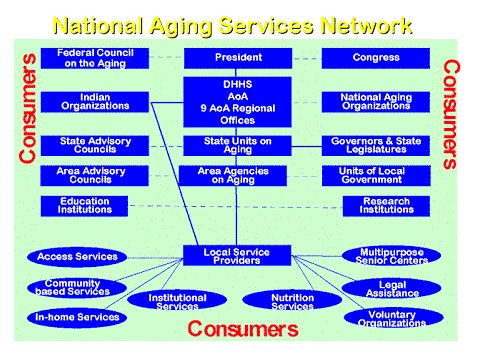
The Administration of Aging (AOA) provided the diagram above. It demonstrates how care is disseminated from the President of the United States of America to the consumers. DHHS on the diagram stands for the Department of Heath and Human Services.
Chapter 2.
Cultural CompetencyDemographics The demographic composition of the United States population will change dramatically in the next few decades. Within the next ten years, the population will grow significantly older and more diverse. This demographic shift has important implications for direct service providers. A greater number of elderly individuals will be in need of health and human services. Racial and ethnic minority elders will constitute a growing proportion of this group. It is critical for direct service providers to be aware of the current and projected characteristics of this diverse population to prepare for addressing their changing needs into the future.
The United States is a nation with a rich mix of people who come from different racial, ethnic, and cultural backgrounds. That mix is becoming even more dynamic. The minority older population will triple by 2030 (US Census Bureau Decennial projections). By then, about one quarter of the elderly population will belong to a minority racial or ethnic group. In some parts of the United States, such as California, the upsurge in the number of older minority adults will be dramatic.
Although the older populations will increase among all racial and ethnic groups, the Hispanic older population is projected to grow the fastest, from about 2 million in 2000 to over 13 million by 2050 (US Census Bureau, Decennial Projections). In fact, by 2050, the Hispanic population age 65 and older is projected to outnumber the non-Hispanic black population in that age group (US Census Bureau, Decennial Projections).
Cultural Competence There is consensus that social services, health promotion/disease prevention, and health services should be culturally sensitive to better meet the needs of older minority Americans. Compelling evidence indicates that race and ethnicity correlate with persistent, and often, increasing health and socioeconomic disparities among U.S. populations. Although there is progress in the overall health of the nation, there remains a continuing disparity in the burden of illness and death experienced by African Americans, Hispanic Americans, Indians and Alaska Natives, and Asian and Pacific Islanders. These disparities are believed to be the result of the complex interaction among genetic variation, environmental factors, specific health behaviors, and factors of service delivery.
Health disparities, and other disparities which set racial and ethnic minority populations apart from the mainstream, are due, at least in part, to problems experienced in accessing and effectively utilizing health and human services. However, a solid and growing body of research now indicates that one of the major reasons that services remain inaccessible and under utilized is because they are not responsive to the needs of the group being served - they are not "culturally sensitive."
Additional, research is needed to better understand these relationships and to acquire new insights into eliminating the disparities and developing new ways to apply our existing knowledge to this goal. Improving access to quality services will require working with communities to identify culturally sensitive implementation strategies. Understanding culture helps service providers avoid stereotypes that can undermine their efforts. It promotes a focus on the positive characteristics of a particular group, and reflects an appreciation of cultural differences. Culture plays a complex role in the development of health and human service delivery programs. Approaches that build on the strengths of minority communities and understand and respect minority cultures result in interventions, which can lead to healthy practices and behaviors. Some call this an "emic" approach--working from the inside, using the strengths, perspectives, and strategies which elders and their families identify for themselves as being most effective.
It is important for direct service providers to acknowledge the significance of culture in people\'s problems as well as their solutions. Although there is some research to suggest that the optimal situation is one in which there is similarity between the service recipient and worker, such matches are a rare luxury. Consider the second-generation Vietnamese-American mental health social worker whose clients consist of Japanese-American and African-American families. It would not be feasible for the social worker to try to memorize cultural traits while trying to become familiar with these families. Subgroups and individuals within particular groups are quite diverse. Instead, the social worker must have an appreciation of the cultural differences between her culture and her clients\', respect her clients\' culture, and behave in a manner that exemplifies this respect. The goals in becoming more culturally competent are to continue to learn about differences and to rid oneself of stereotypes. Cultural competence demands an approach to service recipients in which assumptions are few.
Factors that Influence Culture
The cultures of patients and providers may be affected by:While we know that cultural influences shape how individuals and groups create identifiable values, norms, symbols, and ways of living that are transferred from one generation to another, it is important for us to distinguish the differences created by such factors as age, gender, geographic location, and lifestyle. Race and ethnicity are commonly thought to be dominant elements of culture, but a true definition of culture is actually much broader than this. For example, ethnic and racial groups are usually categorized very broadly as African American, Hispanic, American Indian and Native Alaskan, or Asian American and Pacific Islander. These broad categories are sometimes misleading, because they can often mask substantial differences within groups. The larger group may share nothing more than common physical traits, language, or religious backgrounds. We often fail to consider the distinct factors that influence culture within larger populations that determine how people think and behave.
What is Cultural Competence? Cultural competence is defined as "a set of cultural behaviors and attitudes integrated into the practice methods of a system, agency, or its professionals, that enables them to work effectively in cross cultural situations." Cultural competency is achieved by translating and integrating knowledge about individuals and groups of people into specific practices and policies applied in appropriate cultural settings. When professionals are culturally competent, they establish positive helping relationships, engage the client, and improve the quality of services they provide. It is important to understand that the concept of cultural competency has two primary dimensions: surface structure and deep structure.
Borrowed from sociology and linguistics, these terms have been used to describe similar dimensions of culture and language.
Surface structure involves matching intervention materials and messages to observable, "superficial" (though nonetheless important) characteristics of a target population. For audiovisual materials, surface structure may involve using people, places, language, music, food, and clothing familiar to and preferred by the target audience. Surface structure also includes identifying which channels (e.g., media) and settings (e.g., churches, senior centers) are most appropriate for the delivery of messages and programs.
Deep structure involves socio-demographic and racial/ethnic population differences in general as well as how ethnic, cultural, social, environmental and historical factors may influence specific behaviors. Whereas surface structure generally increases the "receptivity" or "acceptance" of messages, deep structure conveys relevance. Surface structure is a prerequisite for feasibility, while deep structure determines the efficacy or impact of a program.
Barriers to Service Access
Structural Barriers
A significant external barrier to health care access is lack of health care insurance and out-of-pocket health care costs. Factors that have been shown to significantly affect out-of-pocket health care costs include poor health, high levels of functional impairment, limited education, and low income. Because minority elders are in general in poorer health, suffer more functional impairments, have more limited educations and lower incomes than the general population, they may face significantly higher burdens for out-of-pocket costs. Out-of-pocket costs also account for a much higher proportion of income for lower income groups than higher income groups. The current average out-of-pocket costs amount to 19 percent of total income for all Medicare beneficiaries, but account for 28 percent of income for those in poorer health, 24 percent for those with one or more functional impairments, 21 percent for those who did not complete high school and 31.5 percent for those at the lowest income levels (Administration on Aging. "Facts and Figures). Another set of structural barriers is logistical difficulties, including a lack of transportation, language difficulties and illiteracy. Transportation difficulties disproportionately affect lower income racial and ethnic minority elders, many of whom do not have automobiles and, even more importantly, may not have the language skills and information necessary to get a driver\'s license and navigate through their community. Many of these elders also experience confusion regarding public transportation and other resources available to help them access services. Cultural Barriers Some barriers to services can be considered \'internal\' because they are characteristics of the minority groups, and they include styles of interaction and expectations, as well as misconceptions. Traditional Chinese culture, for example, values shielding patients from discussing the full severity of an illness, which is in direct conflict with contemporary Western medical practices. The most common cultural misconception among policy makers, program planners and service providers is an underestimation of the needs for formal support for ethnic elders. This misconception is based on the assumption that minorities "take care of their elders "within the family. Research does confirm that a significant proportion of minority elders live with their family. Unmarried older African Americans are twice as likely to live with family members as whites, Hispanic American and Asian American elders are three times as likely, and half of urban Native American elders live with family members (controlling for income, health status, and other characteristics).The Cultural Sensitivity Continuum
Principles of Cultural Competence
Culture plays a complex role in the development of health and human service delivery programs. As indicated earlier, the need for the provision of culturally appropriate services is driven by the demographic realities of our nation. Understanding culture and its relationship to service delivery will increase access to services as well as improve the quality of the service outcomes.Research has begun to provide the underpinnings for the development of standards for the delivery of services to diverse populations. The following Principles are drawn from research material on the role culture plays in providing services to older adults. When professionals practice in a culturally competent way, programs that appropriately serve people of diverse cultures can be developed. Each person must first posses the core fundamental capacities of warmth, empathy and genuineness. Professionals must first have a sense of compassion and respect for people who are culturally different. Then, practitioners can learn behaviors that are congruent with cultural competence. Just learning the behavior is not enough. Underlying the behavior must be an attitudinal set of behavior skills and moral responsibility. It is not about the things one does. It is about fundamental attitudes. When a person has an inherent caring, appreciation and respect for others they can display warmth, empathy and genuineness. This then enables them to have culturally congruent behaviors and attitudes. When these three essentials intersect, practitioners can exemplify cultural competence in a manner that recognizes, values and affirms cultural differences among their clients.
Values and Attitudes
Culture shapes how people experience their world. It is a vital component of how services are both delivered and received. Cultural competence begins with an awareness of your own cultural beliefs and practices, and recognition that people from other cultures may not share them. This means more than speaking another language or recognizing the cultural icons of a people. It means changing prejudgments or biases you may have of a people\'s cultural beliefs and customs. It is important to promote mutual respect. Cultural competence is rooted in respect, validation and openness towards someone with different social and cultural perceptions and expectations than your own. People tend to have an "ethnocentric" view in which they see their own culture as the best. Some individuals may be threatened by, or defensive about, cultural differences. Moving toward culturally appropriate service delivery means being:How do different cultures differ in their views on aging? North American culture embraces youth. By contrast, aboriginal people view the elderly as repositories of tradition and wisdom, and they are revered as a result. The Chinese view is very similar. Older people in North America are often segregated, living in nursing homes or the like, and there is not as much interaction between generations as in some cultures. Parents who were first-generation immigrants to the United States can often be disappointed when they\'ve brought "old country" traditions and expectations, but their children have adopted the North American thinking in this regard.
Chapter 3.
Depression in SeniorsHow common is depression among seniors? It depends on how you define depression. There are two types: The "serious illness" is clinical depression. Approx. 2-5% of those over 65 are affected (not dissimilar to the general population). In nursing homes or hospitals, that population can be affected up to 25% (Administration on Aging. "Facts and Figures: Statistics on Minority Aging in the U.S.," U.S. Department of Health and Human Services: Washington, DC).
Individual depressive symptoms are much more common. 15-20% of healthy seniors can have one or two symptoms, but that doesn\'t qualify them for clinical depression.
Previously unaffected seniors can develop "late onset" depression. A person can have been totally fine until a very advanced age, and can then become depressed. Often when this happens there is an underlying medical cause.
A number of different kinds of depression, or mood disorders, can afflict older adults. These illnesses affect how people feel about themselves and the world around them. They can influence every aspect of a person\'s life, including appetite, sleep, levels of energy and fatigue, and interest in relationships, work, hobbies, and social activities.
Emotional stress or loss of function can sometimes trigger depression, although it can also develop without a clear precipitant. Strength of character or previous accomplishments in life will not prevent depression. Depression is not a sign of weakness or a problem that can just be willed away. Without proper treatment, their depressive symptoms can last for months or even years and can worsen. Research suggests that depressive disorders are medical illnesses related to changes and imbalances in brain chemicals called neurotransmitters that help regulate mood.
Some people have their first episode of major depression in late life, while others have had many episodes of major depression since a young age. The two main symptoms of a major depressive disorder are depressed mood most of the day--nearly every day for 2 weeks or longer--and/or loss of interest or pleasure in activities the person usually enjoys.
Other symptoms of depression can include
Severe major depressive disorder can sometimes be accompanied by delusions (believing things that are not true, such as that people are out to get you) or hallucinations (seeing or hearing things that are not there). When this happens, the depression is called psychotic depression. Psychotic depression is most common in late life.
The number-one cause of suicide in the United States is untreated depression. Older adults have a suicide risk almost twice that of the general population. White men over age 65 (NIH Publication No. 03-4594 Printed January 2001; Revised April 2003) have a suicide rate five times higher than the general population. Depression is the most common diagnosis in older adults who commit suicide, so it is critical that depression be recognized and treated as soon as possible.
Older people can have other kinds of depressive disorders, such as minor depressive disorder and dysthymic disorder, which are not as severe as major depression. Although these illnesses may not cause symptoms as serious as major depression, they can still make it very difficult for the person to function and should be evaluated and treated.
Many older adults have medical illnesses, some of which can cause depression. Illnesses that can cause depression include Parkinson\'s disease, stroke, heart attack, vitamin B12 deficiency, hyper- or hypothyroidism, multiple sclerosis, lupus, certain kinds of cancers, vascular dementia, Alzheimer\'s disease and many other illnesses. Depression makes it more difficult to treat the other medical illness, since depressed patients may not take care of themselves and follow prescribed treatment. Depression caused by medical illnesses can be treated effectively, but it is important for patients to report their symptoms to the doctor who is treating them.
Many older adults are taking multiple medications. Many medications may cause or worsen depression; these include blood pressure medications, such as reserpine and beta-blockers, anti-ulcer medications, medications for Parkinson\'s disease, muscle relaxants, steroids and many others.
Life Changes
Many older adults experience the loss of loved ones and friends. They may also be affected by other major life changes, such as retirement, moving to a retirement or nursing home, financial difficulties, poor health, and loneliness. Some people have the mistaken idea that it is normal for older people to feel depressed. This is not true. Although stresses such as loss and major life changes can sometimes trigger depression, depression is not an inevitable consequence of such loss and life changes. While grief is expected after the loss of a loved one, if severe depression continues for longer than two months after such a loss, the person should be evaluated for depression.How are the symptoms of depression different in older individuals?
Certain physical symptoms (such as changes in appetite and sleep patterns, or fatigue) are important signs of depression in younger adults. However, older people who are not depressed often experience such changes as a natural part of the aging process or as a result of medical illness. For this reason, doctors often fail to recognize depression in older patients, especially since older patients are less likely to report emotional symptoms than younger patients. To recognize depression in an older patient, the doctor needs to be made aware of certain emotional and psychological symptoms. These include a sad, downcast mood; recurrent thoughts of death or suicide; loss of interest in activities; feelings of hopelessness, worthlessness, guilt, or helplessness; feelings of being keyed up or slowed down; avoidance of social interactions; poor concentration and memory; and difficulty starting new projects or making decisions. Sometimes it can help if a family member of the patient\'s choice, who can describe the problem, accompanies the person to the doctor.How is depression evaluated in older people?
A medical doctor conducts a complete psychiatric and medical history. He/she will want to know when the depressive symptoms started, how long they have lasted, and how severe they are. The doctor will also want to know if anybody else in the family has had depression and how he or she was treated. The doctor needs to know about any medical conditions and what medications the client is taking. The doctor will perform a complete physical examination, obtain some laboratory tests, and assess their mental status (ability to think clearly, remember, make plans). The purpose of this workup is to determine if a medical condition or medication may be causing or contributing to the depression.Causes Of Depression:
Experts think of causes as being either biological (physical), psychological or social.
Modes Of Presentation:
Biological: illness is the major physical cause of depression among seniors. For example, depression is really common in the months after a stroke - the combined effects of the "shock to the system" and chemical changes in the brain. Also, some drugs can cause depression, including tranquilizers and beta-blockers.
Psychological: losses (trying to cope with the death of a loved one is a common precipitant); changes to lifestyle (retirement); changes to family relationships.
Social: isolation, loneliness, financial difficulties.
There are some seniors who may have had a life history of depression. Those people have an underlying chemical vulnerability to depression, so they may be depressed for no identifiable reason.
There are no differences between the way in which men and women present their depression to medical care providers. (Women, as a group, seem more vulnerable to depression, but that may be a reflection of the fact that they tend to outlive men.)
What To Look For:
While rates of depression are about equal between the sexes, suicide rates in men are higher because they choose more "effective" means (guns, other weapons) versus women\'s "gentler" attempts (i.e. pills).
Depression in seniors versus young: seniors don\'t always present with definite complaints of depression, as opposed to younger people who will often approach doctors saying "I\'m depressed."
Seniors may not be as aware that they\'re depressed. They may feel "something\'s wrong," but may attribute it to a physical cause - headaches, weakness, lack of energy, constipation. As a result, doctors may just treat the physical complaints.
Changes in appetite (increase or decrease) or sleep patterns; loss of energy; loss of interest in usual activities; inability to concentrate (suddenly stop reading); they ruminate/feel guilty ("I\'m a burden; I feel useless"); they express thoughts of death/suicide ("I don\'t see the point of going on"); they stop planning for the future.
The Stigma:
People who are seniors today are quite stoic. They lived through the "hard times": the Depression, the World Wars. They consider themselves tough, and it\'s hard to admit to a perceived weakness.
Problems With Diagnosis:
Some patients who have brain disease (i.e. Parkinson\'s) are mistakenly diagnosed as depressed. (This happens because of the disease\'s effect on the facial muscles - the face droops, they don\'t smile, so they look depressed.)
Misconceptions:
Conversely, a person with Parkinson\'s and depression may not be diagnosed as depressed because the facial indicators can be "written off" to the Parkinson\'s.
Overall it is harder to diagnose depression in a person with any type of brain disease.
Thyroid problems are also commonly misdiagnosed as depression.
An underlying cancer (i.e. pancreatic) can cause symptoms that look like depression.
Many people think depression and old age go hand-in-hand. They do not. Many people live to a "ripe old age" in perfect mental health.
Depression in seniors is not inevitable - and if it does happen, it\'s really very treatable.
Chapter 4
The Psychology, Social and Biological Aspects of AgingThe Psychology of Aging
Individual social and family assumptions about aging and its consequences may place us in a self-fulfilling expectations spiral. Stereotypical assumptions about old people are interconnected in social and familial interactions that can create or intensify illness. Our stereotypes should change so they become positive rather than self-fulfilling negative attitudes. Below are some examples of the negative stereotypes and positive images that society maintains.Mental
Negative Stereotype Positive Image Curmudgeon Shares wisdom, knowledge, counseling Inflexible, opinionated, stubborn Learns actively Closed to new ideas Open to ideas and change Repeats same old stories Great storage of accumulated memories Always critical of other generations Has unique perspectives and experiences Always living in the past Always seeks new experiences and challenges Physical
Negative Stereotype Positive Image Feeble, slow Active, strong, effective Always gets in the way Compensates for limitations Drives slowly; dangerous and unfriendly Sensitive and courteous Non-productive Contributes in different ways Social
Negative Stereotype Positive Image Needs to be patronized Emphatic and helpful All old people are the same Rich network of good friends Uses up family resources Volunteers constructive efforts Poses an economic threat Financially secure Positively Getting Older
We always hear about the negative aspects of aging, so here are some of the positives aspects of aging: